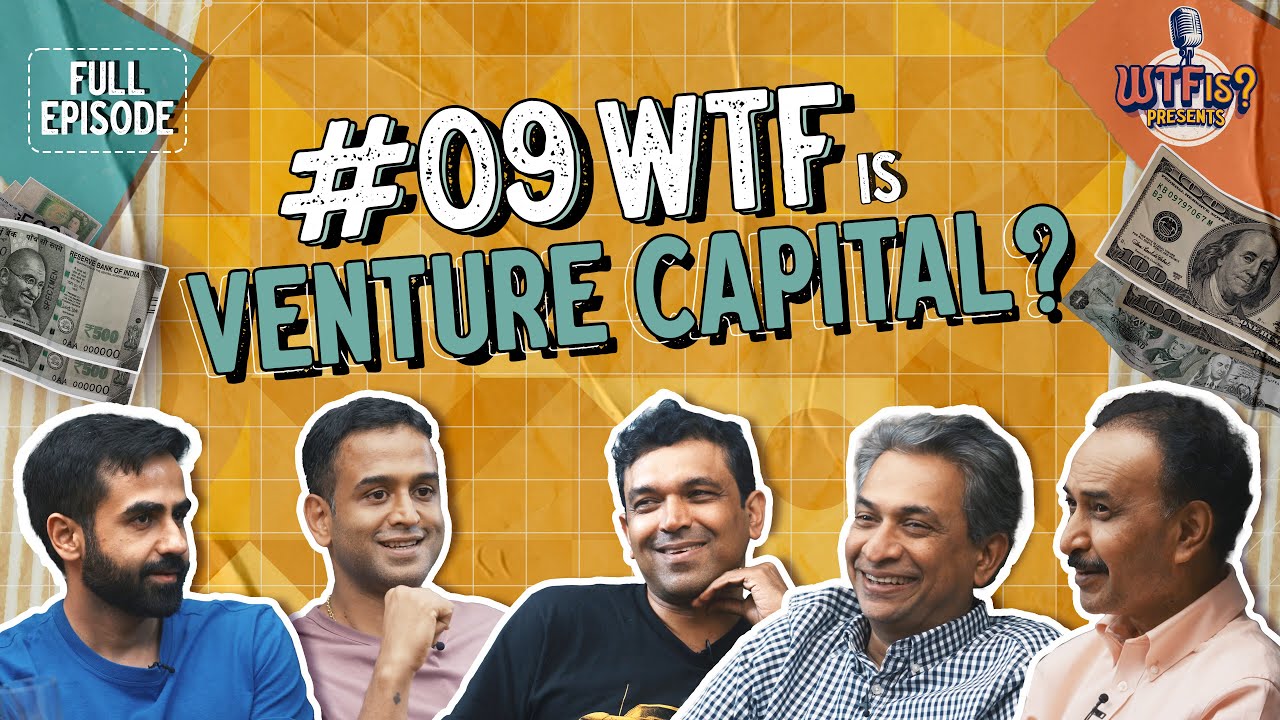
Ep #3| WTF is E-commerce: Kishore Biyani, Udaan & Meesho Founders Reveal What Sells and What Doesn’t
Indian e-commerce founders Vidit Aatrey, Sujeet Kumar and Kishore Biyani explain how rebellions, localization and the Three Indias framework decide what sells online.
Key takeaways
5 points- 1Scarcity and rebellion, not privilege, drive contrarian retail innovation.
- 2Copy-paste Western models fail; localise assortment, pricing and influencers.
- 3Map every opportunity against the Three Indias consumption ladder.
- 4ONDC can bring 60 million kiranas online without building another marketplace.
- 5Reach critical scale first, then protect unit economics; never discount to infinity.
Summary
Panel of Meesho, Udaan and Future Group founders traces how scarcity-driven rebels built India-first e-commerce by rejecting copy-paste models.
Personal Journeys
- Vidit Aatrey moved from farming family and IIT to ITC then Meesho to digitise 85 % offline kiranas (0:00-10:03)
- Kishore Biyani rebelled against conservative roots, invented stonewash fabric and created Big Bazaar after studying Tirupati crowds (10:06-20:10)
- Sujeet Kumar left Hindi-medium Bihar for IIT, Flipkart supply chain and co-founded Udaan (20:11-30:14)
Three Indias Framework
- India 1 (11-13 % consuming class), India 2 (serving class) and India 3 (daily wage) require separate value props (50:26-1:10:32)
- Growth comes from serving aspirations once non-discretionary needs are met (1:10:37-1:20:39)
Influencers, Channels & ONDC
- Micro-influencers and regional celebrities outperform national stars; Meesho uses platform photos for discovery (40:23-1:00:29)
- ONDC aims to let 60 million kiranas upload once and sell everywhere like UPI (1:40:52-2:00:59)
Deep read
Executive Summary
Episode 3 of Nikhil Kamath’s talk series brings together four towering figures in Indian commerce—Kishore Biyani (Future Group), Vidit Aatrey (Meesho), Sujeet Kumar (Udaan), and host Nikhil Kamath—to dissect what actually sells in India’s vibrant e-commerce scene. Across a long, dialogue-driven conversation, the guests braid personal origin stories, the evolution of retail formats, and a forward-looking view on how online and offline channels, influencers, and government-led platforms like ONDC will reshape consumer behavior. A few recurring themes emerge: (1) India’s market is fiercely regional and multi-speed; localization and region-specific campaigns outperform one-size-fits-all national ads; (2) the rise of social commerce and influencers—especially micro-influencers—has transformed discovery and buying behavior, with brands needing authentic alignment to influencer values; (3) ONDC promises democratization but poses fundamental questions about platform differentiation, supply chain governance, and value creation; (4) sustainable growth in e-commerce hinges on unit economics and selective profitability after achieving scale; (5) the Indian consumer economy is propelled not only by mass-market channels but by large, event-driven markets (notably weddings) and a broad “three-India” segmentation. The episode also underscores the importance of introspection for entrepreneurial leaders, encouraging open feedback loops, understanding personal flaws, and embracing a broader, creator-driven economy. In sum, the conversation offers a practical, ground-truth blueprint for navigating India’s evolving commerce landscape, anchored by rich anecdotes and a nuanced view of how digital and physical channels co-evolve.
00:00:00 — Major Topic: Episode Overview and Cast
Speaker: Nikhil Kamath
- Introduces Episode 3: WTF is E-commerce, featuring Kishore Biyani (Future Group), Vidit Aatrey (Meesho), Sujeet Kumar (Udaan), with Nikhil Kamath as host.
- Opens with a quick, playful banter about product-market timing, late arrivals, and the premise of the episode: what sells in e-commerce and what doesn’t.
- Sets the tone for a long-form, interview-style discussion exploring personal journeys, retail evolution in India, and the future of commerce, with an emphasis on localization, channel shifts, and the interaction between online and offline formats.
> > "We started Meesho back in 2015." — Vidit Aatrey
00:10:06 — Major Topic: Vidit Aatrey and Meesho: origin, mission, and scale
Speaker: Vidit Aatrey
- Vidit introduces himself, his upbringing in Delhi (Rohini) and his broader family background, including farming on both sides.
- Describes a demystified path from a government-job-or-parchun ki dukaan mindset to an engineering and startup track, including IIT-Delhi.
- Highlights his early career moves: ITC in an operations-heavy role, language and cultural barriers in Chennai (Tamil-speaking plant), and the grit of moving to Bangalore to join a rising startup ecosystem.
- Co-founded Meesho in 2015 to address a large, offline-dominant segment of Indian retail: 85% of India’s retail sales occur through long-tail, unbranded small businesses. Meesho aims to bring these small businesses online and democratize e-commerce.
- Key metric shared: ~140 million annual consumers and about a million small businesses on Meesho.
- Sets the frame for Meesho as a platform that enables offline-to-online adoption for small businesses by leveraging social and mobile channels, with a focus on the long-tail segment.
00:20:11 — Major Topic: Kishore Biyani: childhood, origins, and retail revolution
Speaker: Kishore Biyani
- Introduces himself and the Future Group (a broad consumer-ism group spanning formats, brands, and services).
- Shares origin: born in Bombay, from a Rajasthan-influenced family. Early exposure to business through a wholesale fabric trading background; developed a trouser brand and a fabric business around the late 80s.
- Reflects on formative experiences: moving from a traditional, regimented family to an independent mindset via college (IIT-Delhi pivot for Vidit; for Kishore, the move from Bihar/Chhattisgarh to Mumbai and exposure to new business styles).
- Describes an entrepreneurial arc: starting with fabric, then denim, then private labels, then wholesale-trader to retailer to later multi-format formats (Aadhaar, Foodhall, Central, Brand Factory, Big Bazaar).
- Emphasizes the learning that branding and consumer understanding are crucial; explains the approach of laddering brands to cover multiple segments (luxury to mass-market) and building a retail ecosystem that serves diverse consumer bases.
> > "Before creating Big Bazaar, I had a format in mind that we'll create a marketplace for brands. Central was originally conceptualized much before Big Bazaar for me." — Kishore Biyani
00:30:17 — Major Topic: The Big Bazaar Era, Scaling Retail, and the Consumer Mindset
Speaker: Kishore Biyani
- Recaps the scaling approach: opened three stores in 22 days to generate scale and volumes; the aim was a bustling, market-like retail experience that crowds can drive more crowds to.
- Describes the genesis of organized retail in India: a catalyst moment for retail formats to appear credible and scalable; the idea that retail could be organized rather than purely informal/unstructured.
- Mentions the breadth of the Future Group play: retail formats across mass, mid, and luxury; Aadhaar for lower-income segments; Foodhall for premium grocers; Central as a fashion/dept store; Brand Factory as a format for value brands.
- Highlights the long-term growth streak: ~30 years of compounding at ~30% annually, underscoring a high-growth retail mindset and the evolution toward more consumer-centric formats.
- frames the ongoing evolution as philosophical: moving from purely growth to deeper consumer understanding, and embracing a broader mission around value-creation for a wide spectrum of Indian consumers.
> > "We laddered many brands in the retail formats. We learned a lot from Hindustan Lever’s approach to building brands across population segments." — Kishore Biyani
00:40:23 — Major Topic: Tirupati, crowds, and learning from real-world management
Speaker: Kishore Biyani, with interjections from Vidit Aatrey and Sujeet Kumar
- Describes how Bharat-based crowd-management principles informed retail crowd flows: Tirupati’s crowd management taught him how queues, water distribution, and patient service can scale in high-density environments.
- Emphasizes the value of learning from extreme real-world scenarios, and the application of those insights to retail and experiences in consumer spaces.
- Anecdotes about Saravana Stores (Chennai) as inspiration for a one-stop concept—an early touchpoint for understanding multi-category retail in a single, sprawling space.
> > "Tirupati, unbelievable management. Crazy. How to manage crowds—how do you create that sense of order? We learned from everywhere in India." — Kishore Biyani
00:50:26 — Major Topic: Marketing, Localization, and the Rise of Influencers
Speaker: Vidit Aatrey, Speaker: Kishore Biyani, with host
- The group discusses the role of social media and influencers in modern marketing; localizing campaigns per state/region matters more than a one-size-fits-all national approach.
- Meesho’s approach to marketing emphasizes local celebrity and regional tailoring (e.g., Sourav Ganguly in West Bengal; Ram Charan in South India); a focus on Diwali localization strategies yielded strong results.
- They discuss the economics of influencer marketing: ROI is hard to quantify; local influencers with aligned brand philosophy often outperform broad celebrity campaigns in heterogeneous markets.
- They note that influencer economics are evolving: platforms may create funds to sustain influencer ecosystems; an increasingly decentralized influencer network allows micro-influencers to drive product adoption in a credible, authentic way.
- Emphasizes the shift from traditional mass advertising to a data-informed, social-driven approach, particularly for consumer brands seeking authenticity and local resonance.
> > "Localization has to happen. The influencer ecosystem is decentralizing; you need micro-influencers who connect with a brand's philosophy, not just celebrities with broad reach." — Vidit Aatrey
01:00:30 — Major Topic: India’s Consumption Landscape: India 1, 2, and 3; Weddings as a market engine
Speaker: Kishore Biyani and others
- Introduces a framework to understand Indian consumer heterogeneity: India 1 (consuming class), India 2 (service class), India 3 (hardcore labor/farm workers). The map reflects differing levels of discretionary spending.
- Provides a market-sizing perspective: India 1 might be about 20 crore people; India 2 and 3 dominate other 100s of millions, shaping a complex, multi-layered market with differing demands.
- The wedding economy as a microcosm of consumer spending: 2 crore families, 15 lakh crore rupees spent annually on weddings; Manyavar as a brand built around wedding-related consumer behavior.
- Observes that India’s consumption is event-driven (harvest season, weddings, IT/tech growth, etc.), and future growth will require new value-added industries—creative economy and the “creator economy.”
> > "India is divided into three parts: India 1, India 2, India 3. India 1 is the consuming class; for every India 1, there are 3-3.5 India 2." — Kishore Biyani
01:10:37 — Major Topic: The Globalization, Localization, and the Future of E-commerce in India
Speaker: Sujeet Kumar, Speaker: Vidit Aatrey, Speaker: Kishore Biyani
- The conversation broadens to talk about global vs. local benchmarks: India’s nascent e-commerce market requires local adaptation rather than direct paste-from-US/Europe playbooks.
- The panelists debate the role of globalization in Indian retail: how to balance imported practices with Indian consumer realities, particularly in the context of ONDC (the government-supported open e-commerce network).
- A persistent theme: “localization + value addition” is essential; not all brands or platforms can rely on global templates; Indian supply chains and consumer behavior require bespoke approaches.
- There’s a nuanced look at Nykaa and other Indian platforms: Nykaa as a brand-led, content-to-commerce play vs. Meesho’s platform-centric, marketplace approach; both reflect distinct but compatible models in India’s e-commerce ecosystem.
> > "India can only prosper if we are able to create value addition in the economy, not just sell commodities." — Kishore Biyani
01:20:42 — Major Topic: Marketing ROI, ROI Attribution, and the Localized Campaign Playbook
Speaker: Vidit Aatrey, Speaker: Sujeet Kumar, Speaker: Kishore Biyani
- The group discusses the difficulty in measuring ROI of celebrity campaigns; ROI is highly context-dependent and hard to quantify across channels.
- They highlight a practical approach: localize campaigns to different states, partner with local celebrities, and measure the incremental lift per region rather than rely on a single national KPI.
- The discussion expands to the role of national vs. local platforms; Meesho’s strategy leverages regional content and influencers, focusing on cost-effective growth rather than global-scale campaigns from day one.
- They discuss the balance of platform vs. brand-led identity; platforms like Nykaa vs. Meesho illustrate different ways to create brand equity while driving demand.
> > "Localization is very effective. We used different celebrities for different parts of the country. One size fits all rarely works in a diverse market like India." — Vidit Aatrey
01:30:46 — Major Topic: The ONDC Experiment and the Future of Interoperable E-commerce
Speaker: Vidit Aatrey, Speaker: Sujeet Kumar, Speaker: Kishore Biyani
- ONDC is framed as the Indian parallel to UPI for payments: a pan-Indian, interoperable e-commerce layer intended to onboard all kinds of sellers (kiranas, panwadas, etc.) onto a single platform by standardizing catalogs and search.
- They discuss ONDC’s potential to disrupt traditional platform dynamics by enabling cross-platform visibility and discovery, but acknowledge the early stage and the ambiguity around its implementation and long-term ecosystem effects.
- They pose critical questions: If everyone’s products become visible across apps, what will differentiate platforms? How will brands build identity if supply chains converge toward similar delivery times and product listings?
- Practical perspective: ONDC could unlock a huge portion of the 60 million small Indian businesses; the challenge remains in platform governance, brand-building, and the economics of participation for small sellers.
> > "ONDC is the UPI of e-commerce—interoperable catalogs across apps is the goal, but the design principles and who benefits remain unclear." — Sujeet Kumar
01:40:52 — Major Topic: Entrepreneurial Flaws, Self-Reflection, and Leadership Lessons
Speaker: Kishore Biyani, Speaker: Vidit Aatrey, Speaker: Sujeet Kumar, with host
- A candid foray into the concept of a “tragic flaw” or fatal flaw in entrepreneurship: acknowledging that every founder has blind spots, and introspection is essential for sustainable growth.
- Kishore emphasizes normalization of flaws, the importance of dissent within organizations, and the idea that a healthy founder network provides feedback without ego protection.
- They discuss the value of psychological introspection and self-awareness (drawing on Jung, Adler, and mythic storytelling) as tools for leadership development.
- The group reflects on luck and the non-linear nature of success in startups, noting that while luck plays a role, deliberate, reflective practice and a willingness to adapt are critical for long-term success.
> > " normalize having flaws. The problem with social media and anonymity is that people talk [bleep]. But until we accept that we are flawed, we won't grow." — Kishore Biyani
01:50:55 — Major Topic: The ONDC Reality Check and the Market’s Big Questions
Speaker: Vidit Aatrey, Speaker: Sujeet Kumar, Speaker: Kishore Biyani
- The ONDC discussion returns to practical realities: interoperability could reshape discovery, but the key design questions remain unresolved—how brands differentiate, how supply chains are managed, and how payments work across interoperable platforms.
- They contrast the ONDC vision with the current dynamics of branded platforms (Nykaa, Flipkart, Amazon) and reflect on whether ONDC will unfold as an ecosystem that enables smaller sellers to reach larger audiences or creates new structural challenges.
- The conversation acknowledges that in India’s e-commerce landscape, there will likely be multiple platform models coexisting (marketplaces, brands with direct e-commerce, and hybrid approaches) rather than a single winner.
> > "If everything becomes visible everywhere, then who stands for what? The question is, what will be the unique value proposition of each platform?" — Sujeet Kumar
02:01:00 — Major Topic: Final Thoughts: The Personal and the Practical for New Entrants
Speaker: Nikhil Kamath, Speaker: Vidit Aatrey, Speaker: Sujeet Kumar, Speaker: Kishore Biyani
- The conversation steers toward practical guidance for aspiring entrepreneurs: embrace the digital shift, but keep a strong offline + hybrid approach; localize and customize; build a brand with a clear value proposition; and pursue sustainable unit economics.
- They emphasize that the future of commerce is a blend of online and offline experiences, with social/influencer dynamics playing a central role in discovery and purchase—not just pure price competition.
- The panel asserts that the consumer is becoming more aspirational and more individualistic, with digital platforms enabling highly personalized pathways to purchase.
- The closing sentiment: commerce is evolving rapidly, and those who understand the interplay of channel shifts, localization, and value addition will win.
> > "If you want to do anything in commerce today, you have to figure out how to make e-commerce work. Social, influencers, marketplaces—these are integrated. The future is hybrid, local, and creator-driven." — Nikhil Kamath
02:10:00 — Major Topic: Closing Remarks
Speaker: Nikhil Kamath
- Thanks participants; invites audience feedback on favorite guests and future topics.
- Wraps the session with a forward-looking note on the continued co-evolution of commerce, technology, and consumer behavior in India.
> > "Commerce, offline and online, are blurring. If you want to create value, you will be part of this ecosystem. The question is not whether to join, but what you need to do to succeed." — Nikhil Kamath
02:15:00 — Resources Mentioned
- ONDC (Open Network for Digital Commerce) — government-backed interoperable e-commerce network in India.
- Meesho — social-commerce platform enabling small businesses to sell online via social channels.
- Flipkart — major Indian e-commerce marketplace; part of India’s e-commerce history; now owned by Walmart.
- Amazon — global e-commerce platform; focus on convenience and vast selection.
- Nykaa — beauty and fashion retailer/marketplace; content-to-commerce model.
- Third Wave Coffee / Hatti Kaapi — examples of niche, local consumer brands and franchising growth.
- Saravana Stores (Chennai) / Saravana Bhavan — inspiration for multi-category retail and food spaces.
- Foodhall, Big Bazaar, Aadhaar, Central, Brand Factory — formats within Kishore Biyani’s Future Group portfolio.
- Tirupati temple — reference point for crowd management and service design.
- Bharat Darshan — Future Group program to study societal changes and consumer shifts across Bharat.
- Jaane Bhi Do Yaaro / Hum Honge Kamyab Ek Din — cultural references used in conversation.
- Stonewash denim / Textile weaving — Kishore’s early product development in textiles.
- KPO (knowledge process outsourcing) / IT, IIT-Delhi alumni networks — background to entrepreneurship journeys.
02:30:00 — Resources Mentioned (Tools, Books, Platforms, Firms)
- Books/Books-to-Read: Mention of a retail bible book (historically circulated in retail circles); no exact title given in transcript.
- Platforms/Services: ONDC, Meesho, Flipkart, Amazon, Nykaa, Manyavar (brand pivot around weddings), Third Wave (coffee shops), BlissClub (women-focused fitness), aLL (A Little Larger, body-positive fashion brand).
- Companies/Markets: Hindustan Lever (historical branding case), Saravana Stores, Foodhall, Central, Brand Factory, Aadhaar (format), Big Bazaar, Future Group, Udaan.
- Markets/Events: Tirupati, Riyadh (investment opportunities), Bharat Darshan, Indian weddings economy.
- Tech/Analytics: Data-driven inventory, SKU optimization, localization, influencer ecosystem economics, marketplace interoperability, and the value of platform-driven discovery.
02:40:00 — Key Term: Summary of Core Concepts and Definitions
- E-commerce: The online buying and selling of goods and services; in this discussion, includes platforms, marketplaces, social commerce, and digitally-enabled retail.
- India 1 / India 2 / India 3: A three-tier framework describing consumption capacity and spending power across Indian society, with India 1 representing the consuming class and India 2/3 representing service-oriented and labor-based segments.
- ONDC: Open Network for Digital Commerce; India’s attempt to democratize e-commerce by enabling interoperability among different apps and sellers.
- GMV: Gross Merchandise Value; total sales volume across a platform (not the same as profit).
- D2C: Direct-to-Consumer; brands selling directly to customers via online channels, bypassing traditional retailers.
- Inflation of influencer marketing ROI: Recognizing that attribution to influencer campaigns can be difficult, but localization and micro-influencers can drive meaningful results.
- Unit economics vs EBITDA: Debates about sustainable profitability in growth-phase e-commerce; critical mass vs profitability trade-offs.
- Bharat Darshan: An initiative to observe societal changes that influence consumer behavior across different regions of India.
- Stonewash / Denim Fabrics: Early textile innovations Kishore experimented with, illustrating the link between manufacturing and branding.
02:50:00 — Notable Lines (Verbatim Blocks)
> > "Crowd management at Tirupati was unbelievable. How to manage crowds—how do you create that sense of order? And you learn from everywhere." — Kishore Biyani
> > "Localization has to happen. The influencer ecosystem is decentralizing; you need micro-influencers who connect with a brand's philosophy, not just celebrities with broad reach." — Vidit Aatrey
> > "ONDC is the UPI of e-commerce—interoperable catalogs across apps is the goal, but the design principles and who benefits remain unclear." — Sujeet Kumar
> > "India is divided into three parts: India 1, India 2, India 3. India 1 is the consuming class; for every India 1, there are 3-3.5 India 2." — Kishore Biyani
> > "If everything becomes visible everywhere, then who stands for what? The question is, what will be the unique value proposition of each platform?" — Sujeet Kumar
00:00:00 — Major Topic: Themes and Takeaways (Recap Section)
- E-commerce in India is not a monolith; it requires channel-aware strategy, localization, and strong branding to serve a fragmented market.
- The balance between online and offline channels is dynamic. The early belief that digital alone will replace physical channels is outdated; success comes from a hybrid approach.
- The rise of social commerce, influencers (including micro-influencers), and content-to-commerce is a fundamental driver of discovery and demand in India’s diverse geography.
- ONDC could democratize, but practical design choices around interoperability, platform differentiation, and supply-chain governance will determine its success.
- The future of commerce hinges on value addition and meaningful differentiation—whether through brand-building, product quality, price, or unique experiences—rather than chasing scale alone.
- Entrepreneurs should pursue introspection and acknowledge personal flaws; feedback loops and dissenting voices within a firm can prevent hubris and accelerate learning.
- Growth and profitability are not mutually exclusive, but the timing matters: early-stage growth often requires investment, while later stages must prioritize unit economics and sustainable profitability.
00:00:00 — Resources Mentioned (Revisitable Summary)
- ONDC: Interoperable e-commerce platform (government-led).
- Meesho: Social commerce platform enabling small businesses to online-sell via social networks.
- Flipkart, Amazon, Nykaa: Key players shaping India’s online retail landscape with distinct value props.
- Third Wave / BlissClub / aLL: Examples of local consumer brands mentioned to illustrate category evolution.
- Saravana Stores (Chennai), Tirupati (crowd-management reference), Bharat Darshan (research program).
- Retail formats: Big Bazaar, Central, Foodhall, Aadhaar, Brand Factory; Future Group’s multi-format approach.
- Cultural/market anchors: Jaane Bhi Do Yaaro, Hum Honge Kamyab Ek Din (cultural references used to frame resilience and aspiration).
01:10:00 — Final Thoughts: Executive Takeaway Messages
- Local adaptation and careful channel selection are crucial for success in India’s diverse market.
- The ecosystem benefits from a mix of platforms, each with a crisp value proposition: discovery + price advantage on marketplaces; brand-building and content-to-commerce on specialized platforms; and social commerce for reach with small businesses.
- The future of commerce lies at the intersection of technology, culture, and human behavior—where influencers, content, and community shape everyday buying decisions.
01:20:00 — Final Notes (Closing)
- Audience engagement call-to-action: share who your favorite guest was and what you’d like to see next.
- End with a sense of ongoing exploration: e-commerce, retail, and the broader economy are in flux, but the core goal remains clear—create value for consumers through better access, smarter branding, and more efficient systems.
01:30:00 — Table of References and Key Terms to Revisit
- ONDC, Meesho, Flipkart, Nykaa, Amazon, Third Wave, Manyavar, SARAVANA, Foodhall, Aadhaar, Big Bazaar, Central, Brand Factory.
- Concepts: channel adaptation, localization, influencer marketing ROI, Bharat Darshan, India 1/2/3, unit economics, EBITDA vs GMV, creator economy.
- Pivotal anecdotes: Tirupati crowd-management, Saravana Stores inspiration for multi-category retail, the wedding economy as a macro consumption engine.
01:40:00 — Summary Diagrams (Proposed Recreation)
- Diagram 1: India’s Three-India Segmentation (India 1 vs India 2 vs India 3) with arrows showing consumption flow from India 2/3 to India 1 through value-added sectors like weddings, IT services, and consumer brands.
- Diagram 2: ONDC Interoperability Model (Catalog Upload -> Cross-App Discovery -> Cross-Platform Purchases) with stakeholders: sellers (kirana, panwadi, small brands), platforms (Meesho, Flipkart, Nykaa), consumers, and regulators.
- Diagram 3: Channel S-Curve: Offline to Online to Social/Influencer-Driven Discovery; milestones showing how channel shifts change what sells (pricing emphasis, visual merchandising, and social validation).
01:50:00 — Additional Notes (Cultural & Industry Context)
- The conversation blends personal stories with macro-market insights, reflecting common Indian startup culture where family background, education, and regional experiences shape business thinking.
- There is an emphasis on the importance of authentic brand narratives, localized campaigns, and a belief that India’s enormous heterogeneity is a source of strength for a diversified e-commerce ecosystem.
02:01:00 — Final Reflection: The Path Forward for Learners
- For students analyzing e-commerce, this episode underscores: understand your target consumer (India 1/2/3), design for channel realities, leverage local influencers, consider ONDC-era interoperability, and pursue sustainable unit economics while exploring growth.
- The founders advocate for a balanced view of risk, including the need to remain profitable after achieving scale while recognizing early-stage growth requires investment.
02:15:00 — End of Deep Read
- The episode closes with a warm thank-you and an invitation to engage with the audience on future guests and topics.
Action Items
- Map your target market to India 1/2/3 segments and identify the most credible entry points for your product in each segment.
- If launching a consumer brand, define a strong local narrative and partner with regional influencers; avoid one-size-fits-all campaigns.
- Evaluate ONDC integration for your business model; document potential value additions, required data standards, and partner ecosystem.
- Build a hybrid channel strategy: design online and offline experiences that reinforce each other, with clear roles for each channel.
- Prioritize unit economics early: model CAC, LTV, gross margins, and fulfillment costs; target profitability post-scale rather than pre-scale.
- Invest in feedback loops: create internal dissent-friendly culture to surface flaws and iterate quickly (the ‘fatal flaw’ concept as a tool).
- Develop a local-content calendar with quarterly regional campaigns; measure ROI by region, not just national averages.
- When considering influencers, pair each creator with a brand philosophy; avoid blanket celebrity endorsements for diverse markets.
- In product design, anticipate channel-specific preferences (visual search on social media; size/fit considerations for offline purchases).
- Explore micro-brand opportunities in the creator economy; test small, online-native sellers who can scale to broader markets.
Mental Models
Glossary
- ONDC
- Open Network for Digital Commerce; India’s government-led platform to enable interoperable e-commerce across apps and sellers.
- GMV
- Gross Merchandise Value; the total value of goods sold through a marketplace, not equivalent to profit.
- D2C
- Direct-to-Consumer; brands selling directly to consumers via online channels, bypassing traditional retailers.
- India 1/2/3
- A framing of Indian consumer segments: India 1 = consuming class with discretionary income; India 2 = service-oriented workforce; India 3 = labor/agrarian segment.
- KB
- Kishore Biyani; founder of Future Group (relevant context in this episode).
- NBFC
- Non-Banking Financial Company; a financial institution that offers banking services without requiring a full banking license.
- KPO
- Knowledge Process Outsourcing; a service industry where knowledge-based processes are outsourced (Vidit mentions early KPO experiences).
- Aadhaar
- A Future Group format; term here refers to affordable, mass-market retail format (not Aadhaar UID).
- Uy
- A colloquial shorthand used in dialogue; here, stands for informal terms within the transcript context.
Notable Quotes
“"We started Meesho back in 2015."”
“"Tirupati, unbelievable management. Crazy. How to manage crowds was something…"”
“"India can only prosper if we are able to create value addition in the economy. By just selling commodities without value addition,"”
“"ONDC is the UPI of e-commerce. It is supposed to be interoperable; tomorrow, when I put my soap on Meesho, will it automatically show up on Flipkart? It should."”
“"Localization has to happen. The influencer ecosystem is decentralizing; you need micro-influencers who connect with a brand's philosophy, not just celebrities with broad reach."”
“"If everything becomes visible everywhere, then who stands for what? The question is, what will be the unique value proposition of each platform?"”
“"India is divided into three parts. 'Three India', according to consumption: India 1 is the consuming class... India 2... India 3..."”
Topics
More from WTF is with Nikhil Kamath
See all