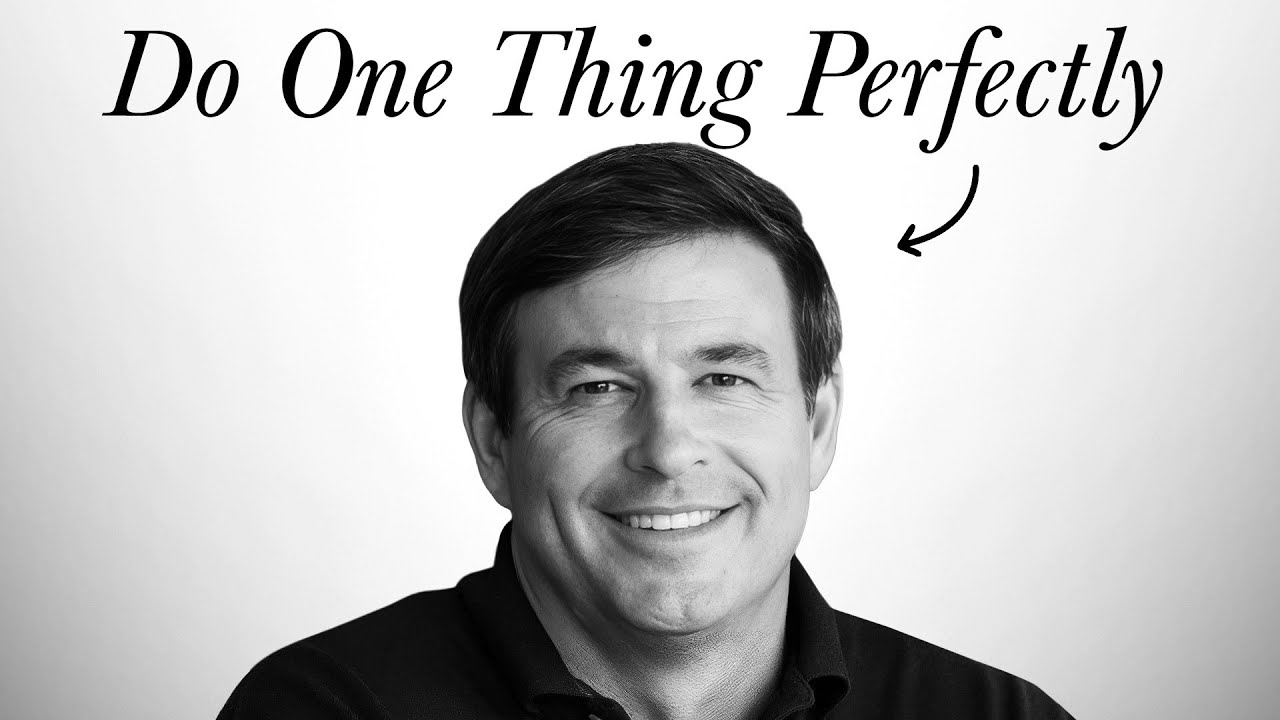
The Life Story of Akio Morita: Founder of Sony
Akio Morita co-founded Sony to restore Japan's global reputation for quality after WWII, pioneering direct-to-consumer marketing, long-term investment, and market-creating products like the Walkman.
Key takeaways
5 points- 1Choose a mission larger than your company.
- 2Live inside target markets before selling to them.
- 3Protect brand equity over short-term revenue.
- 4Lead customers with finished products rather than asking what they want.
- 5Invest for 5-10 year horizons and embrace new technology immediately.
Summary
Akio Morita founded Sony to rebuild Japan's post-war economy and reputation for quality through relentless innovation and global ambition.
Early Life and Defiance
- Heir to a 300-year sake dynasty yet obsessed with electronics, Morita studied physics and defied a WWII mass-suicide order (20:05-30:09).
- His father's hands-on rescue of the family business taught personal responsibility and long-term stewardship.
Sony's Founding Principles
- With Masaru Ibuka, Morita built Sony from bombed-out Tokyo, focusing on unique high-tech products no one else could make (0:00-10:01).
- Rejected committee culture; insisted on direct consumer communication and brand ownership over OEM deals.
Marketing and Market Creation
- Created demand for the Walkman and "pocketable" radios by educating customers and even enlarging shirt pockets (30:10-40:12).
- Practiced "total immersion" by living in the US and refused to chase short-term sales that diluted the Sony brand.
Long-Term Leadership Lessons
- Prioritized 5-10 year investments, Nemawashi preparation, and paid critics over quarterly profits (50:17-1:08:50).
Deep read
Executive Summary
This piece synthesizes the life and leadership philosophy of Akio Morita, founder of Sony, drawing on a detailed transcript from a Founders Podcast episode. It traces Morita’s emergence from a war-torn Japan to leading a global technology powerhouse, emphasizing his bold deviation from committee-based decision-making, his insistence on creating markets through superior marketing as much as superior technology, and his commitment to quality and branding. The narrative asserts that Morita’s mindset—self-confidence, long-term orientation, and a relentless focus on customer education—made Sony a pioneer rather than a follower. Morita’s collaboration with Ibuka, the early resource-constrained days, and the strategic moves to sell directly to consumers, to learn from Western tech cultures, and to export Japanese quality provide a roadmap for founders who want to turn adversity into enduring, world-changing products. The piece also maps Sony’s influence on contemporary business leaders (Bezos, Jobs, Dyson, Knight) and highlights core lessons: build markets, invest in marketing, maintain brand ownership, embrace innovation, and pursue long-horizon value over short-term wins.
00:00:00Major Topic
00:00:00 The Sony Story and Akio Morita's Bold Vision
- The host frames Sony's origins: 40 years after WWII, a small group in a burned-out Tokyo department store aimed to found a new company to help rebuild Japan, led by a young engineer Akio Morita (spelled as Akia Marita in the transcript). Sony becomes a multinational powerhouse, with Morita as its outspoken founder. The narrative emphasizes Sony's long-standing commitment to high-quality products and aggressive, market-creating marketing, driven by Morita's willingness to deviate from traditional Japanese decision-making by committee. ⭐ HIGH PRIORITY
- The host notes Sony’s influence on American tech leaders (Jeff Bezos, James Dyson, Phil Knight, Steve Jobs) and frames Morita as a model for entrepreneurship. Quotes from Bezos and others illustrate Morita’s impact on mission, marketing, and product strategy.
- The Walkman is highlighted as a crown jewel: a product that began as a controversial idea within Sony but became a monumental success, symbolizing the company’s willingness to pursue unexpected, high-impact innovations. "Think of the Walkman" is cited as a key example of Morita’s product philosophy.
Notable quote (verbatim): "Right after World War II Akio Morita the guy who founded Sony made the mission for Sony that they were going to make Japan known for quality. And you have to remember this was a time when Japan was known for cheap copycat products. And Morita didn't say we're going to make Sony known for quality. He said we're going to make Japan known for quality."
01:10:00 Executive framing of Morita’s leadership style
- The host highlights Morita’s departure from consensus-based Japanese business culture. He frames Morita as a disruptor who believed in building markets for Sony’s innovations rather than simply selling existing products. This leadership stance is presented as pivotal to Sony’s early and sustained success.
01:35:00 Quick preview of Morita’s broader influence
- The host previews Morita’s impact on global founders and the broader tech ecosystem, noting connections to Bezos, Jobs, Dyson, Knight, and others who cited Sony as a formative influence.
00:10:03SubtopicAkio Morita's Early Life and Wartime Context
- The narrator begins by noting Morita’s wartime education: a physics degree, naval service, and exposure to Western engineering culture. He emphasizes Morita’s exceptional self-confidence from a young age, even during Japan’s postwar uncertainty when the atomic bombing of Hiroshima forced a reckoning about Japan’s future.
- Morita’s response to catastrophe: despite near-certain uncertainty after Hiroshima, he maintained optimism and confidence in his ability to contribute to Japan’s future. This mindset is framed as foundational to his later work at Sony.
- Morita’s early influences: growing up in a wealthy family with a 300-year-old sake-brewing legacy, Morita was groomed for leadership but his generation had to learn discipline and focus anew after the family business nearly faced bankruptcy due to mismanagement by earlier generations. The transcript emphasizes the contrast between the family’s long-term wealth and the need to restore profitability and a sense of responsibility to family legacy.
- The family’s focus lesson: Morita’s father saved the family business by refocusing on profitability; Morita’s upbringing stresses tenacity, perseverance, and optimism passed down through generations. This legacy informs Morita’s later emphasis on focus, high standards, and long-term thinking.
Verbatim lines: "I was born the first son and the 15th generation heir to one of Japan's finest and oldest saki brewing families. The Marita family had been making saki for 300 years." "Tenacity, perseverance, and optimism were traits that have been handed down to me through my family genes." "I never had to know probation as a child. We were a rich family."
00:20:05SubtopicEarly Interests and the Partnership with Ibuka
- Morita’s obsession with electronics begins in youth: he buys electronics books, subscribes to magazines about sound reproduction and radio, and becomes so engrossed in tinkering that it nearly harms his schoolwork. This early obsession with understanding how things work foreshadows Sony’s later product-driven innovations.
- Morita’s education vs. family expectations: his father expected him to study economics and join the family business, but Morita pursued physics to understand why things work and to fuel his curiosity. His early ambition is not to follow a prescribed path but to pursue a field he loves.
- War-time collaboration with Ibuka: Morita’s naval service places him in a group with researchers from the army, navy, and civilian sectors. Among them is Ibuka, a brilliant electronic engineer who would become Sony’s co-founder. Morita describes Ibuka as possessing a mind unlike anyone else and becomes inspired by Ibuka’s approach to problem-solving and product ideas.
- Morita’s self-assurance is again on display: he recalls being cocky, confident in his abilities, and willing to take risks that others thought were foolish. This mindset is critical to Sony’s willingness to pursue bold, high-end products in the ashes of postwar Tokyo.
Verbatim lines: "I was merely a recent university graduate but I was cocky." "One of my relatives was this amateur engineer... He built his own electric phonograph." "I began to buy books about electronics... I became so engrossed in my electronic tinkering that almost flunked out of school."
00:30:10SubtopicFounding of the Tokyo Telecommunications Research Laboratories (TRTL) and Early Products
- After WWII, Morita and Ibuka form the early core idea of a new company. Morita writes to Ibuka, offering help, and Ibuka invites him to Tokyo to join the new venture. Morita also continues teaching physics during the day to support himself and the project, showing his willingness to do whatever is necessary to build the business.
- Funding and family support: Morita’s father believes in his son’s potential and ultimately provides loans that convert to equity for the early venture. The father explicitly articulates expectations about succession and supports Morita’s independence to pursue his chosen path.
- The atmosphere is stark: a new company starts in a bombed-out building among rubble, with a misfit team of engineers. The environment is hyper-resource-constrained, yet the team aims to build high-quality, innovative products rather than cheap knockoffs.
- Early product focus: the team wants to create new, high-technology products rather than simply building radios. They see themselves as an innovator that would find ingenious ways to deliver advanced tech to consumers. The emphasis is on differentiation, not commoditization.
- The first pivotal product idea: a shortwave adapter for standard radios becomes an early success, made possible by using scrap components, the black-market supply chain for tubes, and the labor of a tiny, scrappy team.
Verbatim lines: "We spoke of the concept of our new company as an innovator, a clever company that would make new high technology products in ingenious ways. Merely building radios was not our idea of the way to fulfill these ideas." "The Tokyo Telecommunications Research Laboratories."
00:40:13SubtopicThe Tape Recorder, Marketing, and the Walkman Prelude
- The team discovers tape recorders as a superior technology to wire recorders—they build a tape recorder, but the initial market reaction is underwhelming because they don’t yet understand the marketing aspect. This demonstrates a critical turning point: Morita and Ibuka realize that great products require strong marketing; engineers alone cannot build a successful business.
- The Walkman idea emerges as a direct result of a problem identified by a collaborator: Ibuka points to the need for portable music without recording capabilities, and Morita galvanizes a miniaturization path by stripping down the unit’s recording circuit and speaker and enabling pocket portability through lightweight headphones. The team encounters resistance from marketing and is forced to push through with their vision.
- An early supplier conflict teaches a core principle: a key supplier insists that Sony put its own name on products (OEM vs. own-brand). Morita insists on brand-building for Sony, arguing that the company must own its product identity rather than become a generic OEM. This episode cements Sony’s commitment to branding and direct consumer value.
Verbatim lines: "The Walkman is one of Sony's most successful products... that came from Akio. His own company tried to fight him and tell him no, this is never going to work. But it sells like 400 million units." "We would not produce radios under another brand name. Our name would be associated with our own products."
00:50:17SubtopicMarketing as Core Discipline and Direct Customer Communication
- Morita and Ibuka learn that a great product is not enough; sales and marketing must be built into the business model. They realize they must educate the market, demonstrate the value of their products to the right customers, and cultivate a direct relationship with end users rather than leaving distribution to intermediaries who may not share their passion or commitment.
- They test and refine their sales approach: demos in the street, direct demonstrations to show the value of their tape recorder to courts and professionals. This leads to immediate sales with the Supreme Court and a strong proof of market need.
- The company begins looking for new ways to leverage existing technologies: they monitor Bell Labs and other tech pioneers for breakthroughs (e.g., transistor technology), which leads to the Walkman-era logic of miniaturization and portability.
- The idea of a pocket radio is born from recognizing the consumer desire to carry music on the go, and the design challenge is reframed as a marketing and product-positioning problem as much as an engineering one. A sales unit with oversized pockets is created to fit the device, and the concept of a pocketable product is established as a core product aspiration.
Verbatim lines: "Marketing is communication. We realized from the beginning that it would not serve the needs of our company to have intermediary distributors who lack enthusiasm for our products. We must educate our customers directly." "The idea you can have a thousand songs in your pocket is what Steve Jobs later echoed with the iPod; Morita’s Walkman seeded this concept years earlier."
01:00:20SubtopicManagement Philosophy and Internal Culture
- Morita’s leadership style emphasizes long-term planning, investment in marketing and product education, and a rejection of quarter-by-quarter optimization that sacrifices future growth. He often contends with leadership that resists big marketing campaigns or large-scale investments in new products, arguing that such investments are necessary for long-term returns.
- A key tactic to sustain morale and identify organizational issues: Morita creates a weekly company newspaper to publicize job openings internally, enabling internal mobility and flagging poor management, which helps him identify and address managerial blind spots and nurture talent across the organization.
- Morita’s approach to talent includes hiring a paid critic (Naria Oga) whose harsh critiques helped Sony improve early products, and regularly dining with younger employees to understand their perspectives. This reflects a people-centric leadership approach and a commitment to continuous product improvement.
- The concept of “neimawashi” (a patient, stepwise approach to preparing markets and customers for a new technology) is introduced as a strategic marketing philosophy that aligns with Japanese tradition of careful market preparation prior to product launch.
- The motto for the company’s strategy: charge a premium for high quality; Sony seeks to be a pioneer and a “seeker of the unknown.” The aim is to be top-tier, not mid-market, and to build a brand that can justify premium pricing.
Verbatim lines: "Advertising and promotion for a brand-new innovative product is just as important." "We would not produce radios under another brand name. Our name will be famous in the next 50 years." "Marketing is communication... direct communication with the consumer is essential."
01:20:00SubtopicGlobal Ambition and Immersive Market Learning
- Morita makes a bold strategic move to relocate his family to the United States to understand American consumer behavior and culture firsthand. He recognizes that America is critical to Sony’s future growth and global positioning; immersion into the American market becomes a core part of his strategy.
- The showroom strategy: a Tokyo showroom in Ginza demonstrates Sony’s products without sales pressure, creating a cultural hub where customers can experience the brand. The analog to this is Sony’s eventual Fifth Avenue showroom in New York, designed to access high-income, sophisticated customers and cultivate a premium brand image.
- Morita emphasizes direct customer education and marketing effectiveness, arguing for minimal reliance on third-party channels that dilute the brand’s voice. He believes premium branding and education are essential for turning early adopters into lifelong customers.
- The ethos of “first-class” business is repeated: the company aims to be first-class in product, marketing, and customer experience—never cutting corners, always striving for top-tier quality and performance.
Verbatim lines: "The Japanese company must export goods in order to survive. It became obvious to me that if we did not set our sights on marketing abroad, we would not grow to be the kind of company that we envisioned." "The showroom in Ginza became a place for customers to try our products with no salesman around; for New York, Fifth Avenue is the natural extension for reaching affluent, sophisticated buyers."
01:40:50SubtopicPhilosophy of Resourcefulness, Conservation, and Excellence
- Morita discusses mottainai, the Japanese concept of not wasting—seeing resources as sacred gifts and loans that must be used efficiently. This value underpins Sony’s approach to design, manufacturing, and energy use: conserve resources, optimize processes, and constantly innovate to stretch every yen and every gram of material.
- He emphasizes conscious cost discipline and continuous improvement: Japanese industries had to minimize waste and maximize efficiency in order to survive, a mindset Morita credits with helping Sony survive and thrive in a devastated postwar environment.
- The motto “Products don’t compete, companies do” is stressed: competition is less about products and more about brand, marketing, and the ability to educate and persuade customers. Morita’s strategy is to lead markets through powerful branding and customer education rather than simply outperform rivals on features alone.
- He argues against wasteful corporate spending (e.g., lavish offices) and for investments that directly relate to the product. He cites examples from negotiations with foreign partners and from touring other companies to illustrate how product-focused investments deliver long-term value.
Verbatim lines: "Products don't compete, companies do." "Mottainai is a religious concept—wasting anything is a sin; we must conserve for survival and create opportunities with the resources we have." "The investment should go into those things that relate directly to the product."
01:50:00SubtopicContagious Influence and Morita’s Legacy
- The host ends with a reflective closure, emphasizing Morita’s enduring legacy on global entrepreneurship culture. The two shoe salesmen parable is invoked to illustrate how new opportunities can be created by reframing a problem (the need for portable music) and bold action to pursue it regardless of initial skepticism. The final takeaway is that Morita’s approach—bold vision, relentless marketing education, direct-to-consumer engagement, and ruthless focus on quality and branding—created a template that many future founders would emulate.
- The episode closes with a personal note from the host about continuing to study Morita and Sony, and invites listeners to engage with the podcast’s notes and resources.
02:00:00 Resources Mentioned
- We Were Burning (book about the Japanese electronic founders and their ambitions).
- Made in Japan (aka Morita and Sony) (the host quotes and references this book that profiles Akio Morita and Sony).
- The Defiant Ones (HBO documentary about Jimmy Iovine and Dr. Dre; used as a lens for the defiant founder mindset).
- The Walkman (Sony product; central to Morita’s product strategy and marketing focus).
- James Dyson’s Autobiography (inspiration from Sony’s product philosophy).
- Jeff Bezos’s quotes about Morita and Sony’s mission to make Japan known for quality.
- Phil Knight (Nike founder) and Steve Jobs (Apple founder) as influenced by Sony.
- Regency (a rival pocket radio brand that failed to market aggressively, contrasted with Sony’s marketing).
- Bell Labs (as a source of tech inspiration for transistor and other innovations).
- Izzy Miyaki (Issey Miyake) – designer linked to Steve Jobs’ fashion influence.
- The Ginza showroom (Tokyo) and Fifth Avenue showroom (New York) as marketing/brand strategies.
- Neimawashi (Japanese gardening tradition for preparing markets before a product launch).
- Mottainai (the Japanese concept of not wasting; a guiding principle for efficiency and sustainability).
02:30:00 Bonus Diagrams and Visuals (Described)
- Mentions of a showroom in Ginza that demonstrates products with no salesman; a similar showroom on Fifth Avenue for affluent customers; the concept of a pocket radio with a larger pocket and oversized shirt pockets for product demos.
- The initial Tokyo bombed-out office as a visual of resource scarcity and rugged beginnings; a contrast to later Sony marketing campaigns and premium store experiences.
03:00:00 Summary and Takeaways
- The Sony story is about building markets for new technologies in a devastated economy, not just delivering products. Morita’s leadership blends confidence, long-term vision, and relentless focus on branding and customer education.
- Key themes include: the importance of a strong founder-driven mission, the necessity of bold marketing and direct customer engagement, the strategic courage to reject OEM arrangements, and the value of learning from other cultures to export quality to the world.
03:15:00 Final Reflection
- The video argues that Morita’s approach—constructing a brand around high-quality products, building a direct sales/education channel, and pursuing aggressive marketing—offers timeless lessons for founders who want to create enduring, market-shaping technology companies.
03:30:00 End of deep read note
- If you enjoyed this analysis, consider exploring the referenced books and documentaries to deepen your understanding of Morita’s philosophy and Sony’s early journey.
Action Items
- Identify a high-potential cofounder with complementary strengths (engineer + product/market mind).
- Create a direct-to-consumer channel early; limit reliance on distributors to preserve brand voice.
- Design a marketing plan that educates customers about the product’s value before mass launch.
- Adopt a long-term budgeting mindset: allocate funding to campaigns and education that yield multi-year returns.
- Hire external critics during product development to force rigorous quality standards.
- Develop a showroom strategy (initially in a flagship district) to demonstrate products and gather feedback.
- Practice Neimawashi: prepare the market in measured steps before a full product launch.
- Incorporate mottainai: relentlessly seek ways to reduce waste and maximize resource efficiency.
- Balance hardware innovation with branding, ensuring the company name remains tied to product quality.
Mental Models
Glossary
- Walkman
- Sony’s iconic portable cassette player that popularized on-the-go personal listening; a symbol of Morita’s market-creating mindset.
- TRTL (Tokyo Telecommunications Research Laboratories)
- The early Sony-precursor engineering labs founded by Morita and Ibuka in Tokyo, which incubated innovative consumer electronics.
- OEM (Original Equipment Manufacturer)
- A company that makes products that other brands sell under their own names; Morita insisted Sony brand its own products rather than OEM for others.
- Neimawashi
- A Japanese practice of guiding a change through careful, gradual preparation of stakeholders to ensure a smooth transition; used here for market preparation before product launches.
- Mottainai
- A Japanese cultural concept of wastefulness as a sin; emphasizes conservation, efficiency, and reverence for resources.
- Ginza showroom
- Sony’s flagship showroom in Tokyo’s Ginza district used to demonstrate products directly to customers without aggressive sales pressure.
- Fifth Avenue showroom
- Sony’s later showroom strategy in New York to reach affluent, cosmopolitan customers and reinforce premium branding.
- neighborhood marketing / direct consumer education
- The practice of engaging directly with consumers to demonstrate product value and educate them on usage and benefits.
Notable Quotes
“"Right after World War II Akio Morita the guy who founded Sony made the mission for Sony that they were going to make Japan known for quality. And you have to remember this was a time when Japan was known for cheap copycat products. And Morita didn't say we're going to make Sony known for quality. He said we're going to make Japan known for quality."”
“"Think of the Walkman."”
“"50 years from now, I promise that our name will be just as famous as your company name is today."”
“"Marketing is communication... direct communication with the consumer is essential."”
“"Products don't compete, companies do."”
“"If you're not going to spend a million or $2 million in this campaign in the next two months, I'm going to fire you."”
“"Mottainai is a religious concept... wasting of anything was considered a sin."”
“"The road of a pioneer is full of difficulties."”
“"Only first class business and that in a first class way."”
Topics
More from Founders
See all