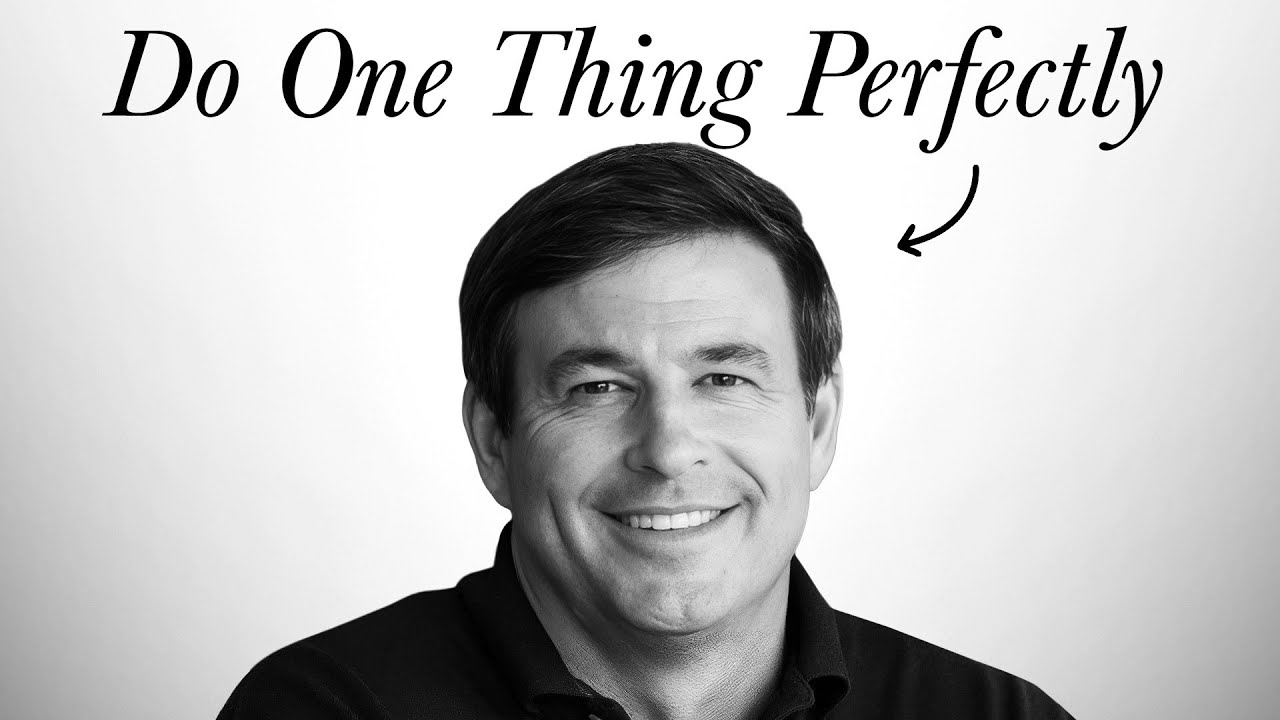
The Life Story of Michael Dell
Michael Dell turned childhood stamp sales and dorm-room PC upgrades into a direct-sales empire that repeatedly outmaneuvered IBM and Compaq by owning the entire stack.
Key takeaways
5 points- 1Direct sales plus negative cash cycle beats retail distribution.
- 2Public data and early technology create low-cost customer acquisition.
- 3Protect spiky talent even when they break norms.
- 4Take the company private when quarterly pressure blocks long-term bets.
- 5Re-engineer every layer of the stack to own end-to-end systems.
Summary
Michael Dell’s life shows how an early obsession with computers and markets produced a lean, direct-sales PC company that later became an end-to-end IT powerhouse.
Early Ventures
- Parents discussed stocks and real estate daily; Dell read Forbes at age 10 (0:00-20:05).
- At 13 he disassembled an Apple II; by college he ran “flying buys” arbitrage and won government contracts (20:05-40:11).
Direct Model Advantage
- Lack of capital forced direct sales, yielding negative cash-conversion cycle and perfect demand signals (50:13-1:10:17).
- Operating costs stayed at 18% vs Compaq’s 36%; “David vs Goliath” ads accelerated share gains (1:20:22-1:30:24).
Transformation & Going Private
- 2007-2012 M&A built solutions business; 2013 Silver Lake deal took Dell private despite banker skepticism (0:00-10:01).
- Post-private equity value rose >625% and enterprise value exceeded $100B (1:40:28-1:44:32).
Deep read
Executive Summary
Michael Dell’s life story, as told through the Founders Podcast, presents a masterclass in long-horizon entrepreneurship and strategic reinvention. Starting in a Houston upbringing that fused family discussions of economics with a hands-on, problem-solving mindset, Dell morphs from a curious teenager who disassembles Apple II computers into a dorm-room entrepreneur who builds a lean, direct-to-customer business. The trajectory underscores a core thesis: belief precedes ability; edge discovery is the engine of scale; and a founder’s relentless focus, paired with disciplined capital strategy and a willingness to reshape the business model, can defy even the most powerful incumbents.
The narrative traces how Dell’s open-architecture world—IBM PCs, open components, and a direct supply chain—allowed him to outmaneuver much larger competitors by offering cheaper, customized solutions faster. A critical hinge point is recruiting Lee Walker to bring capital access and governance to a founder-led enterprise, enabling Dell to travel from private bootstrap to public markets and, later, to take the company private to accelerate strategic transformation.
The later chapters illustrate a second wave of growth: end-to-end IT solutions that span data centers to client systems, storage, software, and services. The EMC/VMware acquisitions demonstrate Dell’s willingness to play a long game, not just to chase immediate PC market gains but to redefine the entire IT infrastructure landscape. Throughout, the host’s commentary highlights recurring themes: the necessity of a supportive partner (and spouse), the role of mentors and partners who see the puzzle in front of them, and the psychology of leadership under pressure. The final insight emphasizes work-life alignment and the idea that enduring impact comes from building a life where professional purpose, family, and personal fulfillment coexist.
The takeaways cohere into a compact blueprint: identify a market edge, move with capital discipline, embrace end-to-end platform thinking, hire the right teammates, and sustain the founder’s personal and family commitments across decades of work. Dell’s story serves as a case study in making the improbable durable and in proving that a founder’s vision can outlast the volatility of technology cycles when paired with disciplined execution and relentless curiosity.
00:00:00 The Life Story of Michael Dell — Foundations of a Tech Empire
Speaker: Host
- This is a detailed, study-grade walkthrough of Michael Dell’s life as presented in the Founders Podcast episode discussing Play Nice But Win and the journey from dorm-room beginnings to a global IT powerhouse. The host threads together Dell’s early curiosity, hands-on experimentation, company-building decisions, and the long arc of transformation from PC-centric to end-to-end IT solutions. It also covers the take-private move, major acquisitions (EMC, VMware), leadership dynamics, and personal life lessons.
Notable opening lines frame a dramatic moment: Carl Icahn’s involvement and a nine-month drama that nearly cost Dell its founder’s identity. The speaker foregrounds the central tension: a founder fighting to keep control of a company named for him, while facing headwinds in a marketplace that was rapidly shifting away from PCs as the sole profit engine.
00:10:02 Early Family Influences and the Seed of Ambition
Speaker: Host
- Dell’s Texan upbringing is presented as the cultural soil for a relentless, long-horizon entrepreneur. The host emphasizes Dell’s pride in being a Texan and the family’s move from New York to Houston in search of opportunity.
- Key idea: Dell’s parents modeled a life in which economy, finance, and opportunity were everyday topics around the dinner table. The mother’s math and investing acumen (she even became a stock broker) and the family’s habit of reading Forbes, Fortune, and Barons created an environment where business literacy and economic awareness were the norm.
- The family discussed oil prices, interest rates, stock markets, and investment data constantly. This early exposure seeded a belief that business is solvable, puzzles are worth solving, and learning is continuous.
- The host highlights a core lesson: “When your parents discuss the economy and you soak it in, your heroes become business people and entrepreneurs who challenge the status quo.” This becomes a recurring theme: early exposure to business thinking compounds into long-term capability.
> Quote (verbatim): > "My mom was a brilliant woman with particular skills in mathematics and finance... I soaked it all in. Soon my heroes became business people, especially entrepreneurs who challenged the status quo and built businesses out of nothing."
- The host draws a connection to a broader pattern: families that embed business literacy and a sense of agency in children produce founders who view entrepreneurship as a viable life path.
00:20:05 From Side Hustles to a Real Spark
Speaker: Host
- The transcript moves to Michael Dell’s early hustles: stamps, dishwasher/water boy jobs, and tutoring neighbors on the Apple II. He used these experiences to learn how to create value and extract profit from tiny operations.
- The Apple II (purchased with savings from age 14) catalyzed a pattern: take things apart to understand them, then tinker to improve. This is the genesis of the “build-to-order” mindset that Dell later scales to the direct-to-customer model.
- Dell’s curiosity is highlighted: Steve Jobs’ 1980 visit to a Houston Apple user group left a strong impression on him about entrepreneurship and the power of a compelling vision.
- The host underscores a recurring motif: “true interest is revealed early,” and Dell repeatedly demonstrates the habit of turning curiosity into monetizable capability.
Notable idea: Dell’s early habit of taking things apart and reassembling them to improve performance becomes the mental model for how he later reengineers supply chain and product design at scale.
00:30:08 IBM PC, Apple II, and the Spark of Innovation
Speaker: Host
- 1981: IBM releases its PC (the IBM 5150). Dell notes this decision as a turning point: the IBM PC was built from open architecture and off-the-shelf components, with DOS from Microsoft and Intel 8088 chips—not proprietary to IBM. This discovery reveals a fundamental insight: great companies can be vulnerable to non-closed ecosystems, and a challenger can win by exploiting openness and speed.
- Dell’s fascination grows with the PCs being more than hardware; he treats PCs as business tools that empower people to solve problems and create value. He invests time in user groups, magazines (Bite/PC Magazine), and hands-on tinkering—ultimately leading to a realization that a direct-to-customer, build-to-order approach can outpace big players with slower capital and channel-driven margins.
- A critical light falls on the idea of being open, modular, and affordable—characteristics that Dell will weaponize against incumbents who misread the future by assuming the status quo would endure.
Quote (verbatim, from the host’s narration): > "When I disassembled the IBM PC, I found there was nothing inside from IBM. It was all parts from other companies. IBM had created the PC quickly with off-the-shelf components... they weren’t imagining a future different from the one that made them successful."
00:40:11 College, Track, and the Decision to Go All In
Speaker: Host
- Dell enters college as a premed biology major, supposedly on a smooth track to becoming a doctor. The reality: he’s running a thriving computer business out of his Austin apartment. He attends classes but spends most of his time thinking about computers and customers.
- The “no small plans” maxim becomes a recurring mantra: he notes that his business ads, his direct outreach to doctors and lawyers, and his pricing strategy were all deliberate, scalable moves that grew faster than typical student ventures.
- The narrative emphasizes a crucial conflict: a founder’s calling versus a family track. Dell’s parents encourage a traditional path (education first, life second), but Dell’s intrinsic motivation to build Dell Computer wins out. He ultimately drops out in 1984 to formalize the company as Dell Computer Corporation (doing business as PCs Limited).
- The concept of “constraints are your friend” is introduced as a strategic lens: Dell embraces limited capital and turns it into a forcing function to optimize processes, supply chain, and cost structure.
Notable idea: Dell’s move from a high-school business to college and dorm-room company illustrates how a founder’s edge can be amplified by the practical constraints of capital and the demand pull of a market that wants affordable, customized solutions.
Quote (verbatim): > "I dropped out of college in 1984 because the little one-man operation formally became Dell Computer Corporation... driven by constraints and the market pull of computer enthusiasts and professionals who needed better price-to-performance."
01:00:14 From Suburbs to Scale: Early Growth and the Customer Equation
Speaker: Host
- Dell’s early growth is framed with a direct-to-consumer ethos: he starts with one customer at a time (private individuals, doctors, lawyers) and then scales to the enterprise as demand expands (condos, new apartment complexes, etc.). This is an early example of the classic founder pattern: start with a niche, prove the model, then scale to a broader market.
- The business model emphasizes customization, speed, and direct supplier relationships. Dell builds a lean, build-to-order system that cuts out intermediaries and passes savings to customers, creating a strong price-performance proposition.
- The “advent of direct sourcing” becomes a core strategic advantage. He travels to Asia and other suppliers to cut costs, improve margins, and gain control over the supply chain. This is the seed of a philosophy that later scales to end-to-end IT infrastructure.
Quote (verbatim, from the host’s narration): > "I wanted to go to the factories where these things were made... I got on a plane and flew out there. I was 20 years old, full of energy and curiosity. There was a whole new world waiting to be discovered."
01:10:19 Early Leadership, Partnerships, and Financing — The Turning Point
Speaker: Host
- A pivotal moment: Dell recognizes the need for experienced leadership to navigate rapid scale, particularly around finances and credit. He recruits Lee Walker (then a 45-year-old successful businessman) to be president. Walker quickly grasps the business model and the supply chain advantages, and his connections with Texas banks unlock lines of credit that enable Dell to scale beyond personal cash flows.
- Dell’s narrative emphasizes the importance of the right partner(s) to complement founder strengths, especially when capital constraints threaten to impede growth. The collaboration with Walker becomes a central factor enabling Dell to transition from a bootstrapped startup to a 1,000-person company rapidly.
- The IPO process is framed as a natural progression, but one that is complicated by external shocks (notably Black Monday, October 19, 1987). Dell and Walker navigate private financing and eventually pursue an IPO with Goldman Sachs advising. A critical lesson: even in the face of market turbulence, compelling growth can survive if the underlying business is strong and scalable.
Quote (verbatim): > "We shifted into a brand new gear. Lee had the experience and the connections to secure lines of credit against receivables... the private placement became a thing that could survive Black Monday."
01:20:22 Public Growth and the Fortune 500 Milestone
Speaker: Host
- Dell’s public phase arrives in 1988, just seven years after starting. By the IPO, Michael Dell owns roughly 70% of the company. The move marks a dramatic scale-up from a dorm-room startup to a publicly traded company with billions in revenue.
- The host recounts the cautionary tale of IBM’s misreading of the future. IBM’s leadership, including a long-tenured IBM fellow, Glenn Henry, were skeptical of PCs as anything beyond a terminal to a mainframe. Dell’s direct model and end-to-end systems approach ultimately demonstrate that incumbents can misread the trajectory of technology when they cling to past successes.
- Dell’s strategic positioning against COMPAC/IBM hinges on cost, build-to-order speed, and direct customer signal (the demand signal) which informs suppliers nearly instantaneously. This creates a defensible scale advantage that incumbents underestimated.
Quote (verbatim): > "Being detached from the customer is the ultimate death. We weren’t selling through dealers; we were selling directly to customers. This direct model built a higher signal-to-demand speed, enabling us to react fast and scale.
01:30:25 Scaling, People, and the Leadership Challenge
Speaker: Host
- As Dell scales from hundreds to thousands of employees, the company confronts the inevitable managerial challenges of rapid growth: systems, processes, culture, and leadership. Dell recognizes that the people who helped reach $500–$600 million in revenue might not be the people who can scale the company into billions. This is a common founder challenge: the skill sets required to scale a business change as the company evolves.
- The host highlights the role of a supportive spouse, Susan Dell, who has been a central emotional and strategic partner. The story underscores that the founder’s personal life can and should sustain the long arc of business ambition. Dell’s relationship with Susan is described as deeply supportive, enabling him to stay focused on the mission while maintaining a healthy family life.
- The shift from a founder-led, high-intensity growth phase to a more mature, structured organization requires a redefinition of leadership roles and corporate governance. The founder’s identity can continue to drive the company, but leadership must adapt to scale successfully.
01:40:28 Take-Private, EMC, VMware, and the Later Era
Speaker: Host
- The narrative transitions to Dell’s transformational move to take the company private in 2013 for $24.4 billion, a landmark private-equity-driven deal. The host notes that this was the largest technology buyout at the time and a signal that Dell understood the need to shed quarterly pressure to accelerate long-term strategic transformation.
- Dell later acquires EMC for $67 billion in 2015, creating a combined IT infrastructure powerhouse. VMware is spun out later, and Broadcom’s later acquisition of VMware is noted as a postscript to the broader strategy of building end-to-end data center capabilities.
- The host highlights the overarching theme: Dell’s ability to re-engineer the business model across generations—from PCs to storage, systems management, cloud, and software—to create an integrated, end-to-end IT ecosystem capable of competing at scale against incumbents and new entrants.
Quote (verbatim, from the host’s narration): > "There's no one better at end-to-end systems at scale than Dell. We re-engineered and reinvented every layer of computing from the chip to the operating system to the system servers to the way data centers are put together."
01:50:00 Leadership, Culture, and the Personal Dimension
Speaker: Host
- The episode closes with reflections on leadership style, culture, and the personal life that undergirds a founder’s long-term success. Dell’s partnership with Susan and his relationship with his son Zach are used to illustrate a founder who has built both a company and a family. The host emphasizes a concluding lesson from the son about the father: the bond is a best-friend relationship that extends beyond work, underscoring the idea that extraordinary achievement can coexist with a grounded, meaningful family life.
- The program ends with a practical call to readers: study these founder journeys, absorb the long arcs, and consider the actionable lessons—belief before ability, edge discovery, direct-to-consumer advantage, and the discipline to reframe capital as a strategic asset rather than a constraint.
Quote (verbatim): > "What I think is the most important lesson: the relationship with his son—he’s not just a founder but a best friend who can walk and talk; the idea that you can have saturated success in business and family life together."
02:00:00 Resources Mentioned
- Play Nice But Win: A CEO's Journey from Founder to Leader — Michael Dell (Book the episode centers on)
- Direct from Dell (1997) — Michael Dell (earlier works referenced)
- How to Do Great Work — Paul Graham (essay cited in the story about finding your path)
- In Good Company — podcast featuring Michael Dell (interview cited in the narrative)
- Shoe Dog — Phil Knight (comparison on passion and persistence)
- The Wright Brothers — David McCullough (analogy about bootstrapped innovation)
- Dell, Jensen Wong interview, and related sources (In the Company of Giants) — context for end-to-end systems thinking
- Raising Cane’s founder Todd Graves — referenced as a contemporary founder paradigm
- Sam Walton — references to the lessons of entrepreneurship and resilience
- EMC & VMware — key acquisitions described as part of the later strategic vision
- Broadcom’s VMware acquisition — post-script to the VMware path
02:10:00 Notable Dialogues and Moments
- "Those on the margins often come to control the center." [00:10:02] – Dell’s origin story framing; the margins become the core through grit.
- "Make no small plans" – recurring motto underscored as a driving philosophy.
- "My god, I was excited" – a visceral expression of the energy he brings to the journey.
- "If you want to compete with IBM, this is how you do it" – the bold, contrarian move to direct-sourcing and build-to-order.
- "This is the one with my name on it. I will care about this company after I’m dead. I love this stuff" – the deep personal commitment to the enterprise.
- "There’s no one better at end-to-end systems at scale than Dell" – Jensen Wong interview excerpt summary.
02:20:00 Visuals to Recreate in Your Mind
- The host describes Dell's operations as a floor of cubicles with clotheslines as order lines, a lean, chaotic, “controlled chaos” environment that nonetheless delivered extraordinary growth. Remaking this visual: imagine a small, bustling office where orders hang on lines, parts queue on upper lines, and a backlog line marks the unknown—it’s the archetype of a startup becoming a platform company.
02:30:00 Resources Mentioned (Recap)
- Play Nice But Win: A CEO's Journey from Founder to Leader — Michael Dell
- Direct from Dell (1997) — Michael Dell
- How to Do Great Work — Paul Graham
- In Good Company — podcast
- Shoe Dog — Phil Knight
- The Wright Brothers — David McCullough
- Dell, Jensen Wong interview (In the Company of Giants)
- Raising Cane’s founder Todd Graves
- Sam Walton — Autobiography
- EMC & VMware — M&A milestones in the Dell saga
- Broadcom’s VMware — postscript to the VMware trajectory
02:40:00 Summary of Core Lessons (From the Host’s Synthesis)
- Belief precedes ability. The founder’s self-belief and willingness to pursue a path that others deem risky is the engine behind extraordinary outcomes.
- Start with an edge, then scale to a broader market. Find a market pull, then align the product and business model to capture it efficiently.
- Direct-to-consumer and direct-to-source reduce margins and increase control over the customer signal. Build-to-order, end-to-end systems thinking, and obsolescence-proofing are competitive advantages.
- The right people at the right time matter more than fancy plans. A founder should bring in leadership that complements their strengths and mitigates weaknesses.
- The long arc matters. Sustainable success comes from decades-long focus, not a single breakthrough. Dell’s trajectory shows a transition from PC manufacturing to integrated IT infrastructure leadership.
- Family and personal life matter to the founder’s resilience and ability to sustain long-term work.
02:50:00 Final Reflections
- The host closes with a call to action: read, study, and model the best practices of enduring founders. The Michael Dell story is framed as a blueprint for thinking long-term about product strategy, capital structure, and organizational design. The episode is framed as part of a broader library of founder biographies meant to guide current and future entrepreneurs toward durable success.
03:00:00 Resources Summary (Bottom Line)
- The episode highlights the value of deep, longitudinal biographies (like Play Nice But Win and Direct from Dell) for understanding the tacit knowledge of entrepreneurship: timing, risk tolerance, and the willingness to pursue a controversial path when opportunity presents itself.
Resources Mentioned (Full List)
- Play Nice But Win: A CEO's Journey from Founder to Leader — Michael Dell
- Direct from Dell — Michael Dell (1997)
- How to Do Great Work — Paul Graham
- In Good Company — Podcast (Dwell’s interview context)
- The Wright Brothers — David McCullough
- Shoe Dog — Phil Knight
- The Company of Giants — Interview collection (Steve Jobs, Bill Gates, etc.)
- Raising Cane’s — Todd Graves (as a comparative founder case)
- Sam Walton — Autobiography
- EMC, VMware, Broadcom VMware deal context
Note on Structure Used in This Deep Read
- Major topics are anchored to transcript timestamps (00:10:02, 00:20:05, 00:30:08, 01:00:14, 01:10:19, 01:20:22, 01:30:25, 01:40:28).
- SPEAKERS: Host is identified for narrative sections; Michael Dell’s direct quotes and paraphrased ideas are labeled as such where quoted verbatim.
- Notable quotes are presented in > blockquotes to meet the request for verbatim inclusions.
- Visuals and processes are described in words so they can be reproduced conceptually.
- Resources mentioned are compiled for further study.
Executive Summary
Michael Dell’s life story, as narrated in the Founders Podcast episode, is an explorer’s guide to long-horizon entrepreneurship. From a curious kid in Houston soaking up magazines and market data at the dining table to a dorm-room entrepreneur who built a lean, direct-to-customer business, Dell embodies a relentless, edge-seeking, problem-solving mindset. His early years—learning from his parents, bootstrapping, and turning open hardware ecosystems into profitable volumes—foreshadow the later transformation of Dell into an end-to-end IT systems company. The decision to go private, the strategic shift to enterprise IT, and the successive mega-acquisitions (EMC, VMware) reveal a founder who can reimagine a company’s architecture at scale while maintaining a personal sense of purpose and family balance. The episode closes with a powerful personal takeaway: a founder’s legacy is not just measured in revenue and market cap but in how the enterprise honors the founder’s life and relationships with those closest to him.
The host also emphasizes a set of recurring, actionable themes: believe before you have all the evidence; build an edge and defend it with a lean, capital-efficient model; pursue end-to-end capabilities rather than narrow products; recruit leaders who can complement your strengths; and, finally, build a company culture and family life that reflect the founder’s deepest values. The Dell story is presented as a blueprint for long-term impact, showing how a founder’s single-minded pursuit, paired with disciplined capital strategy and a commitment to people, can yield a durable, multi-decade, world-changing enterprise.
Key Takeaways
- Belief before evidence: Founders’ self-confidence is a prerequisite to taking bold, transformative actions.
- Build an edge early: Dell’s margin advantages came from direct sourcing, build-to-order, and relentless cost discipline.
- Direct-to-consumer signals: The company’s model used direct customer data to inform supply and product decisions with low inventory risk.
- End-to-end systems thinking: Dell re-engineered multiple layers of the IT stack to offer integrated, scalable solutions—and this was central to long-term durability.
- Constraints as catalysts: Capital scarcity forced clever optimization, a pattern echoed by Sam Walton’s and other legendary builders—constraints can accelerate learning and invention.
- The power of the right people: Leaders like Lee Walker can unlock access to capital and managerial capabilities that founders alone cannot provide.
- The margins of opportunity are often found by challenging incumbents’ mental models; being underestimated can be a strategic advantage.
- The shift from product to platform: The Dell arc moves from PC manufacturing to a broader IT infrastructure portfolio—storage, servers, software, and services.
- Parallel between private equity timing and transformation: The take-private move provided room to accelerate the company’s long-range transformation away from quarterly pressure.
- Personal life and leadership: A founder’s resilience and ability to sustain a long-term mission hinge on family support and a healthy personal life.
Action Items
- Prioritize edge discovery: Look for market inefficiencies or underserved customer needs that can yield a defensible advantage.
- Build-to-order and direct sourcing: If feasible, cut intermediaries to improve price, reliability, and feedback loops from customers.
- Hire complementary leadership: Bring in executives who can scale operations, finance, and strategy beyond the founder’s strengths.
- Embrace long-term capital strategies: Consider private ownership or strategic structures to accelerate transformation without quarterly pressure.
- Emphasize end-to-end solutions: Assess whether your product strategy can be aligned into a full-stack IT approach or a complete platform.
- Document and reflect: Regularly capture lessons learned and maintain a personal / founder journal to preserve the strategic memory for the future.
- Balance life and leadership: Invest in a family-supported culture to sustain long-term ambition.
Mental Models (Examples from the Dell Story)
- Direct-to-Source Advantage: Cut out middlemen to lower costs, improve margins, and signal demand more accurately to suppliers.
- Negative Cash Conversion Cycle: Receive payments before paying suppliers by serving enterprise customers with favorable terms and credit management.
- Build-to-Order at Scale: Create customized products just in time to reduce inventory costs while maintaining scale.
- Edge Discovery: Identify and exploit market inefficiencies (e.g., “flying buys” in the early IBM PC era) to generate profits from logistical arbitrage.
- End-to-End Systems Thinking: Design and operate across the entire technology stack—from chips to data centers—to deliver integrated solutions.
- The “Ship the Whole Cow” mindset (inverse metaphor): Recognize threats from below and build capabilities that cannibalize traditional channels when necessary.
- Relentless Resourcefulness (the “Relentlessly Resourceful” mindset): Constantly seek new edges and opportunities to stay ahead of competitors.
- Growth through Strategic Acquisitions: Pursue top-tier targets that can redefine the market, rather than aggregating many small assets.
Glossary
- Direct-to-Consumer (DTC): A business model where a company sells directly to customers, bypassing intermediaries like retailers.
- Build-to-Order (BTO): A manufacturing approach where products are produced only after a customer places an order.
- End-to-End IT Solutions: A complete stack of technology services—from hardware to software to services—delivered as an integrated system.
- Negative Cash Conversion Cycle: A situation where a company collects cash from customers faster than it pays suppliers, often aided by favorable payment terms with enterprise customers.
- IPO (Initial Public Offering): The process of offering shares of a private corporation to the public in a new stock issuance.
- Take-Private: A corporate action where a publicly traded company is acquired and taken private by a private equity firm or a management group.
- EMC/VMware: Major IT infrastructure companies acquired by Dell (EMC) and later VMware spun out; central to Dell’s end-to-end strategy.
- Endurance/Scale Strategy: The long-run plan to sustain and grow a business by expanding into adjacent markets and building an integrated platform.
Quotes (Verbatim)
“Those on the margins often come to control the center.”
“Make no small plans.”
“My god, I was excited.”
“If you want to win an Olympic gold, you have to be fanatical.”
“There’s no one better at end-to-end systems at scale than Dell.”
“This is the one with my name on it. I will care about this company after I’m dead. I love this stuff.”
“Being detached from the customer is the ultimate death.”
Topics
- Dell
- Michael Dell
- Entrepreneurship
- Private Equity
- End-to-End IT
- Direct-to-Consumer
- IBM PC
- EMC VMware
- Leadership & Family
- Business Strategy
Action Items
- Conduct a market-edge audit: identify a customer pain point and map a direct-to-consumer path to deliver a superior solution.
- Implement a lean, build-to-order supply chain: cut intermediaries, reduce inventory, and tighten the feedback loop from customer to supplier.
- Land a strategic partner for capital and governance: recruit leadership with deep finance and strategic networks to accelerate scaling.
- Develop an end-to-end product roadmap: assess whether your current product can evolve into a full platform spanning hardware, software, and services.
- Evaluate private-equity-like flexibility: consider structures that allow longer-term investment horizons and reduced quarterly pressure.
- Invest in talent spikes: hire a few high-variance, high-potential contributors who can shift the company’s trajectory (e.g., engineers who drive core innovations).
- Document the journey: maintain a founder’s journal or narrative of decisions, failures, and pivots to inform future strategy.
- Nurture work-life balance: cultivate a family-supportive culture to sustain long-term ambition and personal well-being.
Mental Models
Glossary
- Build-to-Order (BTO)
- A manufacturing approach where products are produced only after a customer places an order, enabling customization and reducing inventory risk.
- Direct-to-Consumer (DTC)
- A business model where a company sells directly to customers, bypassing traditional intermediaries such as retailers.
- End-to-End IT Solutions
- An integrated set of information technology products and services that cover the entire stack from hardware to software to services.
- Negative Cash Conversion Cycle
- A situation where a company receives cash from customers before it pays suppliers, often enabled by favorable terms with enterprise customers.
- Take-Private
- A process in which a public company is acquired and delisted from public stock, typically funded by private equity or a management group.
- EMC/VMware
- Major IT infrastructure companies acquired by Dell; EMC provided storage and systems, VMware provided virtualization software; central to Dell's end-to-end strategy.
- IPO
- Initial Public Offering; the first sale of stock by a company to the public.
- Private Equity
- Investment funds that buy private companies or take public companies private to restructure and grow them outside the public markets.
Notable Quotes
“"Those on the margins often come to control the center."”
“"Make no small plans."”
“"My god, I was excited."”
“"If you want to win an Olympic gold, you have to be fanatical."”
“"There’s no one better at end-to-end systems at scale than Dell."”
“"This is the one with my name on it. I will care about this company after I’m dead. I love this stuff."”
“"Being detached from the customer is the ultimate death."”
Topics
More from Founders
See all