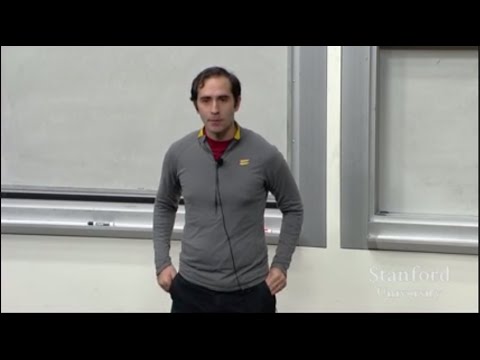
Lecture 14 - How to Operate (Keith Rabois)
Keith Rabois teaches leaders to operate startups like high-performance machines by editing relentlessly, delegating via conviction matrices, empowering barrels, and obsessing over every detail.
Key takeaways
7 points- 1Edit the company like a film: cut everything that does not drive progress.
- 2Delegate low-conviction, low-consequence decisions completely.
- 3Identify and promote barrels who ship end-to-end; maintain 1:10-20 ratio with ammunition.
- 4Attack only A+ problems; ignore solvable B+ problems.
- 5Build a dashboard employees use daily and share board materials openly.
- 6Obsess over non-user-facing details to set culture and remove friction.
- 7Audit your calendar weekly against stated priorities.
Summary
Keith Rabois shows how to turn a messy early-stage company into an autonomous high-performance machine through disciplined editing, adaptive delegation, and detail obsession.
Editing the Organization
- Treat leadership as editing: cut noise, maximize output, and measure only progress (0:00-10:01).
- Triage problems ruthlessly, fixing fatal issues while ignoring minor colds; embrace early messiness.
Delegation and Task-Relevant Maturity
- Adapt management style to each employee's maturity; use the conviction-consequence matrix to decide what to delegate fully (9:59-20:01).
- Fully hand off low-conviction, low-consequence tasks so people learn from mistakes.
Barrels Over Ammunition
- Hire and promote barrels who drive ideas from conception to shipped product; ammunition alone creates bottlenecks (19:58-46:41).
- Target roughly 1 barrel per 10-20 engineers to maintain velocity.
Focus, Transparency, and Details
- Solve only A+ problems; build a daily-used dashboard and share board notes for radical transparency (19:58-30:01).
- Obsess over unseen details like circuit boards and office food to set culture; lead by example with extreme effort (29:58-40:00).
Deep read
Executive Summary
Keith Rabois’s Lecture 14, How to Operate, is a dense masterclass on turning product success into organizational performance. The core thesis is that building a company is harder than building a product because people are irrational; the leader’s job is to maximize output by shaping an engine that runs with minimal micromanagement. He offers a practical operating framework built around an editorial mindset: simplify aggressively, ask clarifying questions, allocate resources decisively, maintain a consistent voice, and delegate using task-relevant maturity. The talk introduces the barrels-vs-ammunition model for team design, the dashboard for scalable decision-making, and the following pillars: transparency, metrics with pairing indicators, and meticulous attention to details that shape culture and productivity. Across this, Rabois emphasizes effort, leadership by example, and a one-focus discipline (A+ problems) to unlock breakthrough progress. The talk also weaves in a rich set of real-world anecdotes (Square, PayPal, LinkedIn, Apple, Next) and canonical references (Andy Grove, Peter Thiel, Bill Walsh) to ground abstract ideas in practice. The overarching message is practical: build a simple operating system for your company, and relentlessly compress complexity so teams can execute and innovate at scale.
00:00:00 Major Topic — How to Operate (Keith Rabois)
00:00:00 Speaker: Keith Rabois
- In this opening segment, Keith frames operating as the discipline of building a company rather than a product. He frames the problem: having a great product and some customers is not enough; you must forge a company comprised of people who are often irrational, and that is the core challenge of operating. The metaphor is stark: a company is an engine; on a whiteboard it looks elegant, but in practice it looks like duct tape and heroic effort, because there’s real friction (people, constraints, misaligned incentives). He emphasizes the need to transform from a messy early phase to a high-performance machine so reliable that even “idiots can run” it eventually. ⭐ HIGH PRIORITY
"forging a company is basically taking all the irrational people you know putting them in one building and then living with them 12 hours a day at least".
- The core job of leadership, per Andy Grove, is to maximize the output of the organization—focusing on the performance of the whole system (the product, marketing, etc.) rather than just inputs or activities. Keith emphasizes the distinction between output (results) vs. input (effort, hours, busywork). This reframing guides how you evaluate people and initiatives.
- He pivots to a practical stance on management: you should care about what gets produced (the engine’s output), not how many emails you sent or meetings you held. The day-to-day reality will feel chaotic, and that’s expected in the early stages. The idea is triage: some problems are cold (will go away), some are fatal if not diagnosed early. The goal is to equip you with frameworks to tell the difference. ⭐ HIGH PRIORITY
- He introduces the metaphor of editing as your core operating model: you are an editor who simplifies, clarifies, and streamlines. The editor’s job is to reduce noise, focus on one to three priorities, and give a repeatable framework that others can reuse. The emphasis on simplification is portrayed as the path to high performance: “the most important task of an editor is to simplify, simplify, simplify.”
- The talk promises practical tools: when you present an initiative, you must elicit clarifying questions, and you must elicit the “why” behind decisions. You should be relentless about cutting complexity, but not at the expense of discovering the right answer. Editing also entails delegating, but without abdication; you remain ultimately responsible for outcomes.
- He previews a set of concrete techniques: how to allocate resources; how to maintain a consistent company voice; how to delegate effectively using task-relevant maturity; how to identify “barrels” (stellar, scalable contributors) vs “ammunition” (temporary or less scalable contributors); and how to scale decision-making through dashboards and transparent metrics. ⭐ HIGH PRIORITY
"Editors do the writing, but the editor’s job is not to write everything; it’s to edit, simplify, and maintain a consistent voice across the entire organization."
- He closes this opening segment with the thesis that you should aim for a high-performance machine where people can run it with minimal day-to-day intervention from you as the founder, and you should build toward that over time. He also foreshadows the next sections: editing, delegating, scaling, dashboards, transparency, metrics, and details.
00:04:00 Major Topic — The Leader’s Real Job: Output Maximization
01:00:00 Subtopic — Andy Grove’s Definition
- The core concept is a repeatable leadership mandate: maximize the output of your organization. Keith emphasizes that even when you are in a VP role, you are responsible for your organization’s performance, including cross-functional influence (e.g., product, marketing). The emphasis is on output, not just activity or inputs.
- The practical corollary is to focus on outcomes and to treat the organization as a system whose performance you must optimize.
- The talk emphasizes that the work of a leader includes small, mundane tasks (like how to answer the phone) because those tasks shape the entire organization’s behavior and efficiency. This is not glamorous, but it’s essential for building a high-performing machine.
"your job is to maximize the output of an organization your organization that you're responsible for" (paraphrased from the talk, referencing Andy Grove)
01:50:00 Subtopic — Output vs Input, and the Editor Mindset
- Keith repeats the central distinction: measure progress (output) not just motion (inputs). He warns against conflating activity with progress.
- He notes the paradox: leadership seems glamorous, but often the day-to-day work is about operational hygiene: enabling others, streamlining processes, training receptionists, etc. The point is that the system should be designed so that high performance emerges with minimal constant supervision.
00:08:00 Major Topic — The Editor Metaphor in Depth
02:00:00 Subtopic — The Red Ink and Simplification
- The editor’s first action is to strike things out and simplify. The best editors remove what is not essential, preserving only one, two, or three critical initiatives.
- You must train your team to think in terms of simplification; your people can’t handle a thousand initiatives, so you need a repeatable framework that can be communicated and implemented by others.
- The rule against complexity: don’t accept complexity as a given. Even a simple concept (a 140-character description of your universe) should be possible for a founder to articulate, so it should be possible for a team to internalize and execute.
"The most important task of an editor is to simplify, simplify, simplify—and that usually means omitting things."
02:40:00 Subtopic — Clarifying Questions and Decision Framing
- An editor asks clarifying questions around ambiguity: what do you really mean? Which initiative matters most? Is there a competitive advantage? The goal is to reduce the constellation of data to the one or two levers that actually move the metric.
- In practice, he describes how investors try to narrow due diligence to the handful of things that matter, enabling faster and clearer decision-making.
03:40:00 Subtopic — Allocate Resources and Voice Consistency
- Allocation can be top-down (re-allocating editors to new beats) or bottom-up (teams proposing initiatives). The aim is to ensure every piece of output has a consistent voice across the company. This is difficult but essential to brand and cohesion.
- You start with a founder’s voice, then train others to reflect the same voice across the website, PR, packaging, and internal comms.
- The example that Apple struggled with consistent internal voice despite its legendary product discipline is used to illustrate that even great organizations don’t achieve 100% consistency. The target is to minimize mismatch rather than eliminate it entirely.
04:40:00 Subtopic — Delegating Without Abdicating
- The editor metaphor continues: you delegate, but you stay responsible for everything. The tension here is a common trap: over-delegation or micromanagement both hurt.
- Techniques to solve this: task-relevant maturity (based on whether the person has done the task before). The more someone has done it, the more you can delegate; the less they have, the more you should instruct and monitor.
- The concept implies variable management style: different people may require different degrees of oversight even within the same organization.
- A practical example is given of a product marketing initiative at Square (the “inner Square” program). It’s used to illustrate letting a junior employee run a project to learn and eventually take on larger responsibilities.
"Task relevant maturity is basically how mature is this person in doing something." (paraphrase of the talk)
05:45:00 Subtopic — Decision Fidelity: The 2x2 Matrix for Delegation
- He introduces a two-by-two framework to decide what to delegate: outcomes and consequences vs. personal conviction. The idea is to categorize decisions by high/low consequences and high/low confidence; delegate when consequences are low and you are unsure; keep control when consequences are high and you’re confident.
- The goal is to maintain speed and decisiveness by letting capable juniors experiment within safe guardrails, while preserving control over critical decisions.
00:12:00 Major Topic — Building and Managing the Team: Barrels vs. Ammunition
03:00:00 Subtopic — Barrel-Ammo Metaphor
- Keith emphasizes that growth in velocity comes from increasing the number of barrels (people who can take an idea from conception through shipping and rally others) rather than merely adding more ammunition (individuals who contribute but don’t scale impact). Barrels are scarce and culturally specialized; ammunition can be abundant but less leverage.
- You want to promote and reward barrels aggressively because they are rare and drive systemic velocity. The process of identifying barrels includes giving people increasing scope and watching for who takes ownership of cross-team work and drives initiatives forward.
- A small, concrete example given: ordering smoothies for late-night engineers as a simple, concrete way to reward consistent on-time delivery, then expanding the scope of responsibilities for the successful teammate who executed the initial task.
"Barrels are incredibly difficult to find but when you have them give them lots of equity, promote them, take them to dinner every week because they’re virtually irreplaceable."
03:58:00 Subtopic — Growth, Roles, and the Learning Curve
- The company’s growth trajectory (linear vs exponential) affects when to promote or reassign people. If the company is growing rapidly, you can push people into bigger scopes even if their growth looks fast; if not, you need to tread more carefully.
- You should constantly compare an individual’s learning curve with the company’s growth rate: if the company is accelerating, you can stretch people more; if the company’s growth is slow, you should be cautious about expanding someone’s role.
05:40:00 Subtopic — One Focus Principle (Single-Docus Focus) and A+ Problems
- Inspired by Peter Thiel’s PayPal approach and PayPal’s emphasis on solving A+ problems, Keith suggests that individuals should focus on a single core problem at a time to maximize impact. The point is that most teams naturally tackle B+ problems because A+ issues are hard and resources are scarce, leading to mediocre progress across the board.
- The gist: fix one thing completely; allow others to tackle their own A+ problems; this discipline accelerates the company’s ability to ship breakthrough ideas, rather than always chasing incremental improvements.
00:19:00 Major Topic — Creating Scalable Decision-Making: Dashboards and Transparency
07:00:00 Subtopic — The Dashboard as a Decision Tool
- Keith introduces building a dashboard as a core scaling technique. The founder should sketch the simplified value proposition and key inputs on a whiteboard, then someone builds a dashboard that is intuitive for every employee (including customer support) to use.
- The measure of success for the dashboard is adoption: the fraction of employees using it daily should approach 100% if it’s truly useful.
- The dashboard turns metrics into actionable operating intelligence, enabling people to make decisions at a scale comparable to the founder’s own decisions.
07:40:00 Subtopic — Transparency Across the Organization
- The talk emphasizes transparency as a cultural practice. Practices include: sharing board decks after board meetings (with sensitive compensation data stripped if needed); creating meeting notes for all significant gatherings and distributing them to the entire company; and using glass-walled offices to reveal who’s meeting with whom.
- The goal is to minimize mystery and reduce rumors; transparency helps align the team and fosters trust.
- He notes that some transparency experiments (like full email visibility or compensation transparency) are debated, and he personally sees value in greater transparency, including the possibility of broader reforms over time. ⭐ HIGH PRIORITY
08:40:00 Subtopic — Metrics and Pairing Indicators
- He stresses measuring outputs, not inputs. A critical technique is pairing metrics: always measure a secondary indicator that guards against optimizing a single metric in isolation (e.g., fraud rate vs false positives; recruiting quantity vs quality of hires).
- The purpose of pairing metrics is to prevent gaming or unintended consequences and to ensure a more holistic picture of performance.
- He provides examples: reducing fraud alone may degrade customer experience if you over-scrutinize; measuring false positives helps balance risk with usability.
09:50:00 Subtopic — Anomalies and Insightful Data Exploration
- Anomalies can reveal real opportunities or hidden needs. He cites PayPal’s discovery of eBay power sellers prompting PayPal integration as an example of looking for anomalies rather than following the obvious path.
- Similarly, LinkedIn’s homepage click data (20–30% of clicks going to one’s own profile) revealed vanity behavior—people looking at themselves—providing a surprising insight that informed feature direction.
10:50:00 Subtopic — Details Matter: The Score Takes Care of Itself
- He references Bill Walsh’s book The Score Takes Care of Itself, arguing that getting all the details right is the path to extraordinary performance. The idea is that excellence in the smallest details—who answers the phone, how the office operates, food quality, office environment—cascades into high organizational performance.
- He uses a football analogy: a receptionist’s phone script and the confidentiality of the field's details can affect the broader team’s execution and spirit.
- He also cites Steve Jobs’ emphasis on extreme internal design discipline (e.g., Next’s attempt at transparent compensation as a test case), arguing that detail-oriented culture shapes decision-making at every level.
"If you get all the details right, you don’t worry about how to build a billion-dollar business; that’s a byproduct of getting the details right every day."
11:20:00 Subtopic — Office Environment and Culture
- The office environment is not trivial: it signals culture, affects decision-making, and supports or hinder collaboration. He emphasizes personal involvement in shaping the office (not delegating off to an office manager; you must experience the space and the rituals).
- He argues that the office setting is a determinative factor in recruiting and team performance; a thoughtfully designed space can catalyze disciplined behavior and serendipitous collaboration.
00:26:00 Major Topic — Compensation Transparency and Practical Tactics
12:40:00 Subtopic — How to Implement Compensation Transparency
- The audience asks: how would you implement transparent compensation? Keith suggests a banded approach: workers are grouped by experience or role, with clearly defined bands (e.g., a low band and a high band). In Next’s era, a simple version was used: a wide band with a few tiers that determined compensation, to avoid “vanity” concerns and still maintain clarity.
- The approach is a way to reduce anxiety and social friction around pay while sustaining fairness and performance incentives.
13:00:00 Subtopic — Other Details Beyond Food
- He lists additional details that materially affect performance: the quality of laptops, monitors, and hardware; the quality of coffee or food; the general office equipment. These may seem mundane, but they reduce friction and enhance productivity. The underlying principle is to provide the best possible tools and environment to maximize daily value creation.
00:29:58 Major Topic — Details and the Founder’s Example
14:20:00 Subtopic — The Score Takes Care of Itself (Revisited)
- The score takes care of itself is used again to emphasize that focusing on all the tiny details yields a superior product and organization over time; you then get exponential results from disciplined execution.
14:45:00 Subtopic — The Mac and Hardware Discipline
- Steve Jobs’ Next era and the Mac’s tight hardware discipline illustrate the depth of detail required; even when something is not user-facing, it matters. If you can’t open the Mac, that level of detail reveals itself as a standard of execution in the team.
00:34:00 Major Topic — Managing People: Cadence, One-on-One, and Growth
15:20:00 Subtopic — One-on-Ones: Cadence and Structure
- The canonical advice is to hold one-on-ones roughly every two weeks, with a recommended maximum of seven direct reports per manager. The one-on-one should be employee-led; the employee should bring topics and goals to discuss. The cadence balance allows meaningful coaching while still enabling other work.
15:50:00 Subtopic — Transitioning to Managers: A Guide for New Leaders
- Keith discusses how to transition from individual contributor to manager. He suggests using a calendar audit to assess how a leader’s time is allocated versus stated priorities. He notes that in practice, recruiting often consumes more time than people expect, and you need to realign priorities to the actual calendar.
00:37:00 Major Topic — Hiring Pace and Organizational Health
16:30:00 Subtopic — When to Hire Above vs Hire for Ammunition
- You’ll always hire ammunition more than barrels; you must maintain the right balance. If you only have one barrel and dozens or hundreds of engineers, you’ll bottleneck progress because all decisions land on that single person. A healthy ratio of barrels to ammunition is essential for sustainable velocity.
- The rule of thumb given: engineers scale better with barrels; a rough ratio of 1 barrel per 10–20 engineers is a starting intuition, with adjustments by discipline (engineering, design, product).
17:50:00 Subtopic — Performance-Based Promotion and Street Cred
- Street credibility for managers arises from exceptional performance in their domain. The path to leadership is through exceptional execution in a discipline, not merely through people skills. The organization often promotes those who demonstrate the ability to achieve results in a given area; broader management skills can be learned later.
00:39:58 Major Topic — Interaction with Portfolio Companies and Personal Role
17:50:00 Subtopic — Venture Capitalist’s Cadence with Founders
- Keith explains how often he engages with portfolio companies: typically every two weeks in board contexts; more frequently in critical inflection moments; ad hoc as necessary. He notes that today, communication often happens via text or even SnapChat, reflecting a changing communication era.
- The cadence is purposefully anchored in substantive coaching rather than micromanagement; he positions himself as a counselor who asks questions and helps founders maneuver.
18:50:00 Subtopic — Balancing Recruiting vs Product Focus as a CEO
- He discusses how CEOs should balance priorities, using the calendar as a visible measure of where time goes. He suggests doing a calendar audit to compare stated priorities with actual time allocation, and adjusting accordingly. If recruiting is truly a priority, it should dominate planned time; otherwise, adjust.
00:43:00 Major Topic — Summary and Final Reflections
18:50:00 Subtopic — The Core Takeaways and the Attitude of Effort
- Keith closes by emphasizing that operating a startup requires enormous effort and personal example. He reiterates that the method is about tackling the hard problems with disciplined focus, standardizing practices, and maintaining a culture that internalizes a single voice and a consistent level of excellence.
- He ends with a practical invitation to apply the frameworks (editing, barrels vs ammunition, dashboards, transparency, and one-on-one cadence) and to start with small wins (e.g., the smoothie program) and scale from there.
00:46:00 Major Topic — Q&A (Selected Highlights)
19:01:00 Subtopic — Compensation Transparency Question
- A Q&A exchange asks how to implement compensation transparency. Keith suggests bands by experience or role, with a straightforward two-band system (low vs high) and a simple, inflation-adjusted interpretation for today.
- He notes that this is a pragmatic approach to reduce information asymmetry while preserving clear compensation structures.
20:02:00 Subtopic — Other Details That Matter Beyond Food
- In response to follow-up questions, he lists other practical details (laptops, monitors, hardware) as example levers for improving productivity; a founder should ruthlessly optimize these details to reduce friction and enable people to perform at their best.
21:00:00 Subtopic — Office Space Strategy
- He reiterates the importance of the founder personally shaping the office environment to reflect and reinforce culture; it’s not something to delegate away because it sends signals about the company’s priorities and standards.
22:00:00 Subtopic — Final Thoughts on Effort and Leadership
- He encourages focusing on effort and leading by example, emphasizing that the entire company’s energy will mirror the founder’s intensity and the disciplined execution of the operating framework.
00:55:00 Resources Mentioned
- Andy Grove, High Output Management (book) — framework for maximizing organizational output and the “editing” lens for management.
- Peter Thiel — emphasis on focusing on a few key initiatives (A+ problems) and building a culture of deep focus.
- Bill Walsh, The Score Takes Care of Itself — details matter, discipline in daily tasks and culture.
- Warren Buffett — the quote about building a company that idiots can run, implying a durable, simple operating model.
- The Economist — reference to a consistent voice across publications (and by analogy, a company).
- Steve Jobs and Next — early experiments with transparency and discipline; the Mac’s design discipline.
- PayPal, LinkedIn, Square — company-specific anecdotes illustrating the editorial discipline, dashboards, and metrics in practice.
- The Mac — example of deep detail discipline in hardware.
- The concept of “inner Square” — an initiative to empower a junior employee at Square.
- Glass-walled conference rooms — a visual and cultural detail to enhance transparency.
00:58:00 Notable Final Takeaways
- The core framework of operating a company is an editor’s mindset: simplify, clarify, and maintain a consistent voice. This discipline enables scalable decision-making and a sustainable, high-performance culture.
- Build a dashboard as your operating system for the entire company; measure outputs; pair metrics to avoid distortions; and maintain radical transparency where appropriate to align incentives and reduce confusion.
- Focus on one primary problem at a time (A+ problems) to maximize impact; preserve space for individuals who can scale ideas and become leaders (barrels) while ensuring they have the resources to succeed.
"The job of an editor is to simplify every initiative, every product, every marketing effort—so the organization can run as a high-performing machine." (paraphrase from the lecture)
SPEAKER: Keith Rabois
Resources Mentioned (for quick reference)
- Andy Grove, High Output Management
- Peter Thiel
- Bill Walsh, The Score Takes Care of Itself
- Warren Buffett
- Steve Jobs / Next / Mac
- The Economist
- PayPal, LinkedIn, Square case studies
- The Mac hardware discipline
Final note on structure
- The notes above preserve the thread of Keith’s argument: operating is about turning chaos into a disciplined, simple, high-output engine. The recurring motifs are: editing, barrels vs ammunition, dashboards, transparency, pairing metrics, and relentless attention to details that scale culture and performance.
Action Items
- Draft a one-page, 1–3 priority framework for the company (editorial brief) and communicate it to all teams.
- Create a simple dashboard that tracks core outputs; ensure 100% daily usage or close.
- Identify potential barrels: give them an increasing scope and watch for ownership and cross-team impact; promote aggressively when they demonstrate scale.
- Implement task-relevant maturity assessments for direct reports and tailor delegation accordingly.
- Institute a two-week cadence of one-on-one meetings; prepare a joint agenda (employee-led) before each session.
- Plan a calendar audit for yourself/leadership to map priorities to actual time; realign resources accordingly.
- Launch a transparency initiative: publish meeting notes and board notes to the broader company; introduce glass-walled conference spaces if possible.
- Define compensation bands by role/experience; communicate the bands and apply them consistently.
- Audit office tools and environment (laptops, monitors, seating, food) to remove friction and boost productivity.
- Adopt the pairing metrics mindset for at least two critical areas (e.g., risk/fraud and hiring quality).
- Develop a ‘single problem’ policy—limit teams to aggressively pursue one A+ problem at a time for a defined period (e.g., 90 days).
- When hiring, intentionally balance barrels and ammunition; set a target ratio and review quarterly.
Mental Models
Glossary
- Editing
- A leadership approach that focuses on simplifying, clarifying, and standardizing initiatives so teams can execute with a coherent, repeatable framework.
- Red Ink
- The amount of editing (elimination of elements) required in communications or plans to focus and clarify.
- A+ Problems
- The highest-impact problems that, if solved, would dramatically improve the company. These are hard to solve and require deep focus.
- Task-Relevant Maturity
- A measure of how well an employee has performed a specific task in the past, used to decide how much you should delegate versus instruct.
- Barrels vs. Ammunition
- A metaphor for team design: barrels are capable, end-to-end contributors who drive initiatives; ammunition are contributors who contribute but don’t scale impact.
- Dashboard
- A centralized, intuitive interface that condenses critical metrics and inputs to guide daily decision-making across the company.
- Pairing Metrics
- Using at least two metrics together to avoid over-optimizing a single KPI and to reveal true performance signals.
- Voice Consistency
- Maintaining a uniform tone and style across all company communications and materials to present a coherent brand and culture.
Notable Quotes
“forging a company is basically taking all the irrational people you know putting them in one building and then living with them 12 hours a day at least so it's very challenging”
“the job of leadership is to maximize the output of an organization”
“the most important task of an editor is to simplify simplify simplify”
“you can change the world in 140 characters you can build the most important companies in history in a very simple to describe concept”
“build a company that idiots can run because eventually they will”
“the job of an editor is to ensure a consistent voice”
“task relevant maturity”
“where there's low consequences and you have very low confidence in your own opinion you should absolutely delegate”
“the dashboard needs to be as intuitive as your product is for users”
“pairing metrics or pairing indicators”
“the score takes care of itself”
“details matter”
“one-on-ones roughly every two weeks”
“glass walls in conference rooms”
“you should have your board decks and as you get more formal the board decks will get more complicated and actually review every single slide with every single employee after the board meeting”
Topics
More from How to Start a Startup (YC)
See all