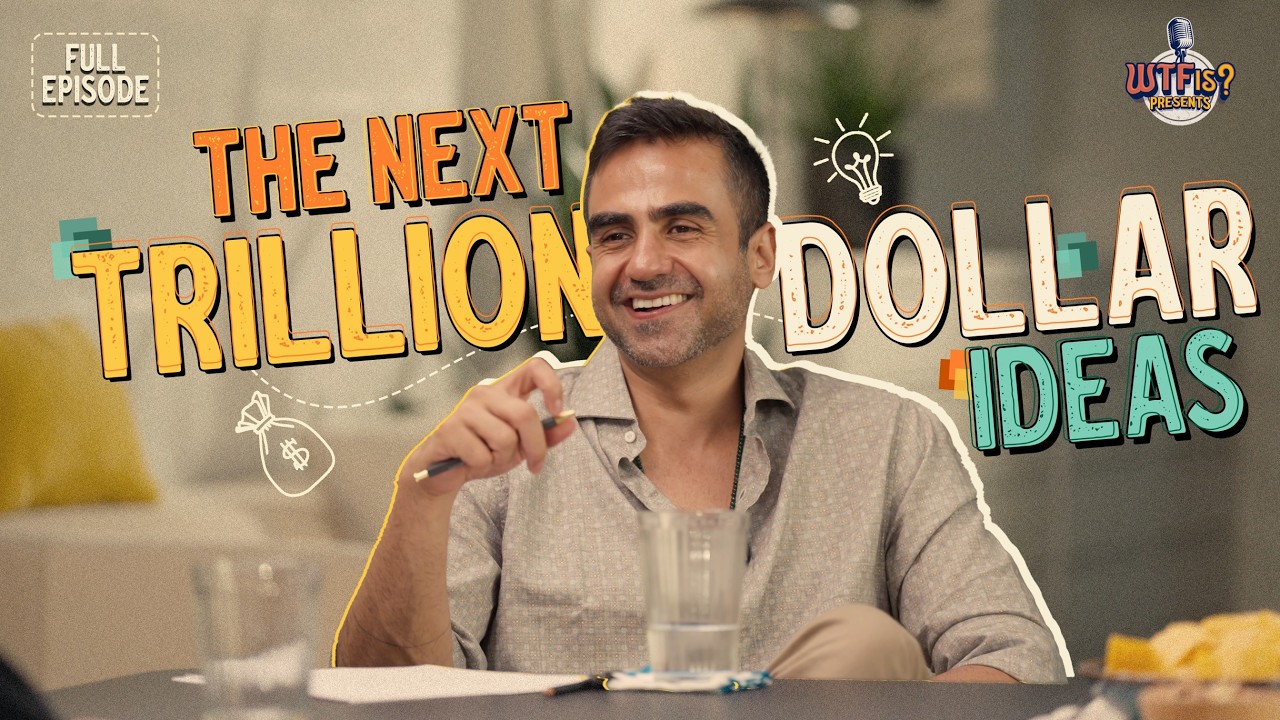
Ep #18 | WTF, Alcohol is a $70B Business in India? | Nikhil Kamath explores Gaps & Opportunities
India's $70B liquor market hides gaps in premium Indian spirits, bars, and distribution that reward authentic heritage brands and smart operators.
Key takeaways
5 points- 1Premium Indian-origin spirits with authentic stories outperform imported copies.
- 2Bartender advocacy and depletion beat traditional advertising for new brands.
- 3State-by-state regulatory navigation and 70-80% gross margins are survival requirements.
- 4Bourbon, aged rum, and ethnic spirits using local botanicals remain wide-open categories.
- 5Bars represent a virgin high-margin channel still underserved by operators.
Summary
Nikhil Kamath hosts industry veterans who map the realities of India's alcohol business from bar ownership to national brand building.
Core Journeys
- Minakshi moved from college bartending to co-founding Sidecar, India's top bar for three years (10:03-20:06).
- Suraj learned FMCG-scale operations at Kingfisher and Pernod Ricard before launching Goa Brewing (20:08-30:09).
- Abhishek turned around family distillery Radico Khaitan with Magic Moments and Rampur Single Malt (40:14-1:00:19).
Market Realities
- Hard liquor dominates via 180 ml nips; beer lags despite similar climate to Vietnam (1:00:21-1:10:24).
- Each state imposes unique taxes, labels, and listing fees, forcing "think global, act local" strategies (2:00:40-2:10:42).
Opportunities
- Premium Indian whiskeys, bourbons, rums, and ethnic spirits using local ingredients command 70-80% gross margins (1:30:32-1:40:34).
- Bars remain a virgin growth channel; bartenders drive depletion more than ads (1:50:38-2:00:40).
Deep read
Executive Summary
This session with Nikhil Kamath and a panel of the Indian alcohol industry insiders offers an expansive, ground-floor view of how to build a meaningful, locally rooted, globally relevant alcohol business in India. The key threads are: (1) the market is large, highly fragmented, and heavily state-regulated, which makes boots-on-the-ground, asset-light strategies (co-packers, distributors, on-premise activations) essential; (2) authentic storytelling and premium positioning are critical levers for growth, especially in beer, gin, vodka, and premium whiskeys; (3) the path to scale is slow and capital-intensive, requiring patient capital and a clear plan for primary/secondary/tertiary distribution; (4) Indian heritage brands can carve out a global space if they pair local, artisanal production with international packaging and pricing strategies; (5) practical steps for a new founder include: observe consumer behavior in supermarkets and bars, engage co-packers/consultants early, register state licenses, build a core set of bars/retailers to deplete inventory, and cultivate a long-term brand story that resonates locally but travels globally. The conversation blends personal journeys (Minaki, Yangdup, Riyaz, Abishek) with actionable market intelligence (the premiumization arc, role of country liquor, IPA-curious craft-beer trend, and the value of local manufacturing vs. outsourcing). The overall takeaway is clear: in India’s evolving alcohol ecosystem, success hinges on disciplined product development, deeply understood distribution, authentic storytelling, and patient capital willing to back a long-term, brand-first strategy rather than quick-market grabbing tactics.
00:00: Intro and Panelists
Speaker: Nikhil Kamath
- The host sets the stage: the goal of the session is to show young people how to get into jobs in owning a bar, starting a liquor company, working in a liquor company, or doing advertising for liquor brands. He emphasizes that the panelists are experts in this space.
- Notable quote (verbatim):
> "the intent is to find young people out there and tell them how they can get a job in owning a bar starting a liquor company working in a liquor company doing advertising for liquor companies because you guys are experts in this".
- The tone is aspirational: the host invites the audience to learn actionable paths into alcohol entrepreneurship and industry roles.
Speaker: Minaki
- Minaki begins with background context: hotel management training, IHM Pusa New Delhi; started bartending in college; describes ODCs (outdoor catering/short gigs) as early experiences.
- She emphasizes the social element of bartending: hosting, talking to strangers, the performative and social aspects alongside drink making.
- On grooming and hygiene: bartenders must present themselves well; grooming is central to credibility when serving food and drinks.
- Early career arc includes the shift from aspiring hotel manager to bartender, a push to explore the craft, and a decision to pursue bartending despite parental concerns.
- She notes a turning point: realizing bartending was her calling and that India had regulatory constraints (women not legally allowed to bartend in some states) which shaped career options.
Speaker: Yangdup Blama (Yang Dup)
- Yangdup describes his path from bartender to educator and entrepreneur; he co-founded a bartending school with Minaki and later moved into training, brand activations, and corporate projects with global brands.
- He details the experience of traveling across India on activation projects for brands such as Bacardi, Smirnoff, etc., and explains the value of hands-on bartending experience in shaping a business.
- He emphasizes the difference between the social/craft elements of bartending and the business/operational dimensions of running bars and brands.
- Highlight: the motivation to create a space that mimics global cocktail bars—places where patrons can have high-quality cocktails with conversation, not just loud environments.
Speaker: Riyaz (Riyaz)
- Riyaz introduces Goa Brewing Company and shares his Goan roots, early curiosity about beer culture, and a transformative moment on a transatlantic flight when he first encountered a true craft IPA in a green can.
- He explains his pivot from a corporate/brand activation track to starting a craft beer brand in India, emphasizing the importance of authenticity and craft, not just marketing.
- He contrasts Western craft culture (openness about recipes, shared knowledge) with the Indian market where brand secrecy and tradition have historically persisted, and he argues for transparent ingredient lists and craft values.
- He outlines the differentiators for Goa Brewing: natural ingredients, avoidance of extracts, choice of whole grains, and a focus on quality and flavor that justifies a higher price point relative to mass-market beers.
- He provides a pricing map: 330 ml can around ₹65–₹90; premium offerings higher; margins discussed in context of mass-market beer economics vs. craft.
- He highlights the business model: a relatively small-scale operation, driven by quality and local distribution, funded by external investors (DSG, etc.).
- He explains their revenue scale: last year ~27 lag bottles, >₹20 crore gross sales; emphasis on premium positioning rather than mass-market volume.
- He discusses competition, positioning, and the lack of direct peers in some segments, arguing that Goa Brewing operates in a distinct craft niche rather than competing with Beers like Kingfisher.
- He underscores the importance of story and local pride in branding (Goa origin, craft feel) and articulates a go-to-market strategy focused on the home fridge, not just bars.
- Notable line (verbatim):
> "the first basic differentiator is it is phenomenally different from any commercial beer... absolutely natural or nothing business where we don't even use any kind of extract".
Speaker: Abishek (Radico Khaitan family legacy)
- Abishek frames his family business legacy: Rampur Distillery & Chemical Company founded in 1943; his father acquired the business in 1973; the family has run alcohol manufacturing for generations.
- He shares a personal arc: initially trained as an engineer, he chose to stay in alcohol after a turbulent phase in the mid-1990s, and he helped rebrand Rampur and scale the business.
- He recounts the major pivot: renaming Rampur Distillery to Radico Rampur Distiller and Co., and the strategic shift towards building premium Indian brands (Rampur, Morpheus, Jessel, etc.).
- Rampur brand story and the famous ad: the "Time for Friends" border ad is highlighted as a standout marketing moment; Rampur evolved into a premium, globally recognized Indian whiskey.
- He discusses the Indian market dynamics: excise regimes, price points, and the premiumization of vodka (Magic) and premium brands like Morpheus (Brandy) and Jessel (Gin) have driven growth.
- He argues that India has a unique opportunity in Indian heritage brands and local storytelling, which can command premium pricing and global acceptance.
- He asserts several market dynamics:
- 20–25% of India’s hard liquor market is country liquor; a large informal sector exists with price-sensitive, high-ABV products. - The vodka segment has grown via flavored variants (Magic vodka) and premiumization trends; gin and single malts have seen heightened consumer interest. - Indian brands can command premium pricing in international markets with authentic storytelling and packaging.
- He concludes with a call for Indian distillers to lean into heritage and local craft, while balancing margins and distribution to sustain growth.
- Notable quotes (verbatim):
> "we launched our first brand 800 p.m whiskey". > "Magic is the seventh largest vodka in the world and India out of all the vodkas…".
Speaker: Abishek (continued, later segment)
- The group discusses distribution realities across India: state-by-state licensing, excise, and labeling rules; registration processes at the state level; and the reality that distribution is capital-intensive.
- They debate the merits of co-packers vs. in-house production, the role of consultants for formulation, and how to source master distillers to create new recipes.
- They discuss the role of marketing in an industry with heavy regulatory constraints (surrogate advertising, etc.).
- They emphasize experiential marketing and events (e.g., gin explorations, cocktails) as practical ways to build brands and drive demand, since direct advertising is limited by law.
- They underline the importance of partnerships with bars, retailers, and distributors as a means to drive depletion (consumption) and brand visibility.
- They talk about the regulatory and tax environment: VAT, excise duties, state tax structures, and the need to navigate multiple licensing regimes across states.
- A recurring theme is the value of authentic Indian storytelling, local ingredients, and heritage branding as differentiators that can justify premium pricing and global interest.
Speaker: All (shared insights on market dynamics and opportunities)
- The group compiles market size and category dynamics:
- Hard liquor market in India approximately billions (range given around ₹40B–₹50B total market; beer around ₹12B–₹13B as context). - India’s consumption pattern shows a strong tilt toward hard liquor with a high number of 180 ml miniatures (nip), and a large post-work consumption moment in urban settings. - The premiumization trend is reshaping beer and spirits categories; gin, tequila, and bourbons are repeatedly discussed as growth bets for the next decade.
- They discuss consumer psychology and consumption patterns: for many workers, alcohol is a break from the monotony; for urban professionals, cocktails and premium spirits are aspirational targets; female participation is rising in alcohol consumption, albeit unevenly by city.
- They discuss brand-building levers: product storytelling, packaging, and authenticity matter; influencers can help, but authenticity and alignment with brand values matter more; distribution is key but expensive; and market entry should be staged, with a focus on core cities and a strong onboarding of bar owners and retailers.
- The closing discussions emphasize a practical, stepwise approach for a new founder: observe consumer behavior, test with a low-cost product (or co-pack), partner with the right co-packer and consultant, and iterate the product and go-to-market strategy.
Speaker: All (closing considerations on investments and a call to action)
- The panel discusses investment avenues for budding entrepreneurs: a proposal to allocate a seed fund (a small amount like ₹5–₹20 lakh) to back a few early-stage ideas in liquor, as a way to nurture future founders.
- They stress that the alcohol sector is capital-intensive and requires patient capital, careful category selection, and a belief in the long game of brand-building and distribution expansion.
- They emphasize the importance of a founder's passion and ability to sustain long-term commitment to a product and brand as a predictor of success.
- The session ends with a collegial note: everyone committed to future collaboration and potential co-investment in a few promising young startups in the alcohol space.
2:10:43: Governance, Entry Costs, and State-by-State Nuances
- They outline practical steps to register a brand in states like Goa and Delhi; listing fees can be modest (Goa example: ~₹50,000); other states have higher listing fees and exhibit more stringent price-regulation requirements.
- They stress that excise licensing varies; you must verify and adhere to EDP (ex-distilled price) rules where some states demand the lowest price for licensing.
- They recount an anecdote about a personal experience with Goa’s excise department where an employee turnover and a fire affected the process; it underscores the bureaucratic hurdles entrepreneurs must navigate.
- They highlight that in some states, the price to list and the process to obtain licenses are non-trivial and require persistence and local knowledge.
2:30:49: Final reflections and micro-strategies
- The panel emphasizes that the liquor market rewards nuanced, localized strategies. India behaves like 28 different markets; a founder should approach state-by-state with tailored strategies, not a one-size-fits-all approach.
- They reiterate that distribution is expensive, but finding the right local partner and focusing on a few bars first can yield faster initial traction.
- They close with a pragmatic reminder: a brand’s success hinges on the consumer experience, not just the product; packaging, story, and the willingness to engage bar managers, retailers, and consultants matter.
3:11:06: Closing
- The episode ends with a call to action for the audience and a note of camaraderie among the panelists. They reflect on the potential of Indian brands to go global and the importance of nurturing homegrown, heritage-driven products.
Resources Mentioned
- Goa Brewing Company (Riyaz) – craft beer brand focused on quality and whole-ingredient brewing.
- Sidecar – Asia’s World (Yangdup Blama and Minaki’s bar/brand venture) – cocktail culture and brand-building in India.
- LIO.com – platform for bartender training and activation projects; shows the value of training and activation in building a brand.
- Captain Morgan, Diageo, Pernod Ricard (Pernod Ricard is mentioned in the context of career and portfolio) – major multinational brands discussed as industry landmarks.
- Rampur Distillery / Radico Khaitan – Rampur Single Malt, Rampur Reserve, Morpheus Brandy, Jessel Gin – exemplars of Indian distillery-led craft and heritage brands with global ambitions.
- Magic Vodka – an Indian-made vodka that became market leader in its category in terms of value.
- GC (Gin Explorers Club) – a gin-focused IP and festival concept by Abishek (and the team), used to demonstrate how to cluster brand events around spirits.
- Proo f and Co – a global consultancy and master distiller source mentioned as a model for product development and recipe creation (via consultants).
- Big global brands and category insights mentioned during the talk (e.g., bourbon vs scotch discussions, craft beer movements, vanilla vs flavor-driven vodka launches).
- Notable campaigns: Rampur’s "Time for Friends" ad (India-Pakistan border-theme) cited as a major marketing milestone.
Notable Terms, Concepts, and Definitions
- ABV (Alcohol By Volume): the measure of how much alcohol is contained in a volume of an alcoholic beverage.
- Nip: a small bottle size common in India, typically 180 ml.
- Co-packer / C-packers: contract manufacturers who produce your beverage (often under your brand) using your recipes; essential for small, capital-efficient start-ups.
- GI tag (Geographical Indication): a legal designation used in India to protect products tied to a specific region and tradition (relevant for branded spirits that rely on origin stories).
- EXCISE: a tax charged on goods produced within a country; in India, excise duties on alcohol are state-specific and can complicate distribution.
- Primary / Secondary / Tertiary distribution: a simple model of distribution where the manufacturer sells to a distributor (primary), the distributor sells to retailers (secondary), and retailers sell to end consumers (tertiary).
- Vodka / Gin / Rum / Tequila / Bourbon / Scotch / Brandy: core spirit categories discussed; each has distinct production methods, ingredients, aging requirements, and market dynamics.
- IPA (India Pale Ale): a style of beer noted by Riyaz as a craft beer archetype that sparked his interest in craft brewing.
- Surrogate advertising: advertising of alcoholic brands via indirect channels due to legal restrictions on direct marketing.
- Boutique/Heritage branding: leveraging Indian history, place-names, and ethnicity in product names and packaging to create premium, culturally resonant brands.
Notable Quotes (Verbatim)
- 00:00 (Nikhil Kamath):
> "the intent is to find young people out there and tell them how they can get a job in owning a bar starting a liquor company working in a liquor company doing advertising for liquor companies because you guys are experts in this".
- 10:03 (Minaki):
> "where are the bars which when you go to London you go to New York you go to... that’s our Direction".
- 20:08 (Riyaz):
> "I was sitting on a flight and I asked, do you know what that green can is?... that was an IPA that I never had".
- 30:11 (Minaki):
> "the four five big pillars: service these are like you have to have them sorted and then everything else hopefully aligns".
- 50:17 (Abishek):
> "I think the best ad of the century—the India Pakistan border ad—Time for Friends".
- 01:00:21 (Group on market sizes):
> "we are extremely over indexed on hard liquor".
- 01:20:30 (Riyaz):
> "the product is everything; the ingredients you read on the label should be the things you’d find in your kitchen".
- 01:40:35 (Abishek):
> "20–25% of the market is Indian-made; Indian heritage brands can command premium pricing abroad".
- 02:10:43 (Strategic distribution):
> "primary, secondary, tertiary; Ulta approach—go to bars directly to build depletion before you engage distributors".
- 02:40:53 (Patriotism and Indian storytelling):
> "The Indians are proud; Indian brands must be authentic and rooted in Indian heritage to scale globally".
- 3:01:00 (State taxes and entry):
> "Listing in Goa is ₹50,000; Delhi licensing is far more expensive; each state is a different world".
Visuals and Diagrams (Described)
- The talk is primarily a dialogue; visuals referenced include a memory of Rampur ads and a mention of contrast between mass-market beer and craft beer branding; there are no presented diagrams or slides in the transcript. The audience would benefit from a recreated diagram of the distribution stack (primary/secondary/tertiary) and a flowchart for state licensing processes across major states (Goa, Delhi, Karnataka, Maharashtra).
External Resources and References Mentioned
- Goa Brewing Company – A craft beer brand highlighted for its commitment to whole-ingredient brewing and premium positioning.
- Sidecar – Asia’s World (a cocktail-bar concept and branding narrative) – discussed as the context for upscale bar environments in India.
- LIO.com – Platform used for bartender trainings and activation projects, demonstrating the value of workforce training in experiential marketing.
- Captain Morgan, Pernod Ricard – Noted as global brands; context for portfolio and industry structure.
- Rampur Single Malt, Morpheus Brandy, Jessel Gin – Examples of Rampur/Radico’s heritage-brand strategy and premium product lines.
- MAGIC Vodka – Indian-made vodka that became a major category player in its segment.
- JC (Gin Explorers Club) – An IP and festival concept created to organize gin-related experiences and brand-building.
- Proof & Co – A global consultancy/producer cited as a path for recipe development and brand-building.
- The “Time for Friends” Rampur ad – Cited as a landmark marketing moment in India’s liquor category.
Key Takeaways
- ⭐ HIGH PRIORITY: India’s alcohol sector is large, fragmented, and state-regulated; success hinges on mastering local licensing, distribution, and regulatory navigation as well as product quality and storytelling.
- ⭐ HIGH PRIORITY: A tiered approach to distribution (primary/secondary/tertiary) plus direct on-ground engagement with bars and retailers often yields better early traction than chasing broad national listings.
- The Indian alcohol market is blend of traditional (country liquor, local brands) and premium craft (vodka, gin, whiskey, craft beer). There is substantial room for localized, heritage-led brands that can command premium pricing.
- Craft beer and craft spirits (gin, single malts, premium vodka) are growth engines for urban centers; IPAs and other flavorful expressions opened doors for new categories and a more discerning consumer base.
- Co-packers and consultants are essential for a capital-efficient start. They enable product development, recipe refinement, and scalable manufacturing without heavy initial capex.
- Packaging and story are as important as the liquid: Indians respond to authentic narratives tied to place, culture, and heritage; a compelling story can justify premium pricing and global interest.
- Marketing in India’s liquor sector is a mix of regulated advertising and experiential marketing (events, tastings, bartenders, and influencer partnerships). Direct TV/print advertising is constrained, so experiential and PR-based strategies are critical.
- The regulatory landscape is complex and state-specific; entrepreneurs should expect to navigate licensing, labeling (EDP), and local tax regimes; patience and local relationships matter.
- The industry rewards long-term commitment and grit: the first 10,000 loyal customers are the hardest to win; scaling comes after you build a core base.
- Women’s participation in alcohol consumption is rising in urban India, creating opportunities for brands that design inclusive products and marketing.
- Indian heritage brands ( Rampur, Jessel, etc.) demonstrate that India can compete globally with authentic stories, premium packaging, and distinctive product experiences.
Top Actionable Takeaways for a 25-year-old Founder with ₹10 Crores to Start
- Start small with a co-packer to validate your product concept; keep capex modest while you prove demand in a focused market (e.g., Goa, Delhi, or Bengaluru).
- Build a differentiated product with credible, authentic provenance (local ingredients, heritage story) to support premium pricing in a niche segment (e.g., ₹1,200–₹1,400 per bottle for a whiskey entry-level, or a premium gin/rum)
- Prioritize on-premise exposure: visit bars, train bartenders, and co-create cocktails to drive depletion and word-of-mouth rather than relying on mass advertising.
- Engage with a few key distributors early, but also do direct-to-bar activations to secure initial shelf space and consumer familiarity.
- Invest in packaging and label design that communicates the story and quality; consider a regional focus at launch and then scale to multi-state rollout.
- Seek experienced consultants or master distillers (Proof & Co or equivalents) to help with recipe development and regulatory-compliant formulation.
- Prepare for state-by-state licensing: Go to Goa for a low-friction start; anticipate higher costs in Delhi/Karnataka; ensure labeling complies with EDPS and state price rules.
- Consider a heritage-focused product (e.g., Indian grains or local botanicals) with a strong narrative; this can command premium pricing and international curiosity.
- If you intend to pursue a genuinely transformative scale, plan for long runway (5–7+ years) and consider patient capital strategies beyond immediate ROI.
- Use influencer and event-based marketing judiciously; prioritize authenticity and alignment with the brand’s story, and avoid “one-off” celebrity campaigns that may not convert into sales.
Topics Tags
- Alcohol Industry India
- Craft Beer & Spirits
- Brand Building & Packaging
- Regulatory & Licensing (Excise) in India
- Distribution & Go-to-Market
- Indian Heritage & Ethnographic Branding
- Investor & Startup Funding in Beverages
Action Items
- 1) Do field discovery: observe shelves in large supermarkets; identify which products move and why (taste tests, packaging, price points).
- 2) Identify a co-packer and a master distiller/consultant who can help with recipe creation and scale-up; begin due diligence immediately.
- 3) Map out state-by-state licensing requirements (Goa, Delhi, Karnataka, Maharashtra); prepare a filing plan, ED P/compliance checks, and label approvals.
- 4) Build a tiny pilot product (₹6–8 crore CAPEX or less if using a co-packer) to validate a core SKU; focus on 1–2 states first.
- 5) Craft a local brand story around Indian heritage or regional ingredients; design packaging that communicates this story clearly on shelf.
- 6) Develop a go-to-market plan focused on bars and experiential activations (cocktail menus, bartender education, and tastings) before broad retail rollout.
- 7) Create partnerships with a handful of quality bars and distributors to ensure depletion (not just listings).
- 8) Prepare a two-year fundraising plan: seed to Series A with clear milestones tied to distribution growth, brand recognition, and international interest.
- 9) If pursuing a premium category (e.g., ₹1,200–₹1,400 price point), define an authentic Indian story and a local production method that differentiates from mass-market options.
- 10) Build a small but deep advisory board (industry veterans, master distillers, packaging designers) to guide product development, branding, and regulatory navigation.
Mental Models
Glossary
- ABV
- Alcohol By Volume; a measure of how much ethanol is contained in a beverage.
- Nip
- A small bottle size, typically 180 ml, common in Indian liquor markets.
- Co-packer (C-packers)
- Contract manufacturers who produce beverages for another brand under their label.
- EDP (Ex Distill Price)
- State-specific pricing regulation used to determine price ceilings or licensing baselines for liquor products.
- Surrogate Advertising
- Advertising of alcoholic brands through indirect channels due to legal restrictions on direct alcohol advertising.
- GI Tag
- Geographical Indication; a label used to protect a product that has a specific origin and traditional production methods.
- Primary/Secondary/Tertiary Distribution
- A model describing the flow from producer to distributor (primary), distributor to retailer (secondary), and retailer to consumer (tertiary).
- IPA
- India Pale Ale; a hoppy beer style originally brewed for long sea voyages; now a craft beer category.
- Heritage Branding
- Branding that leverages history, geography, and cultural narratives to create premium, authentic consumer appeal.
Notable Quotes
“the intent is to find young people out there and tell them how they can get a job in owning a bar starting a liquor company working in a liquor company doing advertising for liquor companies because you guys are experts in this”
“bartending is a mix of many things... the technical art of making drinks is primary but after that it's layer on layer on your personality”
“where are the bars which when you go to London you go to New York you go to... good cocktail bars with cool bartenders talking to you and serving you and owners being there for you”
“I cracked open the bottle can and I poured it had the first sip the burst of hop Aromas and like what authentic craft beer is”
“"Time for Friends" is one of the best ads of the century”
“Magic is the seventh largest vodka in the world and India out of all the vodkas”
“the first basic differentiator is it is phenomenally different from any commercial beer”
“we are extremely over indexed on hard liquor”
“you need to create a product with a story that travels; Bangalore should have a local identity”
Topics
More from WTF is with Nikhil Kamath
See all