Did The Past Really Happen?
Unfalsifiable claims like Last Thursdayism cannot be disproven, yet entropy guarantees every action leaves a permanent, irreversible trace on the universe.
Key takeaways
5 points- 1Unfalsifiable claims about the past are excluded from science by Occam's Razor and Newton's Flaming Laser Sword.
- 2Entropy measures energy dispersal, not visible disorder.
- 3Every human action increases total entropy and cannot be undone.
- 4The universe trends irreversibly toward heat death.
- 5Physical evidence alone never proves the narrative attached to it.
Summary
Vsauce examines whether the past can be proven and how entropy records an irreversible legacy.
Last Thursdayism
- The idea that the universe was created last Thursday with false memories and evidence cannot be falsified (0:00-8:04).
- Occam's Razor favors the simpler continuous-past explanation; Newton's Flaming Laser Sword excludes unfalsifiable claims from scientific debate.
Entropy vs Disorder
- Entropy measures energy dispersal, not visible mess; shuffling cards increases total entropy through human effort even if the deck looks random (8:07-11:39).
Heat Death
- The universe trends toward uniform temperature where no work remains possible; every action, lazy or not, adds to this irreversible increase.
Deep read
Executive Summary
Vsauce's Did The Past Really Happen? weaves together philosophy, archaeology, and physics to explore how future civilizations will interpret our present and whether the past can be proven to have occurred as we remember it. The video uses provocative ideas (Last Thursdayism, Occam’s Razor, Newton’s Flaming Laser Sword) to illustrate that some explanations about the past are unfalsifiable or outside experiment, while others can be pruned by simple heuristics. A core thread is the persistence and meaning of memory versus physical energy in the universe: even if individuals vanish or memories fade, the universe continues to disperse energy according to the Second Law of Thermodynamics, moving toward increasing entropy and eventually heat death. The piece ends with a playful, paradoxical claim that leisure and inactivity may marginally delay the universe’s end, highlighting the tension between personal legacy and cosmic timescales. The video invites curiosity about how we measure significance, memory, evidence, and time itself, urging readers to consider both the fragility of historical memory and the unstoppable march of physical laws.
Key ideas include: the fragility of personal memory over centuries; the role of falsifiability in science; the utility and limits of philosophical razors; the interpretation of the past by future archaeologists; and the thermodynamic view of the universe as a process of energy dispersion with entropy as its measure. The synthesis encourages a humble stance toward knowledge: we may never fully reconstruct the past, but we can understand the forces that govern memory, evidence, and the physical world.
00:00:00 Introduction and the central question
00:00:00 Major Topic: Opening question
- This Vsauce video opens by asking a core philosophical and scientific question: Will future archaeologists be able to piece together who we were, and will anything about us be remembered? It also questions whether the past truly happened, not just how we think it happened.
- Key setup: the idea that we are building ruins and artifacts now that may become the tiny clues future humans interpret; the broader curiosity is about truth, memory, and evidence across enormous timescales.
- Visual/relational framing: examples from antiquity in Greece and the idea of ruins becoming tourist attractions; the possibility of cenotaphs (empty tombs) and misremembered histories.
"The dog that played Toto in The Wizard of Oz was credited as Toto, but in reality the dog's name was Terry. And when Terry died in 1945 her owner and trainer Carl Spitz buried her on his ranch in Los Angeles. But in 1958 the Ventura Highway was constructed right through Terry's grave... a cenotaph, an empty tomb."
- Speaker: Speaker: Michael delivers a personal narrative connecting Toto’s cenotaph to the broader question of how future histories will treat present artifacts.
00:02:00 Subtopic: Cenotaphs and memory in the past
- The video introduces cenotaphs (empty tombs) as a metaphor for memory: future archaeologists may encounter monuments or markers that no longer align with the origins they claim to commemorate.
- Greece and the Acropolis as a touchstone: ancient sites and artifacts are used to illustrate the difference between what is physically enduring and what is conceptually remembered.
- Central question: how will future archaeologists interpret today’s ruins, and what will survive in memory?
"I was reminded of Toto's cenotaph when I saw the cenotaph of Philopappos, atop the Hill of the Muses in Athens."
00:04:00 Major Topic: The past—how we know it and proof it happened
- The video pivots to the philosophical question of whether the past really happened or if our memories and records are simply constructions.
- Initial framing: if there is a way to prove the past happened, and if there is a way it didn’t, or if there is a way that challenges that certainty.
- The concept of Last Thursdayism is introduced as a provocative example of how difficult it is to falsify certain hypotheses about the past.
"Not only can you prove that the universe wasn't created last Thursday? That everything—every person, every memory you have, every photo you've taken—didn't just pop in into existence last week or five minutes ago? Last Thursdayism is the belief that the universe was created last Thursday."
00:06:00 Subtopic: Last Thursdayism and scientific falsifiability
- Definition: Last Thursdayism asserts the universe could have been created last Thursday with arbitrary details all containing memories of the past. The claim is not falsifiable; any evidence that seems to contradict it can be argued to be part of that created history.
- Core point: many people believe for science that a theory must be falsifiable; Last Thursdayism fails that criterion, which places it in philosophy rather than testable science.
- Consequences: this sets up the broader discussion of how we distinguish plausible explanations from untestable ones and how razors help prune unlikely explanations.
"Many people believe that in order for a theory and explanation to be scientific it must be possible to refute it, to prove it wrong, to test it. So, instead, Last Thursdayism falls into the domain of philosophy, where luckily there are razors - little rules of thumb that help shave off unlikely explanations."
00:08:00 Major Topic: Razors as tools to cut away unreasonable explanations
- Introduction to two famous razors:
- Occam’s Razor: among competing hypotheses, the one with the fewest assumptions should be selected. - Newton’s Flaming Laser Sword: if something cannot be settled by experiment, it is not worth debating. Quoted as a dramatic rule about what should count as a meaningful scientific question.
- The video emphasizes that these razors are heuristics to avoid overfitting and unfalsifiable claims.
"Occam's Razor can shave off last Thursdayism because it requires fewer assumptions to believe that, say, this beehive tomb was constructed way back in the Bronze Age..."
00:11:00 Subtopic: Newton’s Flaming Laser Sword in practice
- The discussion underscores that some things about the past are not testable with experiment; yet that does not necessarily negate the value of studying the past—it just clarifies what is scientifically approach-able.
- The main takeaway: the past exists in a way that we reconstruct, but the exact events may be untestable by direct experimentation.
"Newton's Flaming Laser Sword states if something cannot be settled by experiment, then it is not worthy of debate. So let's move on to the past."
00:12:00 Major Topic: What the past means for us
- The video asserts that the past will always be partially unknowable; future humans will probably know more about many scientific topics than we do today, but they won't know our personal names, memories, or the exact cultural context of today.
- The narrative emphasizes our destined obscurity: people, events, and details become hazy over time due to vandalism, conquest, natural disasters, and changing priorities of memory.
- The speaker suggests that there is a difference between what is physically preserved and what survives in memory or record; apathy is a particularly challenging factor for preservation.
"Future humans will likely know way more than us today about medicine, about exoplanets, about physics. But one thing they almost surely will not know more about than we do is today. Will your great great great grandkids know your name?"
00:15:00 Subtopic: Applause for memory and the Ira Glass line
- Ira Glass is invoked to illustrate how even culturally significant memory can fade: asking listeners to name 10 people from the 15th century shows the fragility of long-run memory without sustained attention or overarching historical narratives.
- The point: apathy erodes specific personal memory, even if the era exists in large-scale records.
"Ira Glass put it well when he asked his listeners a simple question: name 10 people from the 15th century. We have records of more than 10 people but to most of us they don't matter."
00:17:00 Major Topic: What endures? Energy and the second law
- A pivot to physics: the video argues that while individuals may fade, a different type of legacy persists—the energy and entropy of the universe.
- It introduces a lasting conservation principle: energy is conserved in closed systems; what changes is how energy is distributed and how it becomes less available to do work.
"Energy will be conserved no matter what you do. Even if you leave lights on all year, there will be no less or more energy in the universe. What's really being conserved when we turn off lights are the resources we turn into energy the lights can use."
00:18:30 Subtopic: Entropy and the Second Law of Thermodynamics
- Entropy is introduced as a measure of how energy disperses and becomes less usable for doing work.
- Clarification: entropy is often described as disorder, but it is better understood as the tendency for energy to spread out and for systems to move toward less usable configurations.
- The Second Law of Thermodynamics states that, in an isolated system, energy dispersion (and entropy) tends to increase over time, leading to a progressive decline in the ability to perform work.
"Entropy is often called 'disorder', 'chaos'. But entropy is very different from macroscopic messiness. ... In order to shuffle the cards my body has to do work... there’s your real legacy. Your contribution to the universe's growing entropy. The Second Law of Thermodynamics."
00:20:00 Subtopic: What the universe’s fate looks like
- The video explains a possible ultimate fate: heat death or thermodynamic equilibrium, where energy is uniformly distributed and no work can occur.
- It provides an approximate timescale: around 8 googol years (a 1 followed by 100 zeros) for the heat death scenario—an almost incomprehensibly long horizon.
"The universe will spread energy out so evenly that nothing more can happen; that end is called the Heat Death of the universe. ... about 8 googol years."
00:22:00 Subtopic: A quirky consequence of entropy and a twist of perspective
- A paradoxical, humorous point is raised: people who are lazy or inactive contribute less to energy dispersion in the moment, effectively slightly delaying heat death, at least in a purely theoretical sense.
- The video frames relaxation and inactivity as a tiny, almost negligible, but real contribution to extending the universe’s usable lifetime.
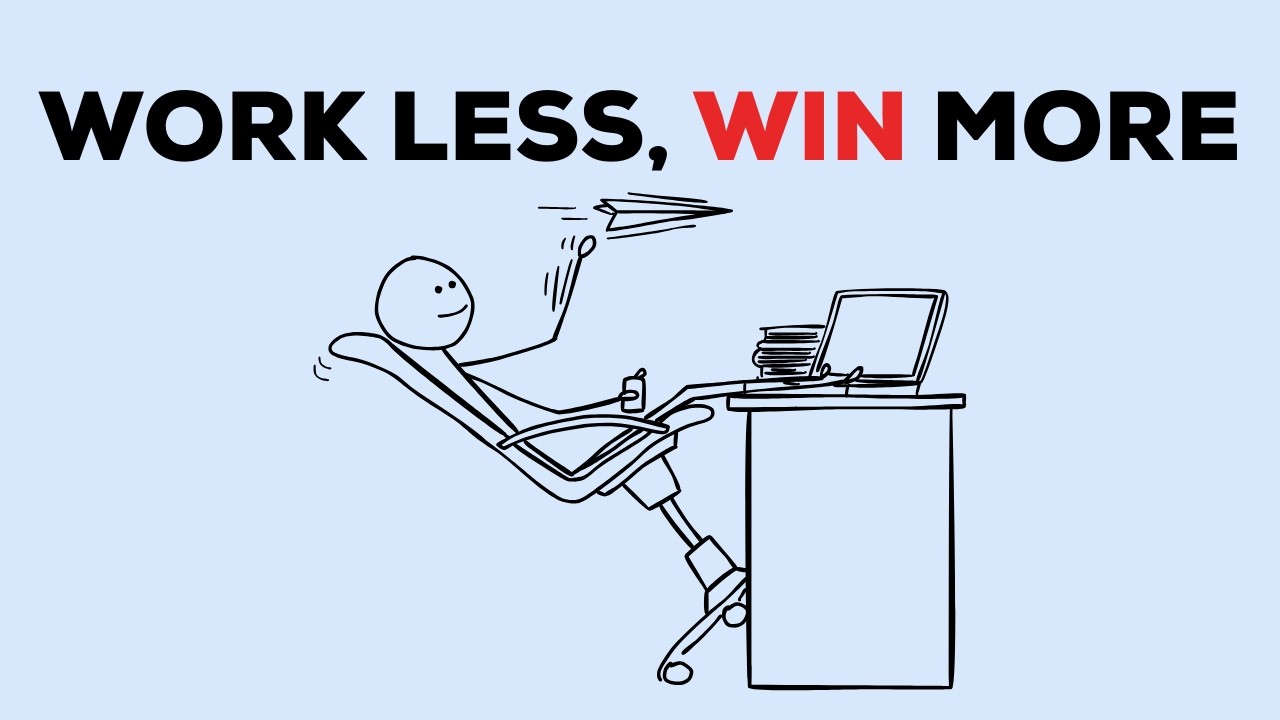
"Sloth maybe of vice, but to the universe it's a fountain of youth. Choosing to do as little as possible means consciously limiting your contribution to the inevitable dispersal of energy and thus in a teeny-tiny way postponing the 'Heat Death' of our universe. Relaxing adds time to the universe's life."
00:23:30 Subtopic: Conclusion and call to curiosity
- The video closes with appreciation for curiosity and a nod to the interwoven themes of memory, science, and philosophy.
"Thanks for chilling out. Thanks for taking it easy. And, as always, thanks for watching."
00:24:00 Resources Mentioned
- The video description and end credits list various resources spanning philosophy, physics, archaeology, and popular culture. These resources are categorized below as a useful bibliography for anyone who wants to dive deeper into the topics raised (Last Thursdayism, entropy, Razors, archaeology of the future, and related curiosities).
00:25:00 Visuals and diagrams described in this video
- Cenotaphs and empty tombs visual metaphor.
- The Acropolis and other Greek antiquities used to illustrate the enduring astonishment of ancient artifacts in modern times.
- A deck of cards themed after Greek philosophers used to discuss entropy and energy expenditure when shuffling.
- General explanation visuals of energy distribution and entropy (no explicit diagrams provided in the transcript).
00:26:00 Additional context and meta-points
- The video frames these questions within everyday life—watching, recording, and sharing—while prompting deep contemplation about what we leave behind and how the future will interpret it.
- The piece blends light curiosity with rigorous ideas from physics and philosophy to explore what “the past” means when time scales become astronomical.
00:28:00 Resources Mentioned (Complete list from description)
- Beatles 3000 (Video)
- Neil deGrasse Tyson On Manhattanhenge (Video)
- Toto: http://allanellenberger.com/toto-finds-a-home-at-hollywood-forever/
- highway vs free way: http://sgtalcastro.blogspot.co.uk/2012/12/the-difference-between-highway-freeway.html
- why are old things so often underground?: http://goo.gl/u8SFFw and http://www.archaeological.org/education/askexpertsfaq#faq3
- Motel of Mysteries (Book): http://www.amazon.co.uk/Motel-Mysteries-David-Macaulay/dp/0395284252/ref=sr_1_1?ie=UTF8&qid=1423256636&sr=8-1&keywords=motel+of+mysteries
- Last Thursdayism: http://en.wikipedia.org/wiki/Omphalos_hypothesis and http://www.last-thursday.org/
- Occam’s Razor: http://math.ucr.edu/home/baez/physics/General/occam.html
- Newton’s Flaming Laser Sword: https://philosophynow.org/issues/46/Newtons_Flaming_Laser_Sword
- other razors: http://en.wikipedia.org/wiki/Razor_(philosophy)
- Interpreting the past (including us, when we become “the past”): http://www.heritagedaily.com/2014/01/the-archaeology-of-the-future-part-2/56891, http://www.usu.edu/markdamen/1320hist&civ/chapters/01HIST.htm, http://bigthink.com/videos/how-will-future-historians-see-us-2, http://www.albany.edu/~scifraud/data/sci_fraud_3486.html
- This American Life on people in the future: http://www.thisamericanlife.org/radio-archives/episode/167/memo-to-the-people-of-the-future
- The 15th century wikipedia article: http://en.wikipedia.org/wiki/15th_century#Significant_people
- conservation of energy: http://www.britannica.com/EBchecked/topic/187240/conservation-of-energy
- history of perpetual motion: http://www.hp-gramatke.net/perpetuum/english/page0020.htm
- Why old computers and consoles turn yellow: http://www.vintagecomputing.com/index.php/archives/189
- the Second Law of Thermodynamics: http://hyperphysics.phy-astr.gsu.edu/hbase/thermo/seclaw.html
- Heat Death of the universe: http://www.physlink.com/Education/AskExperts/ae181.cfm
- entropy resources: entropysimple.oxy.edu/content.htm, https://www.youtube.com/watch?v=870y6GUKbwc, http://physics.ucsd.edu/do-the-math/2013/05/elusive-entropy/, http://www.askamathematician.com/2011/12/q-why-does-the-entropy-of-universe-always-increase-and-what-is-heat-death-of-the-universe/, http://www.learner.org/courses/chemistry/visuals/visuals.html?dis=U&num=Ym5WdElURS9NQ289
Action Items
- Study the concept of falsifiability and its role in differentiating science from philosophy.
- Learn the formal definitions of entropy and the Second Law of Thermodynamics and how they apply to closed systems.
- Explore scenarios of future archaeology: what artifacts would be most informative, and how context affects interpretation.
- Review the examples of razors (Occam’s, Newton’s Flaming Laser Sword) and practice applying them to non-scientific claims.
- Read about cenotaphs and archaeological markers as a lens for thinking about memory and presence in ruins.
- Investigate the heat death hypothesis and the timescales involved in cosmic evolution to appreciate long-term thinking.
- Consider how energy conservation shapes long-term legacy: reflect on personal actions in terms of energy dispersal and entropy.
- Consult the listed resources to deepen understanding of entropy, thermodynamics, and the philosophy of history.
Mental Models
Glossary
- cenotaph
- A monument erected in honor of a person or group but not marking a actual burial site; an empty tomb.
- Last Thursdayism
- A thought experiment claiming the universe could have been created last Thursday with all memories and records perfectly embedded to appear older; unfalsifiable and not scientifically testable.
- Occam’s Razor
- A principle suggesting that among competing hypotheses, the one with the fewest assumptions should be selected.
- Newton’s Flaming Laser Sword
- A rhetorical rule that if something cannot be settled by experiment, it is not worth debating; emphasizes empirical testability as a standard for meaningful inquiry.
- entropy
- A measure of how energy in a system is spread out or dispersed; increases over time in isolated systems, leading to less usable energy (often mischaracterized as 'disorder').
- Second Law of Thermodynamics
- In any natural thermodynamic process, the total entropy of a closed system tends to increase over time.
- Heat Death
- A hypothetical end state of the universe in which energy is evenly distributed and no thermodynamic free energy remains to drive processes.
Notable Quotes
“"The dog that played Toto in The Wizard of Oz was credited as Toto, but in reality the dog's name was Terry. And when Terry died in 1945 her owner and trainer Carl Spitz buried her on his ranch in Los Angeles. But in 1958 the Ventura Highway was constructed right through Terry's grave. Her remains were disturbed and have never been found. Fifty-three years later a memorial was erected in Hollywood Forever Cemetery in her honor but because she isn't burried there, the memorial is not a grave. It's what's known as a cenotaph, an empty tomb."”
“"I was reminded of Toto's cenotaph when I saw the cenotaph of Philopappos, atop the Hill of the Muses in Athens."”
“"Last Thursdayism is the belief that the universe was created last Thursday."”
“"Occam's Razor can shave off last Thursdayism because it requires fewer assumptions to believe that, say, this beehive tomb was constructed way back in the Bronze Age..."”
“"Newton's Flaming Laser Sword states if something cannot be settled by experiment, then it is not worthy of debate."”
“"The past just is what it was. We will one day be the past and no matter how well we try to record our stories ourselves, without time machines future archaeologists are going to have to make a lot of guesses about us."”
“"Future humans will likely know way more than us today about medicine, about exoplanets, about physics. But one thing they almost surely will not know more about than we do is today. Will your great great great grandkids know your name?"”
“"Energy will be conserved no matter what you do. Even if you leave lights on all year, there will be no less or more energy in the universe. What's really being conserved when we turn off lights are the resources we turn into energy the lights can use."”
“"Entropy is often called 'disorder', 'chaos'. But entropy is very different from macroscopic messiness. This deck of cards is themed after Greek philosophers. It's also arranged by value and suit - the entire deck. But if I take the deck and shuffle it, that is, disorder it, I haven't actually increased the deck's entropy... however, entropy in the greater world around us has increased because in order to shuffle the cards my body has to do work."”
“"The universe will spread energy out. The ripples you leave behind may get redirected but the universe will never be able to forget the entropy you add. That's the law. The Second Law of Thermodynamics."”
“"The 'Heat Death' of the universe... it's been estimated that at the rate things happen this end the universe will occur in about 8 googol years, and you're contributing to it by simply existing."”
“"Sloth maybe of vice, but to the universe it's a fountain of youth. Choosing to do as little as possible means consciously limiting your contribution to the inevitable dispersal of energy and thus in a teeny-tiny way postponing the 'Heat Death' of our universe. Relaxing adds time to the universe's life: in amount of time, to be fair, almost indistinguishable from zero, but still theoretically real."”
“"Thanks for chilling out. Thanks for taking it easy. And, as always, thanks for watching."”
Topics
More from Polymath
See all