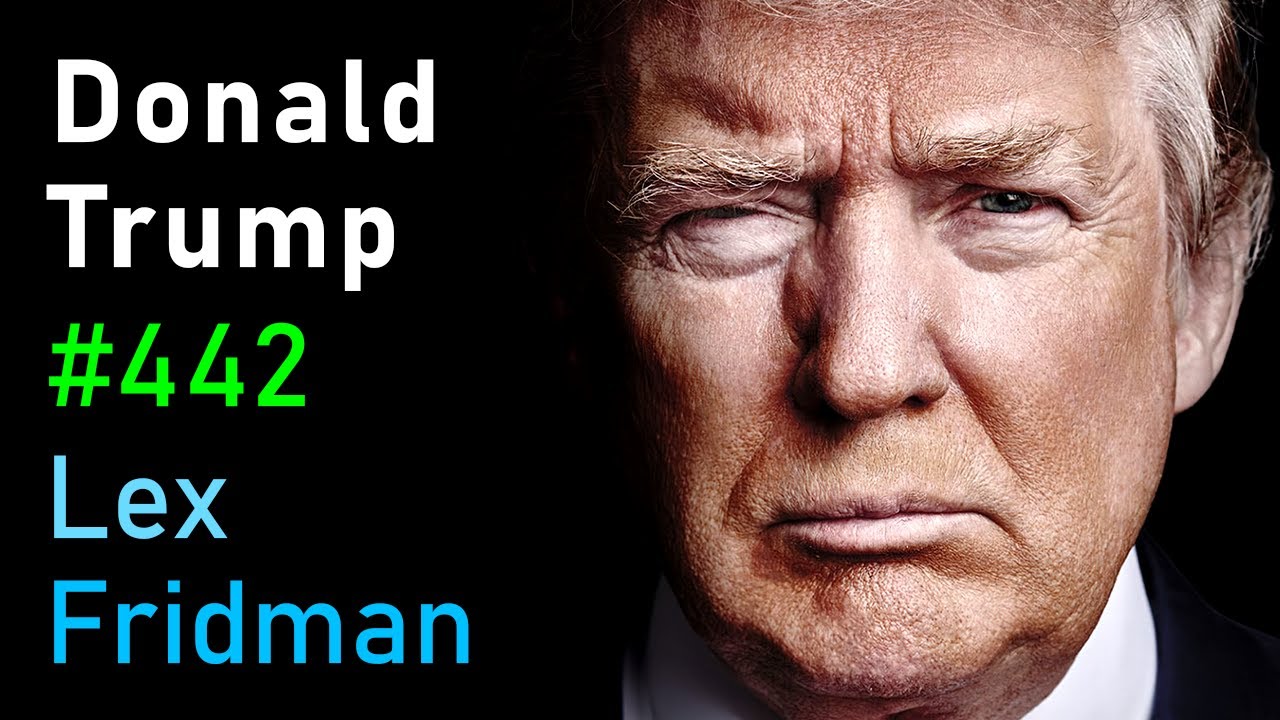
Vivek Ramaswamy: Trump, Conservatism, Nationalism, Immigration, and War | Lex Fridman Podcast #445
Vivek Ramaswamy calls for terminating the nanny state, restoring meritocracy and self-governance, and pursuing pragmatic foreign policy to revive American identity.
Key takeaways
5 points- 1Replace gradual reform with simultaneous 75% cuts to federal bureaucracy.
- 2Select immigrants by skills and assimilation potential rather than asylum claims.
- 3Define American identity by allegiance to founding ideals, not ancestry.
- 4Condition alliances on allies meeting defense spending commitments.
- 5Pursue a Ukraine deal that fractures the Russia-China military partnership.
Summary
Vivek Ramaswamy presents a conservative agenda to dismantle the administrative state and revive founding principles of merit, self-governance, and national sovereignty.
Terminate the Nanny State
- Eliminate the entitlement state, regulatory state, and foreign policy nanny state that crowd out individual responsibility (0:00-10:01).
- Cut federal headcount 75% and convert agencies into time-limited task forces with clear end missions (40:12-50:15).
Merit over Equity
- Reject DEI programs that prioritize group outcomes and suppress viewpoint diversity (10:02-20:07).
- Restore selection by individual talent and achievement across schools, corporations, and government.
Immigration and Identity
- Replace an asylum system built on incentives to lie with criteria that reward skills and assimilation (1:20:27-1:40:33).
- Define American identity by allegiance to ideals of self-governance rather than blood-and-soil ancestry.
Foreign Policy Reset
- End unconditional protection of allies who fail to spend 2% of GDP on defense (50:17-1:00:19).
- Strike a Ukraine peace deal that severs Russia's military tie to China while securing U.S. supply chains (2:00:38-2:20:44).
Deep read
Executive Summary
Vivek Ramaswamy’s Lex Fridman podcast appearance offers a compact, study-grade articulation of a future-oriented, reformist conservatism. He argues the modern conservative movement has spent too much energy opposing progressive agendas and not enough articulating a positive vision. His core program is a radical shrinkage of the federal government (purportedly 75% headcount cuts, sunsetting agencies, closing unconstitutional regulations) to revive self-governance and the rule of law. He ties this to a three-pillar critique of the nanny state (entitlement, regulatory, and foreign policy states) and frames immigration, DEI, and bureaucratic power as central fault lines threatening national cohesion. On foreign policy, he advocates a peace-centric Ukraine settlement aimed at weakening the Russia-China axis, reducing U.S. dependence on China for critical inputs, and reinforcing strategic alliances with partners like India and Japan. He also argues for a civic nationalism anchored in shared ideals (truth, individual, family, nation, God) rather than ethnicity, and emphasizes a culture of debate, curiosity, and truth-seeking as the antidote to ideological rigidity. The discussion ranges across domestic policy, immigration, the teaching mission of education, national security, and the strategic calculus of great-power competition, emphasizing leadership with spine and a willingness to confront entrenched bureaucratic power. The overarching thesis is crisp: shut down the nanny state, revive American self-governance, and restore a republic worthy of its founders.
In sum, the episode is a comprehensive blueprint for a transformative conservative project that urges bold action over incrementalism, pairing a strong national identity with a pragmatic, market-friendly, evidence-driven approach to governance. The conversation also engages in steel-manning the left and center-ground arguments (inequality, historical grievances, debates around DEI, and the ethical dimensions of immigration), but consistently returns to a core, controversial claim: America’s foremost crisis is bureaucratic overreach, and the cure is radical restructuring anchored in founding principles.
Major Topic: Vivek Ramaswamy's Conservative Vision and the State of American Politics
00:00: Conservative Vision and What Conservatism Is For
- Detailed notes / explanations:
- Vivek argues that modern American conservatism has become highly skilled at describing what it's against (wokeism, transgender ideology, climate ideology, covid policies, etc.) but has failed to articulate a positive, future-facing platform. He frames this as a deficit that helped explain why there wasn't a decisive red wave in 2022. His remedy is to articulate a clear, affirmative conservative vision rooted in enduring principles. - Core ideals he says conservatives should champion as a north star: merit (the best person gets the job based on content of character, not genetics), free speech with open debate (every opinion should be expressible in the United States), self-governance (restraining bureaucrats so elected representatives actually run the government), rule of law (reviving lawful norms and borders), and anchors of identity (truth, the value of the individual, family, nation, and God) over identity politics (race, gender, sexuality, climate). - He situates these ideas within the broader frame of reviving a republic that George Washington would be proud of, by focusing on individual responsibility and limiting government overreach.
> Quote: "In a true self-governing democracy, it should be our elected representatives that make the laws and the rules not an elected bureaucrats."
SPEAKER: Vivek Ramaswamy
00:10: Progressivism vs. Conservatism (steel man of left ideas)
- Detailed notes / explanations:
- When asked to steel-man progressivism, Vivek acknowledges the left's claim that the U.S. has not lived up to its ideals (life, liberty, pursuit of happiness) due to histories of slavery and inequalities. He frames this as a genuine argument for government action to correct past injustices and create equality of opportunity. - His counter-critique: even if the motive is noble, the left’s approach risks undermining merit by using racial or group equity targets, which he argues can erode achievement based on individual merit and can fuel backlash or division rather than healing it. - He connects this to immigration policy, arguing that mixing left-leaning equity with mass immigration without assimilation can create community frictions and backlash. - He contends merit and equity are incompatible in the sense that a pure meritocracy acknowledges different talents and paths; trying to enforce equal outcomes for groups can suppress merit-based selection.
> Quote: "There’s merit and equity and they are incompatible. You can have one or the other; you can’t have both."
SPEAKER: Vivek Ramaswamy
00:20: The Nanny State and the Three Forms of Entitlement
- Detailed notes / explanations:
- Vivek distinguishes three forms of the “nanny state”: the entitlement state (welfare), the regulatory state (bureaucracy and red tape), and the foreign nanny state (exporting protection or resources to other countries without fair-share contributions). - His summary goal: terminate the nanny state in all its forms and revive the republic—this is presented as a comprehensive, sweeping reform agenda. - He asserts that this termination would be the greatest form of economic stimulus and the most fundamental restoration of self-governance.
⭐ HIGH PRIORITY Quote: "Terminate the nanny state in the United States of America in all of its forms, the entitlement state, the regulatory state, and the foreign policy in nanny state."
SPEAKER: Vivek Ramaswamy
00:30: Reflections on Immigration and the Bureaucracy
- Detailed notes / explanations:
- The conversation pivots to immigration, bureaucracy, and liberty. Vivek argues that a key problem with the current system is that it rewards lying (e.g., asylum claims) and draws in people who may not assimilate, which can fuel division. - He promotes a more honest immigration framework: screen for allegiance to U.S. ideals, English fluency, assimilation capacity, and a track record of civic engagement, not just economic potential. - He acknowledges there are tradeoffs and debates about whether immigration is primarily an economic or civic project, but insists honesty about goals is essential.
Quote: "I want an immigration system built on honesty. Identify what the objective is... the number one attribute our immigration system rewards is whether or not you are willing to lie."
SPEAKER: Vivek Ramaswamy
00:40: The Department of Education, the Purpose of Agencies, and Task Forces vs. Standing Bodies
- Detailed notes / explanations:
- Vivek critiques the Department of Education as having evolved beyond its original purpose, arguing that its current interventions (curriculum, funding conditions) reflect a broader, post-hoc mission that isn't tied to the historical root of the department. - He argues that many agencies were created with positive intentions but have grown into permanent bureaucracies that persist beyond their initial mission. He advocates for treating agencies as temporary task forces: solve the problem, then sunset the entity. - He suggests depoliticizing or localizing education policy (e.g., school choice, vouchers, local charters) while removing federal mandates that come with strings attached to funding.
Quote: "The original purpose of this thing was to make sure that localities and particularly states were not siphoning dollars... that doesn't exist anymore."
SPEAKER: Vivek Ramaswamy
01:10: The Bureaucracy as the Real Engine of Power and the Deep State Across Institutions
- Detailed notes / explanations:
- Vivek broadens the critique: the problem is a pervasive managerial class—bureaucrats who wield power beyond their electable mandate—across government, corporations, nonprofits, and universities. - He argues that this “committee class” shrouds incompetence or failure with virtue signaling, thereby deflecting accountability and preserving their own power. - He frames this as a national strength issue: the United States was founded on anti-bureaucratic, creator-led innovation, and the rise of the bureaucratic class runs counter to those founding principles. - He emphasizes a need to shrink and reset the bureaucratic machine, not merely replace one form of nanny state with another.
Quote: "Bureaucracy is anti-American at its core... the rise of the managerial class, the deep state, is the problem; we must shut most of it down."
SPEAKER: Vivek Ramaswamy
01:30: Balancing Risk: How to Shrink Government Without Destroying Function
- Detailed notes / explanations:
- Vivek discusses two risky paths of reform: incremental, slow reforms vs. sweeping cuts. He rejects gradualism, arguing that cutting slowly allows the system to regenerate and regrow. - He advocates for a drastic, staged mass reduction: 75% headcount reduction across the federal bureaucracy, closing agencies that shouldn’t exist, and rescinding unconstitutional regulations. - He argues this would reempower elected representatives and restore self-governance, while fueling economic vitality through reduced regulatory drag.
Quote: "75% headcount reduction across the board in the federal bureaucracy... Shut down agencies that shouldn't exist. Rescind every unconstitutional regulation that Congress ever passed."
SPEAKER: Vivek Ramaswamy
01:50: The Role of Big Tech, Regulated Speech, and the DEI Debate
- Detailed notes / explanations:
- The DEI (Diversity, Equity, Inclusion) discussion centers on the tension between expanding opportunities for historically marginalized groups and preserving diversity of thought and meritocracy. - Vivek critiques DEI for creating a liability environment that discourages certain viewpoints and chills free expression under the guise of diversity. He discusses a real EEOC case about a veteran’s Friday red sweater that escalated into a microaggression debate, illustrating how DEI materials may chill legitimate expression. - On the other side, Mark Cuban’s critique is framed as a push for merit-based hiring and the market to determine outcomes; Vivek argues that the free market alone may suffice without top-down directives from ESG/DEI regimes, especially when the government is a contractor.
Quote: "DEI agendas... sacrifice true diversity of thought. The irony is in the name of diversity... you can't have both diversity of thought and compliance with DEI dogma."
SPEAKER: Vivek Ramaswamy
02:10: Toward a Functional Vision of America: The Founding Principles Revisited
- Detailed notes / explanations:
- Vivek highlights Thomas Jefferson and Benjamin Franklin as exemplars of a founder ideology that valued invention, creativity, and self-governance—people who hated the bureaucracy and sought to empower individuals rather than sustain a committee. - He argues that the Founders’ anti-bureaucratic stance was essential to the nation’s success and warns against returning to old world European models of governance that rely on technocratic control. - He ties this to nationalism and identity: pride in the nation, its ideals, and a willingness to defend those ideals without turning to ethnonationalism. He argues for a creed-based, civic nationalism, not blood-and-soil nationalism.
Quote: "Nationalism isn't a bad word when rooted in civic nationalism—the creed of the founding ideals—truth, the individual, family, nation, and God."
SPEAKER: Vivek Ramaswamy
02:50: The International Arena: Ukraine-Russia and the China Challenge
- Detailed notes / explanations:
- Vivek articulates a peace-forward vision for Ukraine-Russia: a deal that ends the war, weakens the Russia-China alliance, and repositions security guarantees for Ukraine. - He argues for Russia to withdraw from its military alliance with China and for NATO expansion considerations to be codified with concrete red lines. He advocates for a strategic approach that uses economic relations and military restraint as levers, including potential economic normalization with Russia as part of a broader China containment strategy. - On China, his stance centers on reducing dependence on China for critical inputs (including pharmaceutical supply chains and military components) and establishing hard red lines to avoid a Thucydides Trap, while rebuilding alliances with India, Japan, South Korea, and others to balance China’s rise.
Quote: "The single greatest threat we face is the Russia-China Alliance. We weaken that by a peace that also opens economic relations with Russia and aligns our alliances with Japan, India, and others to counterbalance China."
SPEAKER: Vivek Ramaswamy
03:40: Views on Leadership, Debates, and Personal Growth
- Detailed notes / explanations:
- Vivek emphasizes the value of engaging in tough, honest debates to illuminate truth and sharpen one’s own positions. He claims that asking for the best argument for the other side strengthens one’s own case. - He discusses his own writing and preparation process: long, quiet periods, physical activity, and notebooks to crystallize ideas. He emphasizes the importance of reflection and pacing in political life to maintain clarity of purpose. - He frames his ongoing political ambitions as a decades-long project: dismantling the nanny state, reviving national pride, and keeping the country on a trajectory of excellence.
Quote: "The number one factor that determines whether you achieve something in life is you. If you want to save this country, you need to be victorious, not a victim."
SPEAKER: Vivek Ramaswamy
04:25: The Closing: The 2028 Question and the Future of American Politics
- Detailed notes / explanations:
- Vivek suggests he’s open to future political runs but emphasizes that the immediate priority is the next four years to reduce the nanny state and restore American exceptionalism. - He calls for a civil, policy-driven debate with leaders who share a willingness to challenge orthodoxies and reinvent the political space. - He closes by praising curiosity, cross-disciplinary thinking, and the founding spirit of American innovation.
Quote: "Shut it down. The three-word summary of my worldview—shut it down—entails dismantling the entitlement state, the regulatory state, and the foreign policy nanny state."
SPEAKER: Vivek Ramaswamy
05:00: Close and Credits
- Detailed notes / explanations:
- The conversation ends with a mutual appreciation for critical thinking, curiosity, and a shared desire to revitalize American leadership and civic virtue.
Resources Mentioned
- Truths: The Future of America First (book by Vivek Ramaswamy)
- West Virginia v. EPA (2022 Supreme Court case)
- Loper Bright Co. v. Raimondo (2023/2024-era case focused on Chevron deference)
- SEC v. Jarkesy (2020 Supreme Court decision limiting agency adjudicatory powers)
- Declaration of Independence (historical document)
- Benjamin Franklin (inventor, founding father)
- Thomas Jefferson (founding father, inventor; swivel chair anecdote)
- Roivant Sciences (Vivek’s biotech company early in career)
- The hearing and policy debates around DEI (diversity, equity, inclusion) in corporate and academic settings
- Elon Musk and the concept of a Department of Government Efficiency (as discussed in context of policy reform)
- George Washington (founding father referenced as precept for revival of the republic)
Visuals, Slides or Diagrams
- The transcript does not describe specific visual slides or diagrams. The narrative is conversational with occasional historical anecdotes (e.g., Jefferson’s inventions, swivel chair, etc.).
Summary of Key Ideals and Proposals
- ⭐ HIGH PRIORITY: Dismantle the nanny state in all forms (entitlement, regulatory, foreign policy nanny state).
- ⭐ HIGH PRIORITY: Replace gradual reforms with bold, large-scale reductions in federal bureaucracy (propose 75% headcount reduction, sunset agencies, rescind unconstitutional regulations).
- Emphasize meritocracy, free speech, self-governance, rule of law, and civic nationalism; oppose identity- or group-based quotas.
- Advocate for an immigration system based on honesty, assimilation, and civic allegiance; reduce incentives to misrepresent asylum status; promote selective immigration that strengthens civic fabric.
- Advocate for a border-centric national sovereignty policy and a stronger focus on private property rights.
- Prefer a strategic, peace-oriented Ukraine-Russia settlement that weakens the Russia-China axis, while maintaining U.S. security guarantees where aligned with American interests.
- Push to reduce U.S. dependence on China for essential inputs; strengthen alliances with Japan, India, South Korea, and other partners to deter aggressive moves by China.
- Champion a culture of curiosity, debate, and rigorous pursuit of truth; emphasize the need for leaders who can articulate a positive, future-oriented vision.
- Embrace a civic nationalism grounded in shared ideals, not ethnicity or blood lineage.
Key Terms and Concepts (first appearance explained)
- Nanny State: A pejorative term for government overreach that treats citizens as children and controls most aspects of life.
- Meritocracy: A system where advancement is based on individual talent and achievement rather than group characteristics or quotas.
- DEI: Diversity, Equity, and Inclusion; a framework some argue prioritizes representation, potentially at the expense of free inquiry and merit.
- Rule of Law: The principle that laws apply equally to all, including lawmakers and government agencies.
- Self-Governance: Government by the people through elected representatives, rather than bureaucrats or technocrats governing by fiat.
- Major Questions Doctrine and Chevron Deference: Supreme Court doctrines affecting how much leeway agencies have in interpreting laws; both are cited as targets of reform in a broader anti-bureaucracy project.
- TPS (Temporary Protected Status): A program allowing temporary entry for people from designated countries facing crises; Vivek discusses its reform as part of immigration policy.
- Nationalism (Civic): Pride in a country rooted in shared civic ideals rather than ethnic lineage; contrasted with ethnonationalism.
- Red Lines: Clear, non-negotiable limits set in foreign policy negotiations (e.g., about Taiwan or alliance structures).
- Military-Industrial Complex: A term popularized by Eisenhower referring to the coalition of defense contractors and government that can influence policy.
Notes on Language and Style
- The dialogue is a mix of polemic, policy proposals, and strategic arguments. The language signals a preference for bold, decisive action and a reformist worldview rather than incrementalism.
- The speaker emphasizes personal experience as an entrepreneur and author to frame his policies as practical and results-oriented, not merely ideological.
End of deep_read
Action Items
- Draft and promote a concrete, legislative pathway to shrink the federal government by 75% headcount over a defined horizon.
- Sunset or transform agencies that lack constitutional mandate or measurable public benefit; resist creating a ‘right-wing’ nanny state to replace the left’s.
- Propose a national, paper-ballot election system with a single-day vote, government-issued voter ID, and strict anti-fraud safeguards as a starting point for election integrity.
- Implement a two-track immigration reform: (a) border-security-first policies with swift removal for those who break laws, (b) a merit-based, assimilation-focused intake with clear paths to legal status for those who contribute to civic and economic life.
- Rebalance defense priorities: increase homeland security spending where necessary, reduce dependency on adversaries for critical inputs (e.g., onshore pharmaceutical supply chains and semiconductors), and articulate red lines to deter escalation with China and Russia.
- Negotiate a peace framework in Ukraine that reduces casualties, weakens the Russia-China axis, and respects national sovereignty while offering a credible post-war economic reconstruction plan.
- Promote civic nationalism: emphasize shared founding ideals (free speech, rule of law, self-governance) rather than ethnic or racial identity.
- Encourage public-facing debates across the political spectrum to rekindle curiosity and critical thinking among citizens.
- Monitor and regulate DEI practices to ensure they do not stifle free inquiry or punish dissenting viewpoints; maintain merit-based advancement in both private and public sectors.
Mental Models
Glossary
- Nanny State
- A government that aggressively manages or controls many aspects of citizens' lives, often beyond necessary constitutional authority.
- Meritocracy
- A system where advancement is determined by individual talent, effort, and achievement rather than race, gender, or other group characteristics.
- DEI
- Diversity, Equity, and Inclusion; a set of policies and practices aiming to diversify representation and outcomes, sometimes critiqued for limiting freedom of thought.
- Chevron Deference
- A legal doctrine where courts defer to administrative agencies' interpretations of ambiguous statutes; targeted by recent Supreme Court rulings.
- Major Questions Doctrine
- A doctrine in U.S. constitutional law requiring explicit congressional authorization for major policy questions addressed by agencies.
- TPS (Temporary Protected Status)
- A temporary humanitarian status allowing nationals from designated countries to stay in the U.S. during crises; viewed by Vivek as a policy that can be misused.
- Self-Governance
- The principle that the people (not bureaucrats) should run the government through elected representatives.
- Civic Nationalism
- A form of national identity based on shared civic values and allegiance to a country's founding principles rather than ethnicity or ancestry.
Notable Quotes
“In a true self-governing democracy, it should be our elected representatives that make the laws and the rules not an elected bureaucrats.”
“Merit and equity are actually incompatible. Merit and group quotas are incompatible.”
“75% headcount reduction across the board in the federal bureaucracy, send them home packing. Shut down agencies that shouldn't exist. Rescind every unconstitutional regulation that Congress ever passed.”
“The original purpose of this thing was to make sure that localities and particularly states were not siphoning dollars, taxpayer dollars away from predominantly black school districts to predominantly white ones.”
“Shut down the nanny state in all of its forms, the entitlement state, the regulatory state, and the foreign policy nanny state.”
“I want an immigration system built on honesty. Identify what the objective is... the number one attribute our immigration system rewards is whether or not you are willing to lie.”
“The single greatest threat we face is the Russia-China Alliance.”
“Nationalism isn't a bad word when rooted in civic nationalism—the creed of the founding ideals—truth, the individual, family, nation, and God.”
Topics
More from Lex Fridman Podcast
See all