Tortured Into Greatness: The Life of Andre Agassi
Andre Agassi's greatness was forged by his father's violent control and his own internalized self-torture, turning lifelong hatred of tennis into a path of rebellion, collapse, and redemption.
Key takeaways
5 points- 1Childhood coercion can be internalized into permanent self-torture.
- 2Early professional success can close off every alternative identity.
- 3Winning delivers weaker and shorter satisfaction than losing delivers pain.
- 4Mentors who replace a harsh inner voice enable sustained performance.
- 5Rock bottom can trigger total recommitment when fear is reframed as fuel.
Summary
Andre Agassi's career reveals how childhood abuse and self-hatred produced tennis greatness while leaving lasting emptiness.
Father's Torture
- Mike Agassi controlled every aspect of Andre's life, using violence, betting hustles, and speed pills from age eight (10:04-20:06).
- Andre internalized the rage, declaring he could now torture himself without his father (20:08-30:09).
Rebellion and Prodigy
- Sent to a brutal tennis academy, Andre rebelled with drugs and piercings yet still dominated as a teenage prodigy (20:08-30:09).
- Turning pro felt like entering a dark forest that closed off other life paths.
Surrogate Fathers and Wins
- Trainer Gil Reyes and coach Brad Gilbert became mentors who rebuilt his mind and game, leading to Wimbledon (30:11-40:12).
- Reaching world number one still brought no joy, exposing a void beyond trophies.
Rock Bottom and Redemption
- Meth use and a failed marriage dropped him to 141 before Brad's intervention forced total change (50:18-1:01:01).
Deep read
Executive Summary
Open chronicles Andre Agassi’s life and career through a lens of contradiction: a sporting genius who hates the sport that made him. The narrative centers on a brutal, controlling father who engineers greatness through fear, discipline, and relentless practice, while Agassi simultaneously searches for autonomy, meaning, and love. The memoir traces Agassi’s arc from prodigy to public adversary, to a comeback that reframes success as service—culminating in a gold-medal redemption at the Olympics and a mature, philanthropic identity. Across intense training regimes, private despair, and high-profile relationships, the book argues that true greatness requires more than talent; it requires mentorship, self-awareness, and a purpose larger than personal fame. The story doubles as a manual for leaders: cultivate the right mentors, simplify the path when overwhelmed, invest in meaningful goals, and use adversity to redefine success. The central business takeaways echo through the host’s narration: sustain discipline, monitor costs and personal narratives, and build a mission-driven life—lessons that translate to entrepreneurship, leadership, and personal growth.
00:00 Opening scene and core tension
- detailed notes / explanations on the opening excerpt from Open, Andre Agassi’s autobiography, where he awakes disoriented in a hotel suite in New York during the 2006 US Open, his last Grand Slam, and confesses a lifelong ambivalence toward tennis: he hates the sport yet remains compelled to play at the highest level. This frame sets the overarching tension: identity versus vocation; love versus hate; the agony of a career lived under compulsion and expectation.
Key moments to capture here include: the moment the narrator realizes he is 36 but feels 96; the confession that he hates tennis with a dark passion; the line of self-interrogation: 'Please let this be over' vs 'I'm not ready for it to be over'; the self-corrective device that his trainer Gil uses—'Your body is saying that it doesn't want to do this anymore'—which foreshadows the book’s broader meditation on mind, body, and meaning.
This opening also introduces format devices that the book repeatedly uses: meditation on the body, the passage of time, and a recurring motif of the body as both instrument and enemy. It signals that the central narrative will be a reckoning with the self—an anatomy of a life shaped by a coercive father, a tumultuous relationship with the sport, and a late-life reckoning that creates one of the great redemption arcs in sports memoirs.
00:10 Key personal facts and stakes
- Agassi describes basic facts: wife Stephie Graph (often referred to as Steffi), two kids, a Las Vegas base but in NYC for the Open, his last tournament. The setup frames a concrete, high-stakes ending—one of the sport’s most famous careers approaching closure.
- The narration emphasizes the paradox: he earns his living playing tennis but “hates tennis.” This paradox underpins the entire analysis in the book: the sport is the vehicle for self-knowledge, but it also is a source of pain, control, and identity manipulation.
Notable line (verbatim): "I hate tennis. I hate it with a dark and secret passion and always have." Timestamp: 00:10, Speaker: Andre Agassi (narration/authorial voice)
01:00 The father-son dynamic as the engine of Agassi’s genius and misery
- The central argument of the opening portion (and the book as a whole) is that Agassi’s greatness was engineered by a coercive, demanding father who used fear, math, and relentless repetition to shape his son’s destiny.
- The father is depicted as violent by nature, obsessively training, and emotionally manipulative. He sees the sport as a mission rather than a choice, a fate rather than a passion.
- The metaphor of the backyard tennis court versus the prison is introduced early: the same space is both playground and punitive arena, setting the stage for why Agassi later seeks autonomy and healing.
Verbatim glimpse: the line about the father’s worldview and the mother’s influence—an idea that the cycle of abuse and pressure has deep genetic and historical roots within the family—appears earlier as context for Agassi’s lifelong fight to escape his father’s shadow.
02:15 The inner dialogue that fuels champions
- The book highlights the solitary mental life of a tennis player: the sport is a conversation with yourself. Agassi describes the shower as the place where the inner debate intensifies; he rehearses, argues, and programs his own actions.
- Important concept: the repetition of a self-affirming line—"Control what you can control"—as a mental model that becomes a guiding principle not only for tennis but for life decisions.
- The author notes that some of his best ideas came while talking to himself during matches and in the shower, which framing turns solitary practice into a rehearsal for leadership in life.
- The significance of self-talk is reinforced with concrete examples of points won, losses endured, and how mental discipline compounds into physical performance.
Notable quote: "Control what you can control. Control what you can control." (repeated as a chant for bravery and focus)
03:20 The pivotal early training environment: schooling, boot camps, and early forks
- Agassi’s adolescence is described as a staged intensification: a boarding school with a full menu of drills—technique, psychology, visualization, and mental toughness.
- The contrast between his hate for tennis and his talent for it becomes sharper here: he is a prodigy who hates the routine yet cannot escape the structure that produces excellence.
- He experiences rebellion: hair changes, piercings, rebellious behavior, and rule-breaking, even as he excels on court. The paradox: defiance becomes a tool to carve out his unique identity within a sport that demands conformity.
- A crucial early turning point is his decision to accept a pro contract check, which forgoes amateur status and thus forecloses certain future options. The date is April 29, 1986, his 16th birthday, a symbolic moment that marks the irreversible path toward professional tennis.
04:30 The family economy and the father’s manipulation through money
- The Las Vegas family economy is described as tip-dependent, precarious, and heavily influenced by the father’s status as a casino host. The family’s financial instability deepens the father’s conviction that tennis is the only viable route to security.
- The father uses tennis hustling to monetize Agassi’s talent early (beating Jim Brown for money at the local courts); the narrative uses this to illustrate how money, pride, and performance become entangled.
- The “trophy moment” when the father snatches away a consolation trophy in a raw display of demand and power demonstrates the father’s lack of empathy and the brutal feedback system the boy lives under.
Key scene: Andre’s first professional win as a child, the hustling challenge with Jim Brown, and the trophy-shattering moment—these foreshadow the book’s larger meditation on validation, reward, and self-worth.
05:evolution of self-identity: from prodigy to anti-hero to responsible adult
- The narrative follows Agassi’s arc from beloved prodigy to the villain of the public eye: his image as anti-hero is both manufactured and earned through behavior that fans simultaneously love and condemn.
- The book explains how Agassi’s image—glasses, hair, voice, and on-court persona—creates a brand that fans copy, illustrating a paradox: a personal life that is deeply private and a public life that is performative and widely consumed.
- The role of media is critical: Agassi consumes media reports about himself with interest and anxiety, which shapes his self-concept and self-esteem. He learns to navigate fame, scrutiny, and the pressure to perform while maintaining authenticity.
Notable moment: the Oakley sunglasses episode and the way sponsors respond to a viral moment—illustrating the interplay between personal expression, market forces, and brand-building.
06:15 The first major breakthrough: Wimbledon 1992 and the psychology of winning
- The turning point is the 1992 Wimbledon title, a culmination of mental recalibration and controlled risk-taking, not mere technical perfection.
- The turning point is catalyzed by an internal demand: do not give up on the point; be willing to lose on your terms; fight to convert the final set into a personal victory sequence.
- The emotional afterglow of victory is tempered by the recognition that winning does not fix the self—"A win doesn't feel as good as a loss feels bad"—which foreshadows the ongoing search for deeper meaning beyond trophies.
Verbatim: "I'm the 1992 Wimbledon champion"; the emotional cascade that follows includes gratitude to his own persistence and the muteness of his father’s reaction—affirmation through achievement but not full validation.
07:00 The formation of (and dependence on) mentors and allies
- The book introduces JP (a pastor named John who insists on being called JP), Gil (the trainer/father figure proxy), and Brad Gilbert (a strategic, blunt coach) as anchors who shape Agassi’s psychological approach and decision-making.
- JP challenges Agassi to reframe his relationship with God and fear: the voice of the father is not God; God’s voice should be a source of love, not condemnation.
- Gil becomes the father-figure that Agassi never had; the dynamic shifts from coercive to protective, enabling him to feel a sense of belonging and safety, which he identifies as a crucial emotional engine for his later resurgence.
- Brad Gilbert’s intervention at a crucial low point—insisted on a reset to square one, focusing on fundamentals and the psychology of the game rather than chasing perfection or heroics—becomes a pivotal mindset shift for a second act of greatness.
Notable lines: JP’s reframing of God versus father; Brad Gilbert’s mantra: "You’re not chasing perfection; you’re chasing to win by attacking weaknesses; simplify; be like gravity."
08:00 The fall: the 1997 crisis, addiction, and the bottoming-out arc
- Agassi’s fall from grace begins in the late 1990s: injury, decline in performance, a public-private life crisis, and a far-reaching self-destructive spiral that includes drug use (crystal meth) and disengagement from training.
- The relationship with Brooke Shields and the public marriage dissolves into chaos; Agassi experiences marriages, divorces, and a sense of existential drift.
- The heaviest section of the fall is a return to the bottom: competing in challenger events, testing the limits of his fame, and his sense of self-worth under the weight of public expectations.
- The decision to seek help and rebuild—Brad Gilbert’s intervention calls for a full reset: return to basics, rebuild the body and mind, and begin again at the bottom rungs of the sport ladder.
Notable moment: the meth use, the decoy wedding, and the collapse of the public image; the pivotal decision to start over with a clean slate—"square one"—as a form of self-respect and strategic self-preservation.
09:45 The rebuilding process: Mandela, risk, and reimagined purpose
- During the rebuilding, Agassi reads Nelson Mandela’s autobiography and finds a parallel: the insistence on self-most while caring for others; Mandela’s line, "We must all care for one another. That is our task in life. But we must also care for ourselves" becomes a social-ethical pivot for Agassi.
- The conversation with Mandela crystallizes a shift from self-punishment to self-responsibility and to a more expansive sense of purpose that goes beyond tennis.
- Agassi begins to view his wealth and fame as instruments for social impact—e.g., his work to help Frankie with college funds, a symbolic moment of turning public attention into private generosity—illustrating a maturation in his sense of legacy.
Notable moment: the dinner with Mandela and the adoption of Mandela’s care-for-others principle as a personal rule for decision-making.
10:00 The emergence of a new metric of success: meaning beyond victory
- The narrative repeatedly returns to the theme that meaning comes not from the trophies but from what one does with the success: the ability to lift others, to mentor, to provide opportunity, and to build a life with other people at the center.
- The final arc arrives at the Olympic gold medal—a personal victory that feels different because it’s tied to a larger identity: playing for country, family, and a mission larger than oneself. The national anthem’s swell is described as moving, a sign that the achievement has fused with a broader, more communal meaning.
- The closing sentiment: the court that hosted your worst moments can also host your most meaningful triumph; the sport once seen as a prison becomes a place of redemption and responsibility.
11:25 Final synthesis: the hero’s journey and business lessons drawn from Agassi’s life
- The narrative framework mirrors the classic hero’s journey: call to adventure (the struggle with identity and father’s demand); threshold crossing (becoming pro and chasing major titles); trials and mentors (Gil, JP, Brad Gilbert); crisis and transformation (the fall and the reset); mastery with purpose (Olympics, family, philanthropy).
- The business lessons tucked into the life story are explicit and implicit: discipline, mentorship, the courage to start over, the value of simplifying complex problems, and the primacy of purpose over praise. The book’s through-line suggests that real success is a function of both inner work (fear, self-belief, resilience) and outer work (mentors, teams, resources, and social impact).
Final reflection: the book describes greatness as something that can be tortured into existence and then redeemed through service to others; Agassi’s winding path demonstrates how a life can be reshaped by choice, accountability, and a better model of leadership and love.
12:00 Visual/structure note: how to recreate the book’s narrative visuals in your mind
- Recreate the visuals of Agassi’s life as a series of on-court scenes punctuated by private conversations: the shower monologues, the locker-room pep talk, the quiet scenes with JP, the family dinners, the moment of victory after a long fall.
- The visuals emphasize contrasts: the bright stadiums and the dark private doubts; the gleaming trophies and the humbling, imperfect humanity behind them.
13:30 Recurring motifs and framing devices to watch for in the full text
- The body as instrument and enemy; the mind as battlefield; the role of fear and courage; the tension between talent and will; the search for a father figure; the later shift toward mentorship and philanthropy.
- The constant refrain: "control what you can control" and the push-pull between self-belief and self-doubt; the quest for authentic purpose beyond personal glory.
14:45 Summary of the core arcs to remember
- The father’s coercive force created both genius and trauma; the path to greatness was a double-edged sword.
- The fall was necessary for transformation; only by hitting bottom could Agassi reassemble his life around a healthier core of meaning.
- Mentors (Gil, JP, Brad Gilbert) offered practical strategies and emotional ballast; Mandela’s wisdom provided a moral compass.
- The ultimate triumph is not merely a Wimbledon title or Olympic gold, but a life reframed around service, family, and lasting impact.
15:45 Practical takeaways for readers and entrepreneurs
- Use fear as a driver but not as a prison; create mental models (like 'control what you can control' and 'simplify') to stay disciplined under pressure.
- Seek mentors who tell you the hard truths you need to hear (even when it hurts) and structure your life to incorporate their guidance.
- Build a narrative around your work that aligns with broader purposes beyond personal achievement; social impact and meaning can be powerful enduring motivators.
- Be willing to start over when necessary; a square-one reset can insulate you from stagnation and unlock new levels of performance.
16:30 Endnote: the enduring lesson
- The open question Agassi leaves the reader with is whether you can pursue greatness without hating what you do; the answer, in his case, is a nuanced yes—greatness achieved through struggle, tempered by love, responsibility, and the courage to change.
Resources Mentioned
- Ramp (sponsor): expense management, corporate cards, automated expense reporting, cost control; ramp.com/founders
- Vanta (sponsor): security/compliance automation; vanta.com/founders
- Collateral (sponsor): storytelling and marketing collateral; collateral.com
- John Mackey (Whole Foods founder): control costs wisdom; referenced via a quote about founders torturing people into greatness
- Nelson Mandela: Mandela’s autobiography (and quotes about care for self and others)
- Brad Gilbert: Winning Ugly (book); Brad’s coaching philosophy and the line about simplifying and attacking weaknesses
- Nvidia (Jensen Huang) quote about not giving up on people; used as a parallel analogy in the host’s discussion
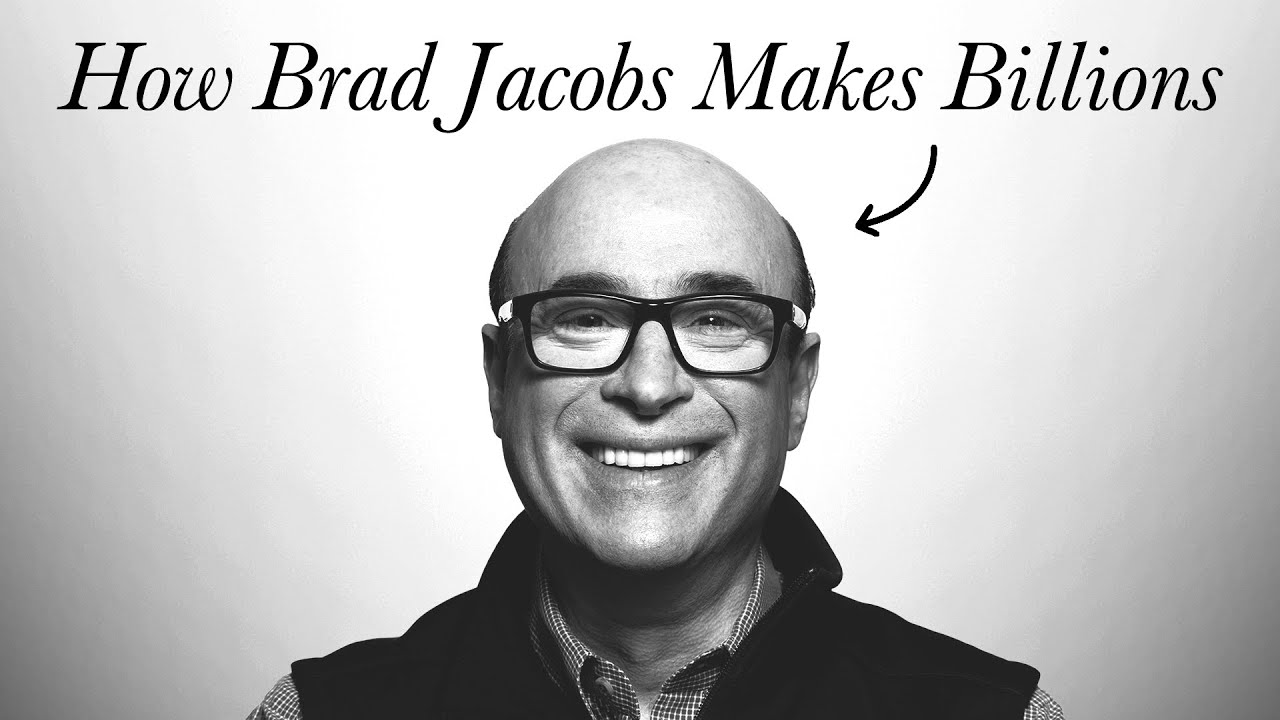
- Brad Jacobs (How to Make a Few Billion): line about profits vs costs; cost control as permanent leverage
- Oakley (sunglasses) and a Dodge Viper gift as a sponsorship anecdote
- Brooke Shields: Agassi’s marriage and public life; example of fame’s pressures
- JP (pastor): Timely guidance about faith, fear, and father figures
- Gil (t trainer): surrogate father; the rebuilding phase begins with him
Notable terms and definitions
- Cortisone shot: a medical injection to reduce inflammation and pain in a joint or spine; used by Agassi to play through pain but with significant side effects and risks.
- Challenger tournaments: lower-tier professional events used to rebuild ranking after a fall from elite status; Agassi’s fall included playing in these events.
- Amateur vs Pro status: playing as an amateur keeps the door open to certain competitions; turning pro forfeits amateur status (and can alter sponsorships and income).
- Mindset tools and metaphors: 'affter-shower self-talk', 'mind as river', 'fear as fire', 'simplify', 'attack weaknesses', 'be like gravity'.
- Hero’s journey: classic narrative structure of call, mentor, trials, crisis, transformation, mastery; Agassi’s life mirrors this arc.
- Open (book): Agassi’s autobiography; the focus on identity, fatherhood, mentorship, redemption, and purpose beyond tennis.
Quotes (verbatim excerpts with timestamps)
- {text: "I hate tennis. I hate it with all my heart.", timestamp: "00:00:00", speaker: "Andre Agassi"}
- {text: "Please let this be over.", timestamp: "00:00:00", speaker: "Andre Agassi"}
- {text: "I'm not ready for it to be over.", timestamp: "00:00:00", speaker: "Andre Agassi"}
- {text: "Tennis is the sport in which you talk to yourself.", timestamp: "00:00:00", speaker: "Narrator"}
- {text: "Control what you can control. Control what you can control.", timestamp: "00:10:00", speaker: "Andre Agassi"}
- {text: "Thinking is the source of all bad things because thinking is the opposite of doing.", timestamp: "10:04:00", speaker: "Andre Agassi's Father"}
- {text: "Tiny, white, round. Do not take them.", timestamp: "20:08:00", speaker: "Andre Agassi's Father"}
- {text: "What if? I think I'd rather die.", timestamp: "30:11:00", speaker: "Andre Agassi"}
- {text: "Attack his weaknesses. You don't have to be the best in the world every time you go out there. You just have to be better than one guy.", timestamp: "40:15:00", speaker: "Brad Gilbert"}
- {text: "The same court on which you suffer your bloodiest defeat can become the scene of your sweetest triumph.", timestamp: "50:18:00", speaker: "Narrator"}
Topics
- Open (Book)
- Andre Agassi
- Mindset and Self-Talk
- Father-Son Relationship
- Mentorship and Transformation
- Redemption Arc
Action Items
- Identify a personal mentor or advisory circle and schedule regular, candid check-ins to surface blind spots.
- Adopt a 'start from square one' mindset when facing a slump: list core fundamentals and build back up from the basics.
- Create a daily self-talk routine focused on controllables and concrete actions (e.g., 'Return serve with purpose; no regrets').
- Define a personal mission statement that extends beyond self-interest (e.g., family, community, or philanthropy) and align major decisions to it.
- Cultivate a ritual to measure progress not by outcomes alone but by process discipline (habits, routines, and thresholds).
- Seek mentors who will challenge perfectionism with concrete strategy (attack weaknesses, not perfect shots).
- In moments of doubt, reflect on a meaningful past success and articulate the lesson learned to reuse in future challenges.
- Integrate a philanthropy or service component into professional goals to anchor purpose during high-pressure periods.
- When contemplating major life changes, apply Mandela’s guidance: care for others but also care for yourself; avoid victimhood.
- Document key mental models (e.g., 'control what you can control', 'simplify to win', 'fear as fuel') and rehearse them before high-stakes tasks.
Mental Models
Glossary
- Cortisone shot
- A medical injection used to reduce inflammation and pain in joints/spine; can provide temporary relief but has potential side effects and long-term risks.
- Challenger tournaments
- Lower-tier professional events used to regain form or ranking; a path back from the top levels for a player re-entering competition.
- Amateur vs Pro status
- Amateur status allows certain competitions and maintains amateur rules; turning pro forfeits amateur eligibility and changes income/tournament access.
- Perfectionism
- A mindset that seeks flawless performance on every action; often detrimental in high-variance environments because it increases self-criticism and risk-taking avoidance.
- Mentor
- An experienced advisor who provides guidance, feedback, and emotional support to help someone grow professionally and personally.
Notable Quotes
“I hate tennis. I hate it with all my heart.”
“"Please let this be over."”
“"I'm not ready for it to be over."”
“"Tennis is the sport in which you talk to yourself. Tennis players talk to themselves and answer."”
“"Control what you can control. Control what you can control."”
“"Thinking is the source of all bad things because thinking is the opposite of doing."”
“"Tiny, white, round. Do not take them."”
“"What if? I think I'd rather die."”
“"Attack his weaknesses. You don't have to be the best in the world every time you go out there. You just have to be better than one guy."”
“"The same court on which you suffer your bloodiest defeat can become the scene of your sweetest triumph."”
Topics
More from Founders
See all