The Power of Delusional Self Belief
Delusional self-belief turns impossible barriers into achievable milestones and sustains effort until luck and skill align for exponential success.
Key takeaways
5 points- 1Treat current limits as temporary mental constructs rather than hard facts.
- 2Expect years of visible failure before any breakthrough occurs.
- 3Pair extreme belief with daily skill-building so you are ready when luck appears.
- 4Recognize that one public success instantly recalibrates what peers believe is possible.
- 5Refuse to quit for at least a decade if the goal is singular and deeply held.
Summary
Delusional self-belief lets people shatter limits others accept and endure the long grind until success compounds.
The Four-Minute Mile Proof
- Scientists once claimed the human heart would explode attempting a sub-four-minute mile.
- Roger Bannister broke the barrier in 1954 as an overconfident medical student (0:00-8:03).
- Within two months, 22 more runners followed, proving belief resets perceived physical limits.
Exponential Success After Long Struggle
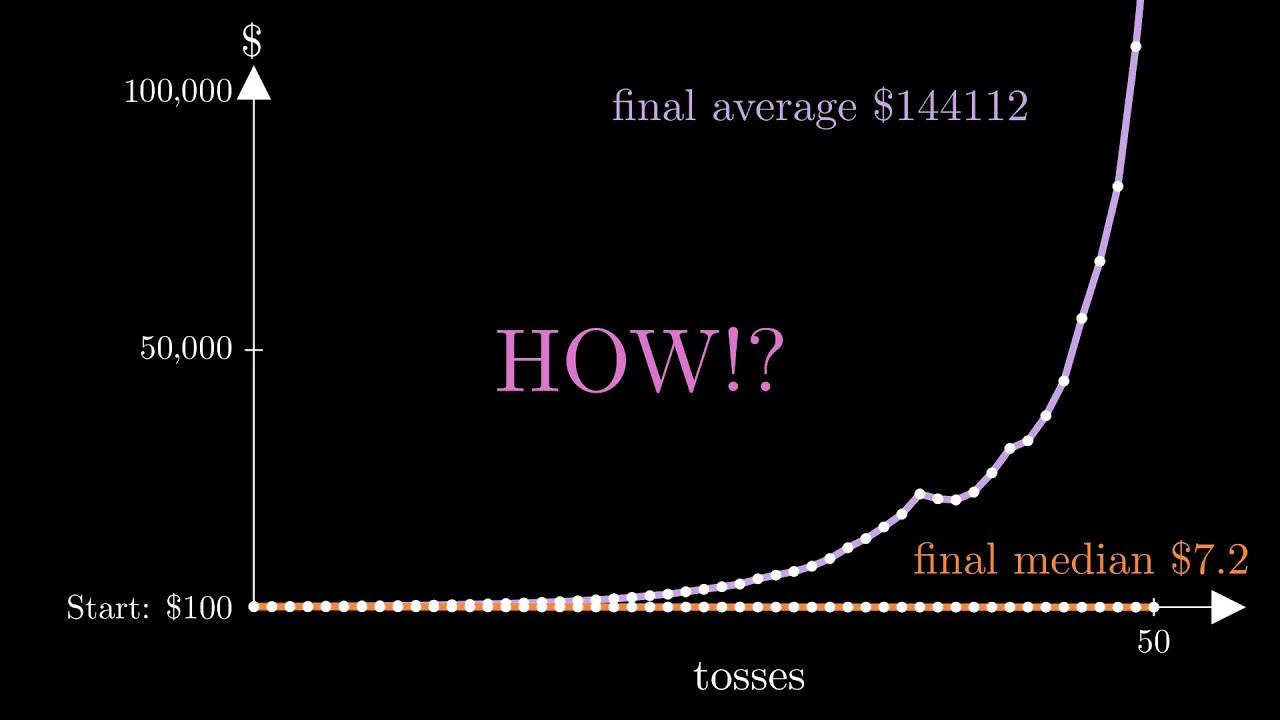
- Success combines luck and sustained effort; neither suffices alone.
- Early years often show zero visible progress before random events trigger rapid growth.
- Microsoft lost money for five years until the 1980 IBM deal; Quentin Tarantino waited eight years for his first hit (8:04-11:42).
Why Delusion Is Required
- Without overconfident belief, most quit during the decade of apparent failure.
- The mindset keeps skills sharp until opportunity arrives.
Deep read
Executive Summary
The Power of Delusional Self Belief argues that extreme self-belief can be a critical driver of extraordinary achievement, especially when paired with long-term persistence, deliberate practice, and fortuitous timing. Through a tapestry of examples (Roger Bannister’s breaking of the four-minute mile, Bill Gates and Microsoft’s ascent, Tarantino’s early career struggles), the video illustrates a recurring pattern: barriers exist in the mind as much as in reality, and a delusional confidence can propel a person through years of effort until a breakthrough makes success seem inevitable to others. Luck is acknowledged as a factor, but it's not sufficient on its own—the combination of being in the right place at the right time and putting in relentless work creates the conditions for exponential growth. The piece ultimately argues that while not every dream is realistic, a decade-or-long commitment fueled by a healthy dose of delusion, tempered by genuine skill development, tends to yield transformative outcomes. The takeaway is both motivational and pragmatic: cultivate ambitious goals, commit deeply to the grind, recognize the role of luck, and let persistent effort compound toward a breakthrough that reshapes what’s possible.
00:00:00Major Topic
SubtopicOpening Premise — Delusional Self-Belief as a Driving Force
Speaker: Narrator
- The central premise: extreme, perhaps irrational, self-belief in one's ability can propel someone toward extraordinary outcomes. The speaker opens with provocative bets on personal possibility (NBA, UFC) to illustrate how a mindset of “I could do anything” can act as a catalyst, even when current circumstances don’t guarantee it.
- This section frames delusion not as ignorance, but as a motivational force that helps sustain long periods of effort without immediate payoff.
- The visuals and anecdotes emphasize that belief in the possibility of success can exist even when others doubt it. The underlying claim is that this kind of confidence may be necessary to pursue ambitious goals for a long time.
Notable line (verbatim): - "Cuz I think right now if I was to quit rapping and I said I want to go to the NBA, I would be in the NBA. No, you wouldn't. Yes. No, you would. Yes, I would."
SubtopicThe Power of Barrier-Breaking Examples (Bannister and the Mile)
Speaker: Narrator
- The video introduces Roger Bannister as a counterexample to the notion of an unbreakable barrier. Before Bannister, the belief held by scientists and many people was that running a mile in under four minutes was physically impossible and dangerous to attempt; this creates a psychological “brick wall” barrier in people’s minds.
- Bannister’s belief that there wasn’t a brick wall leads to a rapid cascade: after his success, many others quickly followed, significantly changing what people thought was possible.
- The famous milestone is framed as both a triumph of deliberate practice and a disruption of a long-held belief about human limits.
Notable line (verbatim): - "There wasn't a brick wall. If you could run it in 4 minutes and 2.2 seconds, then you would be find somebody else somewhere who trained a little better and they could do it."
SubtopicThe Role of Delusion as a Growth Mechanism (Long Arc of Success)
Speaker: Narrator
- The narrative asserts that breakthroughs often come after a long, non-linear arc of effort. The idea is that a delusional or highly confident mindset can keep someone going through periods where results are stagnant.
- The video uses Tarantino as another example: eight years of struggle followed by an overnight sensation. The point is that success is usually not a straight line; early persistence compounds and sometimes only becomes visible after a long time of invisible work.
- It’s argued that without enduring belief, many would quit much earlier, missing the eventual breakthrough that makes later success appear inevitable to outsiders.
Notable line (verbatim): - "Eight years of just nothing working out. And when he did finally get some success, Tarantino, it all came overnight."
SubtopicThe Childhood Dream vs. Social Pressure to Lower Standards
Speaker: Narrator
- A lyric-montage reflects on how most people start with big dreams, but as life progresses, society often nudges individuals to lower expectations. The tension between maintaining high ambitions and facing practical constraints is central to the message.
- The speaker acknowledges that many people shouldn’t chase every dream (not all dreams are attainable). However, a subset possess something essential inside them that makes perseverance worthwhile despite discouragement.
- The broader claim is that delusional tenacity is a common feature among successful people; it helps people endure long periods of stagnation until the eventual breakthrough.
SubtopicBill Gates — A Case Study in Luck, Hard Work, and Opportunity
Speaker: Narrator
- The Gates narrative is used to illustrate a blend of luck and deliberate effort. Gates’s background (privileged access to rare technology) is acknowledged as a fortunate starting point, but the key claim is that luck alone does not explain the outcome.
- Gates’s early passion for computing began at Lakeside School, where a Teletype Model 30 gave him exposure to a cutting-edge tool; this access, plus a friend/peer network with Paul Allen, seeded a long-term project.
- Despite initial setbacks (Microsoft losing money for the first five years) and sacrificing sleep (reports of 18-hour days, no weekends, and no vacations), Gates and Allen pursued the vision relentlessly, eventually turning Microsoft into a global empire.
- The narrative emphasizes that the path to extraordinary success is not purely luck-driven; sustained effort amplifies opportunities and builds capabilities that compound over time.
- The host explicitly notes that luck is involved, but also stresses that the “hard work ethic” and a willingness to persevere are indispensable components of the story.
Notable line (verbatim): - "Luck was involved. No doubts about it. He was in the right place at more than the right time. But he also put in more work than everyone else." - "I didn't believe in weekends. I didn't believe in vacation. From age 20 to age 30, Bill and Paul didn't take a single weekend off." - "Microsoft was losing money for the first 5 years."
SubtopicNonlinear Growth, Timing, and the Myth of Overnight Success
Speaker: Narrator
- The video argues that success is typically non-linear and often appears overnight only in hindsight. Early periods of struggle are essential to building the skills and knowledge that later enable rapid gains when the right opportunity arises.
- The interplay of being in the right place at the right time with persistent effort is a central theme; the idea is that a long-tail investment of time compounds into something that seems sudden to observers later on.
SubtopicDelusion as a Protective Mechanism While You Develop Skill
Speaker: Narrator
- A provocative line suggests that delusional thinking can function as a psychological shield that helps sustain the early, painful phase of skill development. The idea is that a certain amount of delusion is not just harmless but beneficial for enduring the grind and continuing to practice.
- The narrator explicitly links delusion to the long-term payoff, implying that the belief itself helps maintain discipline and persistence when external validation is scarce.
Notable line (verbatim): - "Delusional thinking can sometimes carry you to the like once you develop some skill that delusional is like a little guardian that like keeps you protected while you actually develop talent."
SubtopicSummary Reflection — One Life, One Chance
Speaker: Narrator
- The closing reflection emphasizes urgency: if you have one dream, commit to it for a very long period, because the likelihood of long-term persistence paying off increases with time and effort.
- The message ties back to the opening claim: a dose of delusional belief may be the catalyst that keeps a person going through years of struggle, enabling eventual success.
Notable line (verbatim): - "I honestly don't see a way where if you have one dream in life and you're committed enough to continue going for it for at least a decade, eventually it doesn't work out."
SubtopicVisual and Narrative Devices — How the Video Communicates Its Message
Speaker: Narrator
- The video uses a collage of iconic success stories (Bannister, Gates, Tarantino) to illustrate a common pattern: belief, persistence, and opportunity collide to produce breakthrough results.
- Visuals include references to famous tech history scenes (Amazon’s first office, a desk, the IBM deal) and historical milestones (the four-minute mile record) to anchor abstract ideas in concrete, memorable imagery.
- The use of direct quotes and emphatic lines (quoted above) reinforces the central thesis and provides memorable refrain points for viewers.
SubtopicResources Mentioned (People, Companies, Tools, and Concepts)
Speaker: Narrator
- People: Roger Bannister; Bill Gates; Paul Allen; Quentin Tarantino.
- Companies/Organizations: Amazon (first office), Microsoft, IBM, Lakeside School.
- Tools/Technologies: Teletype Model 30 (early computer terminal).
- Concepts/Measures: Four-minute mile barrier, exponential growth, luck vs. hard work, long-term commitment, delusional thinking as protective mechanism.
SubtopicNotable Quotes (Verbatim Excerpts)
Speaker: Narrator
- "Cuz I think right now if I was to quit rapping and I said I want to go to the NBA, I would be in the NBA. No, you wouldn't. Yes. No, you would. Yes, I would."
- "This is the uh first office of Amazon.com, Inc. And uh over here, this is my desk here."
- "July 1945. Gundg with the windb blown hair number 200 breaks the world record for the fastest time to run a mile. 4 minutes and 1.2 seconds."
- "There wasn't a brick wall. If you could run it in 4 minutes and 2.2 seconds, then you would be find somebody else somewhere who trained a little better and they could do it."
- "Luck was involved. No doubts about it. He was in the right place at more than the right time. But he also put in more work than everyone else."
- "I didn't believe in weekends. I didn't believe in vacation. From age 20 to age 30, Bill and Paul didn't take a single weekend off."
- "Microsoft was losing money for the first 5 years."
- "Eight years of just nothing working out. And when he did finally get some success, Tarantino, it all came overnight."
- "Fucking, I'm going to be so [ __ ] good at this."
SubtopicVisuals and Diagrams — What They Would Look Like If Recreated
Speaker: Narrator
- A classroom or dorm setting with a student delivering monologues; a montage of historical milestones in tech and pop culture to illustrate the “believe it, then build it” arc.
- A visual of a four-minute mile barrier with Bannister crossing the line, followed by a montage of people breaking the barrier in quick succession to illustrate the cascade effect.
- A slide on Gates’s timeline: Lakeside School → Teletype Model 30 → Coding with Paul Allen → Microsoft formation → IBM deal → 88B in yearly profit, with a caption emphasizing long hours and no early financing.
SubtopicResources Mentioned (Expanded)
Speaker: Narrator
- Books, papers, tools, websites, and organizations referenced include Amazon (first office), Microsoft, IBM, Lakeside School, Teletype Model 30, Roger Bannister, Bill Gates, Paul Allen, Tarantino, and the four-minute mile barrier narrative.
SubtopicKey Takeaways and Implications
Speaker: Narrator
- The central thesis is that delusional self-belief can act as a catalyst for pursuing ambitious goals, especially when paired with relentless effort and the right timing.
- Real-world examples (Bannister, Gates, Tarantino) illustrate how breakthroughs often emerge after long periods of struggle when people refuse to quit.
- Luck matters, but it interacts with preparation, opportunity, and persistence; the most successful individuals maximize exposure to opportunities through consistent work.
SubtopicDefinitions and Important Terms (Glossary within Deep Read)
Speaker: Narrator
- Delusional Self-Belief: A form of highly confident, potentially irrational belief in one’s ability to achieve difficult or improbable goals, used here as a driver of persistence.
- Brick Wall Barrier: A metaphor for a fixed limit people believe exists, which prevents progress; Bannister’s achievement is used to dismantle this barrier.
- Exponential Growth: Growth that accelerates over time, producing big results after accumulated effort and time.
- Teletype Model 30: An early computer terminal that connected to mainframes, representing access to computing power in Gates’s youth.
- Lakeside School: A private school attended by Bill Gates; significant for providing access to technology and early computer exposure.
- IBM: International Business Machines, whose deal with Microsoft was a major breakthrough in the company’s history.
- Guardian/Protective Guardian Metaphor: The idea that delusional thinking protects ongoing effort by reducing fear of failure during skill development.
SubtopicFinal Observations — Risks and Responsibilities
Speaker: Narrator
- The message implies a balance: delusional belief can fuel perseverance and eventual breakthroughs, but sustainable success also requires skill development, continuous effort, and a willingness to confront reality as capabilities grow.
Resources Mentioned
- Roger Bannister (four-minute mile barrier)
- Bill Gates, Paul Allen, Lakeside School, Teletype Model 30, Microsoft, IBM
- Tarantino (eight years of struggle before breakthrough)
- Amazon (first office) and other tech/creative success narratives
Summary Visual Narrative Notes
- Start with a bold claim about personal possibility; contrast with skepticism.
- Move to historical barriers and their rapid dissolution after a single breakthrough.
- Layer in multiple success stories to illustrate a common pattern: long-term persistence, luck, and momentary breakthroughs.
- End with the protective role of delusion during early skill-building.
Takeaway Diagram (Recreatable in Brief)
- A timeline with two lines: “Delusional Confidence Time” and “Skill Development Time”. The crossing point (breakthrough) marks when perceived barriers dissolve and exponential progress begins.
Closing Thought (Framing for Study)
- The video argues that a degree of delusional belief can be a practical tool for staying in action during long periods without results, provided it is combined with real skill-building, opportunities, and persistence over a decade or more.
Action Items
- Choose a big, meaningful dream and commit to pursuing it for at least 10 years.
- Design a daily practice routine that builds the core skills needed for your goal (e.g., 'elevator pitch' practice, technical drills, etc.).
- Track progress and iterate: if a path isn’t working after a substantial trial, adjust while maintaining overall commitment.
- Seek environments or opportunities that increase proximity to luck (networks, projects, collaborations, early-stage experiments).
- Accept that early years may involve heavy effort with little payoff; stay disciplined and maintain momentum.
- Use a deliberate belief in possibility to fuel endurance, but balance with honest assessment and skill-building.
- Draw inspiration from durable success stories but tailor strategies to your own context and strengths.
Mental Models
Glossary
- Delusional Self-Belief
- An intense, possibly irrational, confidence in achieving highly ambitious goals that sustains effort over long periods despite uncertainty or lack of immediate progress.
- Brick Wall Barrier
- A metaphor for an assumed hard limit to progress; breaking the barrier changes what people think is possible.
- Exponential Growth
- Growth that accelerates over time, such that small continued improvements compound into very large gains.
- Teletype Model 30
- An early computer terminal used in the 1960s/70s; a symbol of access to computing power that could spark early interest in programming.
- Lakeside School
- A private school where Bill Gates and Paul Allen fostered their early interest in computing.
- IBM
- International Business Machines, a major computer company whose deal with Microsoft helped propel Microsoft’s growth.
Notable Quotes
“Cuz I think right now if I was to quit rapping and I said I want to go to the NBA, I would be in the NBA. No, you wouldn't. Yes. No, you would. Yes, I would.”
“This is the uh first office of Amazon.com, Inc. And uh over here, this is my desk here.”
“July 1945. Gundg with the windb blown hair number 200 breaks the world record for the fastest time to run a mile. 4 minutes and 1.2 seconds.”
“Luck was involved. No doubts about it. He was in the right place at more than the right time. But he also put in more work than everyone else.”
“Eight years of just nothing working out. And when he did finally get some success, Tarantino, it all came overnight.”
“Fucking, I'm going to be so [ __ ] good at this.”
Topics
More from Polymath
See all