Nick Sleep's Letters: The Full Collection of the Nomad Investment Partnership Letters
Nick Sleep details how Nomad's edge came from extreme concentration in honestly run compounding machines like Costco and Amazon that relentlessly share scale efficiencies with customers.
Key takeaways
5 points- 1Concentrate in a few honestly run compounding machines instead of diversifying.
- 2Prioritize customer value over short-term reported profits.
- 3Analyze the evolving engine of success, not just the balance sheet.
- 4Hold through volatility; selling early has historically been the costliest error.
- 5Founder-led businesses that never sell their own stock compound most powerfully.
Summary
Nick Sleep and Zach close Nomad Investment Partnership after 13 years, crediting Berkshire and sharing the principles behind their concentrated bets.
Core Philosophy
- Competitive advantage came from manager capital allocation plus investor patience that allowed a true long-term horizon (0:00-10:02).
- "Terminal portfolio" companies are honestly run compounding machines where owners can stop trading (10:03-20:04).
Customer as Main Thing
- Costco's EDLP and "scale efficiencies shared" return every efficiency gain to customers, creating a virtuous cycle (20:06-30:09).
- Disney's leather straps and Sinegal's refusal to raise jeans markups show founders prioritizing the customer contract over short-term profit (10:03-20:04).
Avoiding Classic Mistakes
- Selling IBM and Walmart early cost one fund more than its entire AUM; focus on the evolving engine of success instead of the balance sheet (30:09-40:11).
- Amazon's 16% order growth in the 2008 recession proved scale economics work in downturns (40:12-50:56).
Deep read
Executive Summary
Nick Sleep and Zach’s Nomad Letters saga is less a manual for stock picking and more a case study in patient, founder-led investing. Across 2001–2014 letters, the pair evolves from cautious shareholders toward a ruthless belief in a small set of truly durable, founder-driven businesses. The central themes—patience, high-conviction concentration, and a focus on the underlying engine of success—are anchored by analogies to Costco’s EdLP model, Buffett’s long-horizon thinking, and Bezos’s scale-driven price discipline. Sleep frames investing as identifying and protecting “jewels” inside companies, trimming away the noise (or non-core ventures) to keep the core jewel intact and capable of compounding for decades. The 2008 crisis acts as a proving ground: when markets panic, the enduring economics of companies like Amazon and Costco prove more valuable than today’s price, reinforcing the idea that the best investors are entrepreneurial guardians of the business’s soul, not risk-averse traders. The material also explores practical mental models—convexity of effort, opportunity costs, and the inversion method for portfolio construction—that remain highly relevant for academic study and practical investing alike. The text isn’t a how-to manual for quick wins; it’s a rigorous, time-scale analysis of durable competitive advantages and patient capital, with a strong emphasis on aligning incentives with customers and avoiding the common pitfalls of diversification and premature selling.
In short, the Letters offer a blueprint for building an “earnest” portfolio around a handful of compounding machines, governed by a consistent customer-first philosophy, tight cost discipline, and the willingness to act on long horizons rather than short-term data points.
00:00:00The Nomad Letters: Context and Closing
Speaker: Nick Sleep
- Nick Sleep and Zach announce the closure of The Nomad Investment Partnership after 13 happy years; they will return cash to investors and recently sold their Berkshire Hathaway shares. They stress that Nomad's performance was not purely their doing; it reflects the capitalization of the success of the firms they invested in, with Berkshire Hathaway being a key part. They express deep gratitude to Berkshire and their investors, noting Nomad’s roughly $2 billion in client gains over the years, largely benefiting charities and educational endowments. They ensure they will repurchase shares privately or for their charitable vehicles, and that they will keep the office with a new sign above the door. They invite investors to the next AGM and welcome visits to Burnsall Street.
Dear Mr Buffett after 13 happy years of running The Nomad investment partnership Zach and I have decided to close the fund the process requires us to return cash to our investors and so after many years as shareholders in Berkshire we have recently sold our shares it appears to all the world that the performance that Nomad has enjoyed over the years was created by Zach and me that is not the case as time goes by the performance that our clients have received is the capitalization of the success of the firms in which we have invested in other words the real work is done by you and the good people at Berkshire the purpose of this letter is to say a very big thank you and let you know that you have made a real difference Nomad was not a particularly large fund but over the years it did make around $2 billion for its clients which were predominantly Charities and educational endowments Berkshire was a big part of that that strikes us as capitalism working well for our part Zach and I are Keen to leave the professional industry behind and spend our time in more caring Pursuits Zach has his various charitable causes and I have in my mind to set up a center to provide respit care both of these activities will require long-term funding and so while you'll lose us as professional investors we will be able to repurchase our shares both privately and for the Charities that we run you don't get rid of us that easily we will be keeping the office and a new sign will be hung above our somewhat shabby front door we look forward to seeing you at the next AGM and extend an invitation to visit us at burnsall Street with the warmest regards Nick sleep"
Speaker: Narrator
- The host contextualizes the letters as part of a larger project: a 110,000-word collection of Nomad letters from 2001–2014, with Nick Sleep as the author who built a partnership around patient capital and a disciplined investment process.
00:10:03Buffett's Response and the Personal Connection
Speaker: Warren Buffett
- Buffett replies: "Dear Nick thanks for sending along the update you and Zach have made the right choice I predict you will find life is just beginning best regards Warren E Buffett". This reinforces the mutual respect and signals a life-phase transition rather than a failure of investment craft.
Dear Nick thanks for sending along the update you and Zach have made the right choice I predict you will find life is just beginning best regards Warren E Buffett
00:20:06Why Read Nick Sleep's Letters: A Grounding in Patience and Earned Secrets
Speaker: Narrator
- The host frames the project around two recurring themes Nick Sleep emphasizes: the need for patient capital and the discipline of capital allocation. The idea is that long-horizon patience is a genuine competitive advantage (a cornerstone of Nomad’s identity, which is why it’s called an investment partnership rather than a fund).
- The “earned secret” concept: Nick Sleep and Zach built their thinking by learning from founders who trust their own judgment and by adapting behavior to align with that secret. The host highlights that much of what’s compelling about Nick Sleep’s letters is not mechanics of investing, but the psychology of founders, the health of business models, and the timeless patterns in successful companies (e.g., Costco, Amazon).
00:30:09The Cancer Surgery Approach: Extracting the Jewel Beneath the Clutter
Speaker: Narrator
- Sleep and his sources discuss Charlie Munger's cancer surgery approach: focus on the jewel at the heart of a company and surgically remove the diluting, underperforming parts. The metaphor suggests there is a core, valuable business that can fund new ventures if protected from dilution by poor projects.
- The Coca-Cola example demonstrates how conglomerates dilute their core by adding peripheral businesses; cutting away the non-core reveals the jewel—syrup manufacturing and marketing. The narrative emphasizes that leaders should do what benefits customers in the long run, even if it’s costly in the short term. A quote underscores this: if a CEO let the team cut corners now, they’ll likely do so again later.
- The Disney anecdote parallels the cancer surgery idea: Walt Disney chose to push back on shortcuts in the name of quality and customer clarity, even under time pressure; the shared lesson: protect the core customer-aligned jewel, not just immediate profits.
If I let you do it this one time you'll do it again the contract with the customer which is very low prices must not be broken this is a really important point to consider think about this what the buyer is trying to do is do what's better for the company what was better for the company in the short term what Jim Sagle and other great Founders do is they always do what's better for the customer because if you do that over the long term that is then what is better for the company
00:40:12The Costco Case: EdLP, Scale, and the Shared Benefits Model
Speaker: Narrator
- Sleep notes Costco's operating discipline, focusing on Everyday Low Pricing (EdLP): a simple, shared-pricing tradition that consistently delivers the lowest prices by maintaining a fixed markup and forcing high turnover of a fixed SKU count (about 4,000 items). A cost discipline is central: shipments are negotiated with suppliers on the basis of achieving the best price for customers; vendors who refuse to quote the lowest price are dropped.
- The four-pronged engine: (1) very low operating costs, (2) highly competitive wholesale prices, (3) high revenue through scale, and (4) the deliberate pass-through of cost savings to customers, which drives growth and further scale. The host notes that Costco’s model is hard to understand and difficult to operationalize, yet it provides a durable competitive advantage through shared economics—cost savings returned to customers fosters loyalty and long-run growth.
- The idea of the “scale economies shared” is framed as the single best thought that should dominate the manager’s work. The host cites the model’s durability and how it can be emulated in other businesses when aligned with customer value. The Costco framework becomes a lens for evaluating other potential investments like Amazon.
Costco is a cost disciplined intellectually honest High product Integrity perpetual motion machine trading at a discount to Value I think we will do quite well your manager has already made his first mistake in investing in Costco from not buying enough towards the end of his partnership letters Nick sleep writes something that's excellent the fact that you know these ideas that work today they worked in the past and they will build empires in the future too that is why I read 110,000 of these words this is what I'm choosing to focus on as I speak to you the one the first thing that got me really interested in Nick's sleep is not his investment performance it's his observation that he lays out in the following quote he says the best investors aren't investors at all they're entrepreneural who never sold and since Nick is an investor he's trying to learn from that from learning that why these entrepreneurs not sell he says the biggest mistake an investor can make is to sell a stock that goes on to rise tenfold not from owning something into bankruptcy but that's what everyone thinks at least judging by the questions that we get from our clients we got questions about our holding in Northwest Airlines rather than the sale of Apple earlier this year but selling Apple has cost us more so again that speaks to Nick's own point about how difficult this was when he's talking about that firm that sells IBM in the 50s and Walmart in the 70s he's not like hey
00:50:00The Internet Era: Amazon and the Long View on Value Creation
Speaker: Narrator
- The narrative pivots to Amazon as a potential “jewel” in the internet era, arguing that scale, self-funding growth, and customer-centric focus can yield enormous long-term value. The host connects the Costco model to the internet via Amazon and Dell, noting that Jeff Bezos’s decisions—lower prices, scale-driven efficiencies, and customer love—challenge conventional math: price reductions may harm short-term margins but create long-term value through free cash flow and a larger customer base.
- The Bezos quotes emphasize that math-based decisions dominate near-term thinking, but vision-driven decisions anchored in long horizon value creation can drive outsized results. The founder’s guardrail theme—being the guardian of the company’s soul—appears as a throughline: protecting customer value and the core business even in turbulent times.
- The 2008 crisis is treated as a proving ground: Amazon’s order volumes rise while traditional retailers falter, illustrating the power of scale economies shared in a downturn. The text argues that diversification is overemphasized in modern markets and that truly great businesses are often concentrated bets on a few durable models.
The scale economics works well in bad economic times as well as good on the busiest day in the runup to Christmas this year in 2008 order volumes at Amazon were 16% higher than the previous year compared to the overall retail industry which are down 10% in the last few months Amazon has been priced in the market as if it would not grow in the future despite some of the best growth prospects we can imagine
00:55:00Inverting the Portfolio: The Founder’s Lens on Concentration and Patience
Speaker: Narrator
- Sleep and Zach discuss the idea of inverting portfolio construction: start with 100% in the best idea and work down. They acknowledge that this is not about owning a single stock but about a deep, almost founder-level conviction in a few compounding machines (Costco, Amazon, and others). They evaluate the likelihood that these “super high quality thinkers” will eventually be priced at favorable opportunities; the implication is that thoughtful patience and readiness to buy on dips can pay off huge over time.
- The 2008–2009 era underscores the paradox: in times of crisis, great compounders become even more valuable as price certainty increases in the long run, and the mispricing becomes more pronounced for the patient investor.
00:60:00Behavioral Foundations: Avoiding Misjudgment and Staying Loyal to the Core
Speaker: Narrator
- Sleep emphasizes the psychological discipline required to stay with a few truly great businesses. He quotes and cites Charlie Munger on human misjudgment and the dangers of selling successful positions. The text recounts the lesson from reading about Walmart: the best investors are not merely traders; they are entrepreneurs who never sold—holding through cycles and letting compounding do the heavy lifting.
- A private anecdote about a fund manager who sold IBM in the 1950s and Walmart in the 1970s is used to illustrate the opportunity cost of selling a position that later becomes multi-bagger. The central aim is to avoid selling good ideas too early and to build a decision framework anchored in the engine of growth rather than short-term outputs.
00:70:00The Soul of the Founder: Customer-First Philosophy and Internal Compass
Speaker: Narrator
- The literature culminates in a theme: true business leaders have a strong internal compass directed at the customer. Sleep and his cohort frame this through lessons from Soul Price (a mentor figure in Jim Sinegal and others’ circles) and the West Coast (Bezos, Walton). The “internal compass” is about prioritizing the customer’s long-term value creation over near-term margins or crowd opinion.
- A framed memo from Soul Price (1967) is highlighted, emphasizing margin not at the expense of philosophy but rather through better buying, better selling, lower markdowns, greater turnover, and justifying price increases only to the extent they remain competitive. The takeaway is that scale should benefit the customer, not merely the bottom line.
margin must be obtained by better buying emphasis on selling the right kinds of goods we want to sell operating efficiencies lower Mark markdowns greater turnover increasing the retail prices and justifying on the basis that we are still competitive could lead to a rude awakening as it has with so many let us concentrate on how cheap we can bring things to the people rather than how much traffic how much the traffic will bear and when the race is over fedmart will be there
00:75:00Final Reflections: Timelessness and Transferability of Lessons
Speaker: Narrator
- The host emphasizes that the lessons are timeless and widely transferable: great businesses are built around human traits—customer focus, trust in a core model, and the discipline to reinvest scale benefits back into customers. The same patterns (cost discipline, customer-first pricing, and patient capital) have repeated across Ford, Sam Walton, Herb Kelleher, Jeff Bezos, and beyond. The closing note points to resources for further study: Nick Sleep’s shareholder letters are freely available, and William Green’s book Richer, Wiser, Happier offers a synthesis of these ideas.
- The host closes with a personal invitation to read the letters and a recommendation for further reading (William Green’s book) to deepen the understanding of how great investors think and behave.
Resources Mentioned
- Nomad Investment Partnership (Nick Sleep, Zach)
- Berkshire Hathaway (Warren Buffett)
- Costco (Stage Coach, Sinegal, and the EdLP model)
- Coca-Cola (the “jewel” behind a conglomerate)
- Walt Disney (early-stage decision-making under deadline pressure)
- Steve Jobs (advice to Nike about cutting the crap and focusing on the best)
- Nike (analogy occasionally referenced)
- Jim Sinegal (Costco CEO; “cancer surgery” approach)
- Bezos / Amazon (scale economies shared; price redutions; long-term free cash flow)
- Dell (comparing business models with Amazon/Costco)
- Berkshire (as a long-term capital allocator and example)
- eBay (mentioned as a potential internet-era jewel before conceding Amazon as the true path)
- Walmart (historical lesson in focus and concentration)
- Sam Walton (emphasizing long-term customer value over diversification)
- Soul Price (mentor; memo about margins and philosophy)
- Fedmart (Soul Price memo reference)
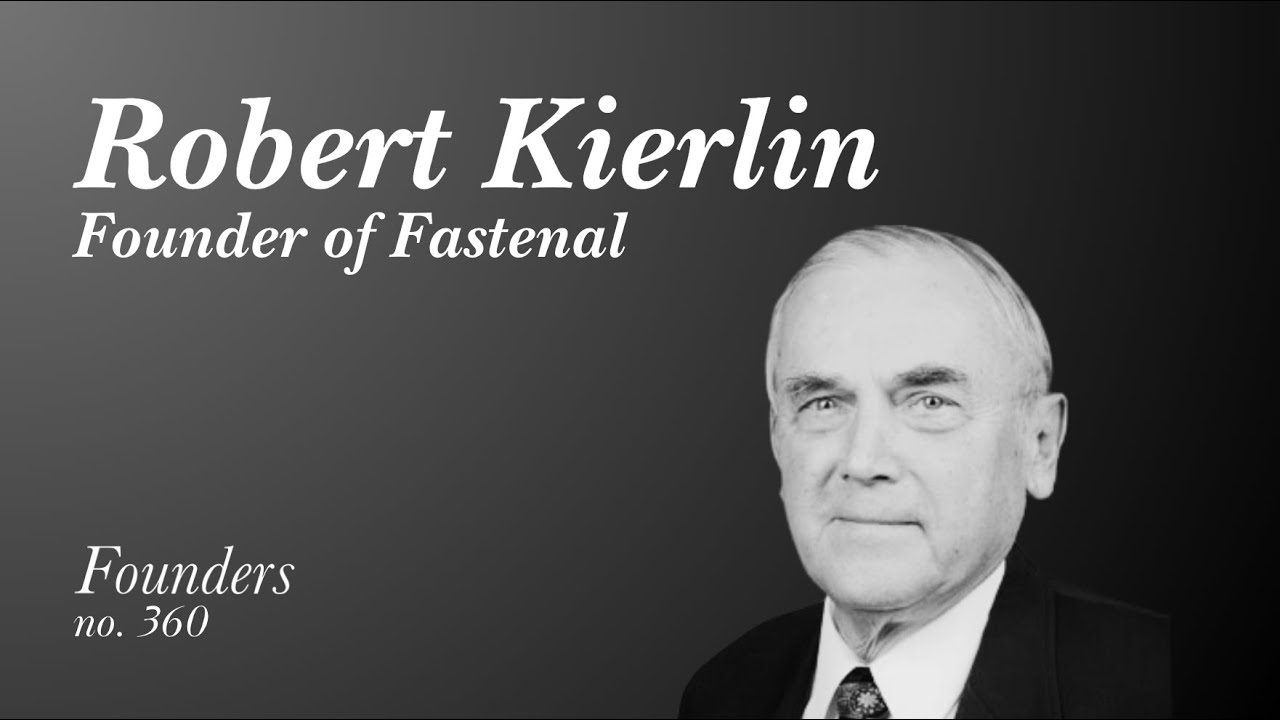
- Bob Kierin (Fenol founder; reference to a book on Fenol’s model)
- Disney’s Land (book used for the Disney anecdote)
- Pixar, Stage Coach (as investment examples in the letters)
- Jeff Bezos (founder of Amazon; shareholder letters cited)
- William Green, Richer, Wiser, Happier (book about investors)
- Episode 360 (Bob Kierin book reference)
- 110,000-word collection of Nick Sleep letters (this full collection)
- 1,500 to 1,800 word note references (Lelu, Columbia business school lectures; Peter Thiel)
- Margin of Safety (Seth Klarman; referenced in the context of investor discipline)
Notable Quotes (Verbatim excerpts)
00:00:00 Dear Mr Buffett after 13 happy years of running The Nomad investment partnership Zach and I have decided to close the fund the process requires us to return cash to our investors and so after many years as shareholders in Berkshire we have recently sold our shares it appears to all the world that the performance that Nomad has enjoyed over the years was created by Zach and me that is not the case as time goes by the performance that our clients have received is the capitalization of the success of the firms in which we have invested in other words the real work is done by you and the good people at Berkshire the purpose of this letter is to say a very big thank you and let you know that you have made a real difference Nomad was not a particularly large fund but over the years it did make around $2 billion for its clients which were predominantly Charities and educational endowments Berkshire was a big part of that that strikes us as capitalism working well for our part Zach and I are Keen to leave the professional industry behind and spend our time in more caring Pursuits Zach has his various charitable causes and I have in my mind to set up a center to provide respit care both of these activities will require long-term funding and so while you'll lose us as professional investors we will be able to repurchase our shares both privately and for the Charities that we run you don't get rid of us that easily we will be keeping the office and a new sign will be hung above our somewhat shabby front door we look forward to seeing you at the next AGM and extend an invitation to visit us at burnsall Street with the warmest regards Nick sleep 00:10:03 Dear Nick thanks for sending along the update you and Zach have made the right choice I predict you will find life is just beginning best regards Warren E Buffett 00:20:06 the single best thought that you have ever had in your life it needs to dominate everything because you're not going to get many insights like that 00:30:09 If I let you do it this time you'll do it again 00:40:12 scale economics works well in bad economic times as well as good 00:60:00 and the line that Buffett anchors: Time is a friend of the wonderful business and the enemy of the mediocre
Key Concepts Defined (glossary within the deep_read)
- Nomad Investment Partnership (NIP): An investment partnership built on patient capital and high-conviction ideas rather than rapid diversification.
- EdLP (Everyday Low Pricing): Costco’s core pricing philosophy—maintain consistently low prices to build loyalty and scale; prices stay low, margins are squeezed in pursuit of volume and long-term customer value.
- Scale Economies Shared: The notion that cost savings from scale are passed back to customers, fueling growth and creating a virtuous cycle of loyalty and expanding scale.
- Cancer Surgery Approach: Identify a company’s core jewel and remove or deprioritize the diluting, less profitable pieces to protect value creation.
- Super High Quality Thinkers: A curated list of companies managed by founders and leaders who have demonstrated durable, long-term compounding capability and shareholder-aligned incentives.
- Terminal Portfolio: The aspirational portfolio of truly great compounding machines that an investor would like to own for the long term, almost irrespective of short-term market moves.
- Inversion: A portfolio-building tactic that starts with 100% in the best idea and works downward, flipping conventional diversification logic in favor of concentrated bets on enduring franchises.
- Long-Term Value Creation: The idea that fundamental value comes from durable cash flows and customer loyalty, not from quarterly earnings per se; the founder’s role is to safeguard this long-term value.
- Behavioral Misjudgment: A recognition that decision-making errors are often psychological; the best investors study this to avoid selling great ideas too early and to resist crowd psychology.
Topics
- Investing
- Long-Term Value
- Costco & Amazon
- Behavioral Finance
- Founders and Entrepreneurship
- Concentration vs Diversification
Action Items
- Identify 2–4 potential ‘super high quality thinkers’ with durable moats and founder-led discipline.
- Adopt an EdLP-like discipline for a subset of holdings: prioritize low operating costs and pass-through pricing that benefits customers.
- Evaluate portfolio concentration using the inversion approach: determine if 100% exposure to the top idea is feasible and what risks must be managed.
- Practice the cancer surgery mindset: conduct regular portfolio cleanups to remove non-core or dilutive investments.
- Study long-run value creation via customer-centricity: measure ability to grow free cash flow and reduce capital intensity over time.
- In crises, look for scale winners with proven demand and supply chain resilience; reassess valuations against long-run cash-flow potential.
- Embed behavioral checks to avoid misjudgment: create checklists that guard against selling winners too early.
- Read and internalize founder-driven decision making: prioritize decisions that align with customer value and long-term franchise health.
Mental Models
Glossary
- EdLP
- Everyday Low Pricing—consistently keeping prices low to attract customers and drive loyalty.
- Scale Economies Shared
- The practice of passing cost savings from scale back to customers, helping to grow demand and enduring moats.
- Jewel
- The core, highly valuable part of a business that justifies its long-term investment and protects its competitive advantage.
- Super High Quality Thinkers
- A curated list of businesses led by inherently honest and rational managers who allocate capital well over long horizons.
- Terminal Portfolio
- A strategic aim for an investor to concentrate on a small number of truly great businesses for the long term.
- Cancer Surgery Approach
- A metaphor for removing inefficient or non-core elements to protect the essential, valuable engine of a business.
- Inversion
- A method of portfolio construction focusing on the strongest idea first and evaluating the rest downward.
- Opportunity Cost
- The value of the next-best alternative forgone when making a decision; in investing, the cost of not choosing the best option.
- Long-Term Value Creation
- Building durable cash flows and customer loyalty that increase company value over years, not quarters.
- Behavioral Misjudgment
- Errors caused by psychology and cognitive biases; recognizing them helps avoid costly mistakes.
Notable Quotes
“Dear Nick thanks for sending along the update you and Zach have made the right choice I predict you will find life is just beginning”
“the best investors aren't investors at all they're entrepreneurs who never sold”
“If I let you do it this one time you'll do it again”
“scale economics works well in bad economic times as well as good”
“time is a friend of the wonderful business and the enemy of the mediocre”
“margin must be obtained by better buying emphasis on selling the right kinds of goods we want to sell operating efficiencies lower markdowns greater turnover”
Topics
More from Founders
See all