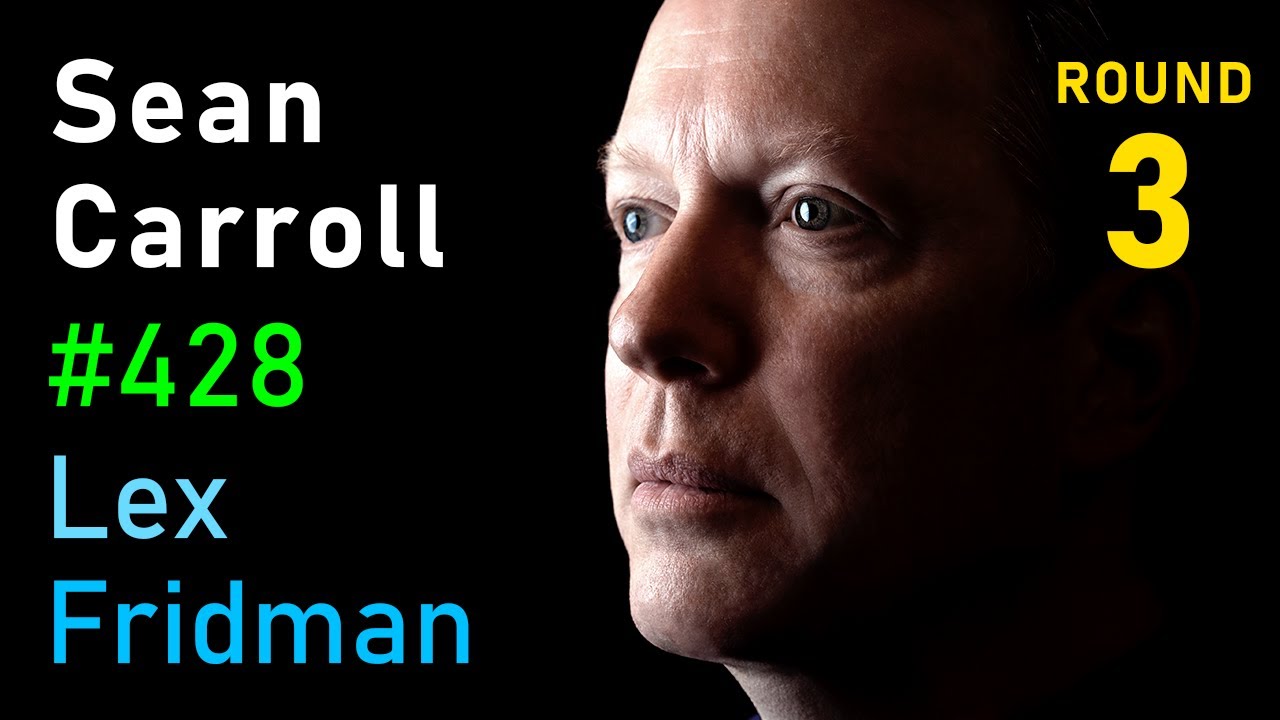
Kevin Spacey: Power, Controversy, Betrayal, Truth & Love in Film and Life | Lex Fridman Podcast #432
Kevin Spacey shares career-defining stories from Se7en to House of Cards while confronting allegations, mentorship, and the craft of serving the text without judgment.
Key takeaways
5 points- 1Strip performance to the essential text and let silence do the work.
- 2Treat theater as a living nightly experiment and film as a fixed record.
- 3Mentors like Jack Lemmon model generosity that outlasts any single role.
- 4Accept accountability for real boundary violations while rejecting false claims.
- 5Play characters without moral judgment so the audience can form its own.
Summary
Kevin Spacey joins Lex Fridman to trace his acting life from iconic roles to personal reckoning.
Se7en & Fincher's Minimalism
- Spacey was cast as John Doe days before shooting and chose no billing to protect the twist (0:00-10:04).
- Fincher hammered "do less" and "say the words and mean them," stripping pretense for naturalism (10:13-20:15).
Serving the Writing & Theater vs Film
- Actors must serve the script first; the greatest compliment is when audiences treat characters as real (20:17-30:22).
- Theater evolves nightly while film is frozen; live performance builds stamina and family bonds (30:24-40:27).
American Beauty & Mentors
- Sam Mendes pushed gradual evolution over change; Spacey used hairpieces and costumes to show Lester's slow shift (40:31-1:00:40).
- Jack Lemmon served as lifelong mentor and father figure, teaching generosity on stage and off (40:31-50:32).
Allegations, Accountability & Legacy
- Spacey was acquitted in all legal cases yet admits crossing boundaries and regrets his 2017 coming-out statement (1:10:45-1:30:51).
- He stresses non-judgment when playing dark characters and hopes for industry redemption (2:01:07-2:18:58).
Deep read
Executive Summary
This interview with Kevin Spacey on the Lex Fridman Podcast (#432) spans the arc of Spacey’s acting career, his collaboration with legendary directors, the craft of character-building, and the fraught terrain of public scandal and accountability. The dialogue is anchored in Spacey’s reflections on Se7en, American Beauty, House of Cards, and his work with directors like David Fincher and Sam Mendes, as well as his early mentorship experiences with Jack Lemmon and Mike Nichols. Across nearly two hours of conversation, Spacey discloses his acting philosophy—serving the writing, embracing restraint, and leveraging direct address to seduce audiences into a character’s inner logic—while also grappling with the moral consequences of his public life, including the 2017 allegations and the ensuing legal outcomes. The piece is less a sensational defense than a nuanced exploration of artistry, power, vulnerability, and the possibilities of redemption, with careful attention to due process, personal accountability, and humility before the complexity of human behavior. The transcript offers a study-grade guide to Spacey’s acting mechanics, collaboration with some of cinema’s greatest minds, and a personal reckoning with fame, legacy, and forgiveness.
00:00:00 Introduction and Podcast Ethos
Speaker and Context
- Speaker: Lex Fridman interviews Kevin Spacey, a two-time Oscar-winning actor known for Se7en, The Usual Suspects, American Beauty, and House of Cards. The transcript opens with a biographical framing and the contextual note that Spacey was canceled following allegations, with Spacey subsequently acquitted in the legal sense in multiple trials. The host emphasizes a commitment to due process and independent thinking, resisting online mob judgement.
- Speaker: Kevin Spacey reflects on his career, craft, and the complex social dynamics around fame, accountability, and redemption.
"The principle I operate under for this podcast and in life is that I will talk with everyone, with empathy and with backbone. For each guest, I hope to explore their life's work, life story and what and how they think and do so honestly and fully. The good, the bad, and the ugly, the brilliance and the flaws."
> This opening frames the session as a deep dive into both artistry and the moral complexities surrounding Spacey, not a sensational confrontation.
Key Premises and Goals
- Lex frames the conversation around understanding human beings at their best and worst, avoiding simplistic characterizations. He emphasizes due process, independent thinking, and honest self-examination.
- The interview positions Spacey’s work within a spectrum that includes celebrated performances and controversial public episodes, inviting Spacey to articulate what he did and did not do.
- The episode wants to connect Spacey’s artistic process with broader questions about power, performance, and accountability in the entertainment industry.
Core Themes to Track
- The craft of acting: how Spacey builds characters; collaboration with directors; the balance between serving the writing and engaging the audience.
- Direct address and performance psychology: Spacey discusses how he learned to engage audiences, including Shakespearean techniques (e.g., direct address) and the evolution of performance styles.
- The role of leadership and collaboration in film and theater: the dynamics with directors (Fincher, Mendes, Cukor), ensemble casts (Pacino, Lemmon, Nicholson), and the impact of rehearsal culture.
- The interplay of success, fame, and responsibility: Spacey speaks to consequences of public perception, the impact of allegations, and the possibility of redemption.
- Personal history and influences: the shaping effect of mentors, family dynamics, and early career opportunities.
00:10:00 Spacey on Se7en: Audition, Character Craft, and Billing
SubtopicGetting the Se7en Role and the Billing Debate
- Spacey recounts his audition for Se7en in late 1994 after returning from projects like Swimming with Sharks and The Usual Suspects. The shooting had started with another actor who was fired, leading to Spacey being asked to come to Los Angeles and start shooting on short notice.
- Decision about billing: Spacey chose to accept a first-credit-at-end credit placement instead of a top-billed lead on posters and VHS covers. The compromise arose after New Line Cinema insisted they could use his image, while Fincher supported the idea of a different billing arrangement to create a narrative ambiguity about the killer’s identity.
- Visual transformation: Spacey shaved his head for the role (an offer he and Fincher mutually agreed to pursue). He describes how Fincher encouraged economy of movement and speech, focusing on reducing ostentation to heighten terror.
"The compromise was, I'm the first credit at the end of the movie when the credits start. So I got on a plane ... I shaved my head. And then I started shooting the next day."
- Direct quote fashion and on-set atmosphere: Fincher’s directive was to let the audience meet the character with minimal in-scene theatrics; Spacey emphasizes Fincher’s method of stripping away pretense to reveal truth in performance.
SubtopicFincher's Directing Style and the Car Scene
- The climactic car scene (with Morgan Freeman and Brad Pitt) is highlighted as a masterclass in restraint. Fincher repeatedly told Spacey to go "Less, do less"; Spacey interpreted this as a cue to maintain quiet menace rather than overt theatricality.
- Spacey explains the director’s philosophy: the actor should feel in control but be trained to trust the process and allow the writing and scene structure to carry the emotion.
- The interview references the ending’s ambiguity and the multiple endings discussed during production (e.g., Brad Pitt’s fate versus John Doe’s fate). The key takeaway is the director’s insistence on a truthful, restrained performance that respects the audience’s inference.
> "Less, do less." and "Remember, you are in control. Like you are going to win. And knowing that should allow you to have tremendous confidence."
SubtopicActing as a Learned Skill Rather Than a Gift
- Spacey recounts a Jack Lemmon anecdote about George Cukor’s coaching: the idea of doing a scene "just a little less" until the performer understands the line between subtlety and underacting, illustrating the craft of arriving at authenticity by subtraction.
- Spacey uses this anecdote to illustrate a general acting principle: less is often more when the intent is clear and truthfully delivered.
SubtopicSpacey’s Philosophy on Directing and Acting
- Spacey differentiates between the “dramatic” aspect of acting (dramatization of a text) and the “performer” aspect (seduction of an audience). He posits that the goal is to serve the writing; if the writing is served, the performance lands in an authentic world.
- The benchmark for success is when audiences reference a character as if he exists beyond the screen, indicating the craft has connected with viewers.
SubtopicSpacey’s Reflections on Ensemble and Mentorship
- Spacey shares a reverence for Jack Lemmon and notes Lemmon’s influence on his own sense of mentorship and leadership in ensemble work.
- He recounts how Lemmon’s encouragement early in Spacey’s career shaped his trajectory and contributed to later collaborations.
00:20:00 Theater vs. Film: Craft, Improvisation, and Living Performance
SubtopicTheater as a Living, Risk-Heavy Craft
- Spacey discusses the difference between theater and film as a living, evolving process. Theater offers nightly opportunities to revise and react to a live audience, with no safety net; film is more static once shot.
- He emphasizes the communal family-like atmosphere of theater, where the company trains together, grows together, and shares a culture of trust and risk.
- Improvisation in rehearsal is a tool to discover boundaries and to explore who a character can become, though Spacey stresses that improvisation should not undermine the integrity of the text.
"The difference between theater and film is that no matter how good someone might think you are in a movie, you'll never be any better, it's frozen. In theater, I can be better tomorrow night than I was tonight."
SubtopicImprovisation as a Tool, Not a Crutch
- Spacey sees improv as a valuable rehearsal device to test choices, space, and pacing, but he remains committed to the script’s words as the primary vessel for storytelling.
- He provides an example from a “Glengarry Glen Ross” encounter with Al Pacino, in which Pacino’s off-script moment (not recorded for sound) became a catalyst for Spacey’s reaction, illustrating the generosity and risk-taking of improvisation when used sparingly.
"In the middle of the take, Al starts talking about me. ... That was the take. It was my closeup. And yeah, that's the take."
SubtopicTheatrical Rhythm and the Audience
- Spacey asserts that theater is akin to athletics: you must sustain energy, breath, and vocal discipline across performances; the actor negotiates sự pace and tempo nightly against a living audience.
- He notes famous anecdotes about living with the physical demands of long runs and the camaraderie that forms in a touring company, which he considers a profound part of the acting experience.
00:30:00 Spacey on Space: Vision, Collaboration, and Direct Address
SubtopicDirect Address and the Art of Connection
- Spacey discusses how Shakespearean technique (direct address) informs House of Cards’ broadcast approach. He describes how he learned to look into the camera as if speaking to a trusted friend, creating a conspiratorial intimacy with the audience.
- He explains that this technique requires the actor to resist over-explanation, allowing the audience to intuit the truth from the performance rather than being explicitly told.
- This approach helps Frank Underwood maintain a seductive, dangerous public persona even as his inner calculations unfold on screen.
SubtopicThe Craft of a Charismatic, Dangerous Leader
- Spacey reflects on the psychological underpinnings of Frank Underwood: a man who loves predicting others’ reactions, who understands human behavior profoundly, and who can foresee multi-step outcomes—a kind of behavioral psychology in real time.
- He emphasizes that Underwood’s power is less about raw ambition and more about a mastery of perception and strategic manipulation.
SubtopicThe Role of Color and Costume in Character Evolution (Lester Burnham as Case Study)
- Spacey discusses Sam Mendes’ approach to American Beauty, including using three hairpieces, costumes, and makeup cues to subtly evolve Lester Burnham over the film without a visible, dramatic transformation.
- The goal was to ensure Lester’s change felt inevitable and authentic, rather than manufactured or obvious.
"We did some things that people don't know we did to aid that gradual shift of that man's character. Three different hair pieces, three different costumes, makeup, etc. It was a theatrical trick that the audience didn't notice but felt."
SubtopicOn The Apartment and Lemmon’s Influence
- Spacey explains how Lemmon shaped his approach to Lester’s evolution and personal truth in a way that maximized restraint and consistency of character across a changing emotional arc.
- He recounts the impact of Lemmon on him personally, including Lemmon’s encouragement and his own recognition of Lemmon’s philosophy of sunshine and empathy in performance.
01:00:00 The Dinner Table: Humor, Darkness, and the Balance of Tone
SubtopicThe Dinner Scene and Improvisation vs Script
- The famous dinner table sequence in American Beauty is discussed, with Spacey denying that the plate-slamming moment was improvised; he confirms it was written and directed by Mendes and Spacey. This reveals an important nuance about how performance and direction shape a scene’s tonal balance.
- Spacey and Lex discuss humor and tragedy’s relationship, noting that the best dramas often contain humorous or absurd elements that illuminate the heart of darkness.
"That dinner scene was written and directed. Can't take credit for that."
SubtopicComedy and Darkness as Complementary Forces
- The conversation touches on the idea that the most enduring comedies often contain tragedy at their core, and vice versa. Spacey cites the value of humor as a coping mechanism in the face of trauma or moral complexity.
01:10:00 Mortality, Death, and the Search for Meaning
SubtopicMortality and Personal Growth
- Spacey discusses mortality and how his perspective has evolved. He reflects on older generations (e.g., Dick Van Dyke) who approach aging with gratitude, continuing to wake up and value life as a daily practice.
- He shares a personal sense of how his relationship with death has changed and how he hopes to reach a state where, if he were to die tomorrow, he would feel his life had been meaningful.
SubtopicThe 2017 Allegations and the Pursuit of Truth
- Spacey confronts the sexual misconduct allegations that led to his public cancellation in 2017. He emphasizes that in the trials he faced, he was acquitted or not found liable, underscoring the importance of due process.
- He distinguishes between private remorse for past behavior and the legal outcomes of criminal and civil cases. He emphasizes that there were statements and interviews (e.g., Dan Wootton and Allison Pearson) that provided detailed responses, but he says the audience should consult those sources directly for specifics.
- He takes responsibility for some boundary-crossing behaviors, acknowledging that some actions were wrong and expressing sincere regret for hurting others. He emphasizes a commitment to never repeat such behavior.
> "I have learned since were not right, and I have had to recognize that I crossed some boundaries and I did some things that were wrong, and I made some mistakes and that's in my past. I will never behave that way again for the rest of my life."
SubtopicThe Dynamics of Reputation and Redemption
- Spacey discusses public forgiveness and redemption, noting humanity’s capacity for change and the role of conversations and accountability. He suggests that redemption is possible, including for people in entertainment, but acknowledges systemic challenges in achieving public forgiveness.
01:20:00 Frank Underwood, Richard III, and the Craft of Evil
SubtopicDirect Address and Audience Seduction in Frank Underwood
- Spacey contrasts his approach to Frank Underwood with Shakespeare’s direct-address technique in Richard III. He explains the intention to speak directly to the audience to reveal political machinations without overt sermonizing, thereby inviting the audience into the character’s world.
- He points out that Underwood’s charisma and cunning are designed to seduce the audience into complicity with his plans, even as the character acts unethically.
SubtopicLessons from Richard III for House of Cards
- Spacey uses his experience with Richard III to discuss House of Cards’ dynamic: the value of keeping the audience close, the power of timing, and the importance of maintaining a consistent core persona while allowing the character to evolve.
- He notes the challenges and rewards of reinterpreting Shakespearean devices for modern political drama, highlighting how the ensemble and the script create a suspenseful, conspiratorial atmosphere.
SubtopicThe Role of Humor in Darkness
- He emphasizes that humor can reveal truth and provide a counterbalance to darkness, a theme he explored in Lester Burnham and in other morally fraught characters.
- He asserts that the actor’s job is not to judge the character but to inhabit it fully and let audiences render their own judgments.
01:40:00 The Gods of Cinema: Pacino, Lemmon, and the Great Directors
SubtopicThe Godfather, Pacino, and the Mythos of Great Acting
- Spacey discusses the mythic status of The Godfather, placing it among the greatest films of all time and acknowledging Pacino’s evolution as an actor—an evolution Spacey traces through his own career.
- He shares a personal anecdote about Pacino’s influence and mentorship in a way that highlights the collaborative, mentorship-driven nature of intensive ensemble work.
SubtopicMike Nichols and The Real Thing
- Spacey returns to Mike Nichols’ mentorship, recounting how Nichols introduced him to Hurlyburly and the path that led to his first major film opportunities with Nichols guiding him toward the craft’s subtleties.
01:50:00 The Real Thing: Nichols, Walken, and the Power of Opportunity
SubtopicNichols’ Generosity and Guidance
- Spacey describes how Nichols actively helped him develop an ability to inhabit multiple male roles within Hurlyburly, and how Nichols then offered him opportunities to audition for film roles with Meryl Streep and Jack Nicholson in The Witches, creating a formative early career landscape.
- He shares a memorable anecdote about pleasantries and mentorship with Nicholson on the Missouri Breaks set, underscoring Nicholson’s informal mentorship style and the role of humor in forging relationships between actors.
SubtopicChristopher Walken and the World of Actors
- Spacey shares recollections about Christopher Walken, illustrating the eclectic world of actors who bring undeniable uniqueness to their roles and remain authentic to their signature style across different contexts.
02:01:00 House of Cards: Fincher, Logline of Betrayal, and the Nature of Power
SubtopicFincher’s Vision for House of Cards and the Show’s Aesthetic
- Spacey credits David Fincher with establishing the show’s distinctive visual and narrative language and notes that subsequent directors largely preserved that world, ensuring a consistent feel across seasons.
- He discusses battles with networks and executives over creative control, tone, and specific edits (e.g., a scene’s music, a cut’s pacing). He emphasizes the importance of arguing for artistic integrity and resisting pressure to dilute tone for broad appeal.
SubtopicThe Godfather and Pacino: Lessons in Casting and Tenacity
- He recalls industry anecdotes about casting and risk-taking in the service of iconic performances, drawing parallels between The Godfather’s casting decisions and House of Cards’ unconventional choices.
02:11:00 Personal History, Family, and the Search for Belonging
SubtopicFamily History and the Pull Between Love and Hate
- Spacey delves into his family background, including his father’s dual identity as a U.S. Army medic and a later white supremacist figure, and how that traumatic family history shaped his own sense of belonging, trust, and agency.
- He recounts the difficulty of reconciling those two versions of his father and the impact on his own emotional development. He highlights his mother’s role as a counterbalance and the tension between seeking love and facing fear and intimidation at home.
- He discusses how theater, debate, choir, and other creative outlets in eighth grade provided a respite from a difficult home environment and shaped an identity rooted in performance and community.
SubtopicThe Power of Art as Healing and Understanding
- Spacey emphasizes the concept that inhabiting other minds—through acting—fosters empathy. He cites his broader acting career’s breadth, including roles in Recount, The Ref, Pay It Forward, and other works that explore different moral landscapes.
- He reflects on the Solzhenitsyn idea of the shifting line between good and evil within a person, arguing that every day is an opportunity to make better choices.
> "Every day is an opportunity. It's an opportunity to make better decisions, to learn and to grow. The line between good and evil moves within the heart across ages and circumstances."
SubtopicRedemption, Forgiveness, and What Lies Ahead
- Spacey discusses forgiveness as a real possibility, noting that the entertainment industry often struggles with pathways to redemption, even as other societal sectors support rehabilitation and reintegration for people who have been convicted or publicly corrected.
- He remains focused on possible future work and asks the audience to consider the possibility that his best performances may still be ahead if given the chance.
Resources Mentioned
- People: Lex Fridman, Kevin Spacey, Anthony Rapp, Dan Wootton, Alison Pearson, Jack Lemmon, George Cukor, David Fincher, Sam Mendes, Al Pacino, Robert De Niro (implicit via Clint Eastwood references? Not explicit), Meryl Streep, Christopher Walken, Jack Nicholson, Seymour Hoffman, Heath Ledger, Ian McKellen, Dick Van Dyke.
- Films/TV: Se7en, The Usual Suspects, American Beauty, House of Cards, Outbreak, Swimming with Sharks, Glengarry Glen Ross, Glengarry Glen Ross, The Apartment, The Godfather, The Shining, The Iceman Cometh, Hurlyburly, Long Day's Journey Into Night, Richard III, Pay It Forward, Recount, The Ref, Mister Roberts (referenced in a Lemmon anecdote).
- Plays/Theater: Richard III, Long Day's Journey Into Night, Hurlyburly, The Real Thing, Hamlet (referenced conceptually via direct address), The Iceman Cometh.
- Books/Docs/Media: The Gulag Archipelago (Solzhenitsyn), Now in the Wings on a World Stage (documentary), BuzzFeed article (Anthony Rapp’s allegation), New York Times (audience/industry references), Dan Wootton interview, Allison Pearson interview.
- Tools/Platforms: Netflix (as a reference to show production dynamics and streaming culture); various production studios (New Line Cinema; references to the industry’s structure).
Notable Quotes (verbatim excerpts)
- > "Less, do less." (Spacey on Fincher’s direction during the car scene) — 00:10:13
- > "Remember, you are in control. Like you are going to win. And knowing that should allow you to have tremendous confidence." — 00:10:13
- > "I’m the first credit at the end of the movie when the credits start." — 00:10:13
- > "I am a series of colors in someone else’s painting." — 00:30:24
- > "What does that line actually mean and then work backwards." — 00:30:24
- > "If I do any less, I’m not gonna be acting." — 00:30:24
- > "I’ve learned since that those things were not right, and I’ve had to recognize that I crossed some boundaries and I did some things that were wrong." — 01:10:45
- > "Every day is an opportunity. It’s an opportunity to make better decisions, to learn and to grow." — 02:11:20
Resources Mentioned (Detailed)
- Books/Papers: The Gulag Archipelago (Aleksandr Solzhenitsyn)
- Films/TV: Se7en, The Usual Suspects, American Beauty, House of Cards, The Apartment, The Godfather, Glengarry Glen Ross, Richard III, Long Day’s Journey Into Night, Hurlyburly, The Real Thing, The Iceman Cometh, Pay It Forward, Recount, The Ref, Mister Roberts
- Directors/People: David Fincher, Sam Mendes, George Cukor, Jack Lemmon, Al Pacino, Meryl Streep, Christopher Walken, Ian McKellen, Dick Van Dyke, Mike Nichols
- Documentaries/Media: Now in the Wings on a World Stage, BuzzFeed article on Anthony Rapp, Dan Wootton interview, Allison Pearson interview
- Studios/Networks: New Line Cinema, Netflix
3–6 Key Takeaways (Essence distilled)
- The best acting demands serving the writing; authenticity emerges when the performer loses the pretensions of technique and lets truth surface through simple, precise action.
- Great directors push actors to strip away indulgence and speak to the audience with clarity and restraint; pacing, rhythm, and economy are as important as line readings.
- Theater offers a unique, living laboratory for growth, risk-taking, and ensemble trust; film captures perfected moments but lacks nightly recency. Both require a discipline around timing and truth.
- Spacey emphasizes empathy through inhabiting others’ perspectives; even morally complex characters can be approached with nonjudgment and a search for understanding.
- The concept of direct address — talking to the audience — can create a conspiratorial bond that magnifies the power of a performance, especially in political or morally ambiguous material.
- Redemption is possible but unevenly distributed in public life; accountability and private amends are essential, but public forgiveness depends on broader cultural dynamics.
- The line between good and evil is not fixed; it shifts with time, context, and personal choices. Spacey cites Solzhenitsyn to illustrate the fluidity of moral standing within a single life.
- Mentorship and early encouragement (e.g., Jack Lemmon) can have long-lasting effects on an actor’s direction, resilience, and willingness to take risks.
- The most iconic performances often hinge on a willingness to do less and let the audience fill in meaning; over-explanation rarely yields lasting impact.
- The industry’s dynamics—careers, fame, power, and relationships—create a complex moral ecology where boundaries can blur; ongoing self-reflection and accountability are essential.
10 Actionable Ideas (for learners and performers)
- Practice a “read the room, then read the page” approach: study the scene’s beat, then decide where to subtract to reveal the truth.
- Incorporate a deliberate “look into the camera” practice to discover how direct address alters your connection with the audience.
- Use backward design in scenes: ask, What is the last line before the character collapses? Work backward to the opening moment.
- Build a character’s evolution through subtle costume/hair/makeup cues across scenes to achieve transformational continuity without overt changes.
- Debrief after rehearsal with a director on what was achieved by cutting a line or a beat — document the effect to inform future choices.
- Cultivate theater-like stamina: aim to maintain vocal and physical energy through long runs and multiple performances.
- When approaching difficult material, search for humor or humanity to balance darkness and maintain audience engagement.
- Keep a running journal of “moments of truth” in performances where you felt the audience truly connected to a character; reuse these insights in future roles.
- Practice empathetic acting: deliberately study a character’s motives without judgment to unlock a deeper, more nuanced portrayal.
- Develop career resilience by studying mentors you admire; extract practical habits (discipline, generosity, and boundary-setting) to shape your own practice.
Glossary
- Direct Address: The technique of a character directly speaking to the audience, breaking the fourth wall to create a conspiratorial relationship.
- Billing: The order of credits and prominence given to actors in a film’s posters, trailers, and promotions.
- KO (Knockout): A boxing term used metaphorically to describe a decisive moment or line in a scene.
- Improvisation (Improv): Spontaneous, unscripted action or dialogue used to explore a scene and push actors beyond their comfort zones.
- Theatre vs. Film: Distinct performance contexts; theatre is live, cyclical, and text-driven with immediate audience feedback, while film is meditated, shot, and edited, often requiring different stamina and nuance.
- Direct-Address Agency: The actor’s perceived ability to leverage the camera as a stand-in for the audience, balancing intimacy with manipulation in political or dramatic material.
- Redemption: The possibility of repair, forgiveness, and continued contribution after wrongdoing; a contested cultural topic in public life and show business.
Quotes (Verbatim excerpts)
- > "Less, do less." — 00:10:13, Kevin Spacey
- > "Remember, you are in control. Like you are going to win. And knowing that should allow you to have tremendous confidence." — 00:10:13, Kevin Spacey
- > "I’m the first credit at the end of the movie when the credits start." — 00:10:13, Kevin Spacey
- > "I am a series of colors in someone else’s painting." — 00:30:24, Kevin Spacey
- > "What does that line actually mean and then work backwards." — 00:30:24, Kevin Spacey
- > "If I do any less, I’m not gonna be acting." — 00:30:24, Kevin Spacey
- > "Every day is an opportunity. It’s an opportunity to make better decisions, to learn and to grow." — 02:11:20, Kevin Spacey
Topics
- Kevin Spacey
- Acting
- Se7en
- American Beauty
- House of Cards
- David Fincher
- Sam Mendes
- Richard III
- Direct Address
- Theatrical Craft
- Redemption
- Due Process
- Improv
- Mentorship
- Theater vs Film
Action Items
- For acting students: practice ‘look into the camera’ moments and micro-pauses to train restraint and truthfulness.
- Study the ‘work backwards’ technique: pick a pivotal line and trace its implicit meaning back to the first beat of the scene.
- When analyzing a script, note potential indirect cues (costume, hair, makeup) that can subtly signal character evolution.
- In rehearsal, use controlled improv to explore a scene’s edges, but return to the text as the foundation for performance.
- When portraying morally complex characters, delineate what you admire about them without endorsing their harmful actions.
- If exploring redemption, pair private accountability with a public commitment to change; track concrete steps and document progress.
- Watch and analyze a famous director’s rehearsals (e.g., Fincher’s tempo with ‘Less, do less’) to understand how pacing changes affect audience perception.
Mental Models
Glossary
- Direct Address
- A technique where a character looks at and speaks to the audience, creating intimate, conspiratorial engagement.
- Billing
- The ordering and prominence of actors in promotional materials and credits; affects perceived status and exposure.
- KO
- Knockout; a boxing term used metaphorically to denote a decisive moment in a scene.
- Improvisation (Improv)
- Spontaneous, unscripted action or dialogue used in rehearsal to explore scene possibilities.
- Theater vs. Film
- Two distinct performance mediums: theater is live and evolving; film is recorded, edited, and more fixed.
- Redemption
- The process of atonement, forgiveness, and the possibility of reintegration after wrongdoing.
Notable Quotes
“"Less, do less."”
“"Remember, you are in control. Like you are going to win. And knowing that should allow you to have tremendous confidence."”
“"I’m the first credit at the end of the movie when the credits start."”
“"I am a series of colors in someone else’s painting."”
“"What does that line actually mean and then work backwards."”
“"If I do any less, I’m not gonna be acting."”
“"Every day is an opportunity. It’s an opportunity to make better decisions, to learn and to grow."”
Topics
More from Lex Fridman Podcast
See all