ALL OF PHYSICS explained in 14 Minutes
Physics from Newton's laws and energy to relativity and quantum mechanics, distilled into simple explanations anyone can grasp.
Key takeaways
5 points- 1Force equals mass times acceleration and governs all everyday motion.
- 2Energy is conserved and merely changes between kinetic, potential, and thermal forms.
- 3Electric and magnetic fields are two aspects of the same electromagnetic interaction.
- 4Time and space are relative once light speed is treated as constant.
- 5At atomic scales, particles behave probabilistically and cannot be pinned down exactly.
Summary
A rapid tour of essential physics that connects motion, energy, fields, and the quantum realm.
Classical Mechanics & Energy
- Newton's Second Law (F=ma) predicts acceleration from applied force on a given mass (0:00-2:32).
- Law of Universal Gravitation follows an inverse-square relationship between masses and distance.
- Energy exists as kinetic or potential; Conservation of Energy states it is never created or destroyed, only converted.
Thermodynamics & Electromagnetism
- Temperature equals average atomic kinetic energy; entropy measures rising disorder (4:40-6:00).
- Electric charges obey Coulomb's Law; Maxwell's equations link electric and magnetic fields, producing electromagnetic waves (6:01-8:29).
Relativity & Quantum Mechanics
- E=mc² shows mass-energy equivalence in fission and fusion (9:28-11:24).
- Light displays wave-particle duality; Heisenberg's Uncertainty Principle limits simultaneous knowledge of position and momentum (12:13-14:08).
Deep read
Executive Summary
The video condenses the main branches of physics into a continuous narrative: classical motion and energy conservation lead into thermodynamics and electromagnetism, which in turn give way to relativity and the probabilistic rules of quantum mechanics. Each section highlights one or two governing equations or principles and illustrates them with everyday or extreme examples.
0:00Classical Mechanics and Energy
Newton's Second Law (F=ma) gives predictable acceleration when force acts on fixed mass. Universal gravitation pulls bodies together with strength falling by the square of distance. Energy measured in joules appears as kinetic or potential forms and obeys strict conservation; work occurs only when force produces displacement.
4:40Thermodynamics
Temperature reflects average atomic kinetic energy. Entropy quantifies disorder and tends to increase, rendering high-grade energy less useful over time as it dissipates into heat.
6:01Electromagnetism
Charges create forces described by Coulomb's Law. Moving charges generate magnetic fields and vice versa; Maxwell's equations unify these into electromagnetic waves that carry energy at light speed.
8:02Atoms, Radioactivity and Waves
Atoms consist of quarks inside protons and neutrons orbited by electrons. Unstable isotopes decay with characteristic half-lives, emitting ionizing radiation. Accelerating charges radiate electromagnetic waves across a spectrum that includes visible light.
9:28Relativity
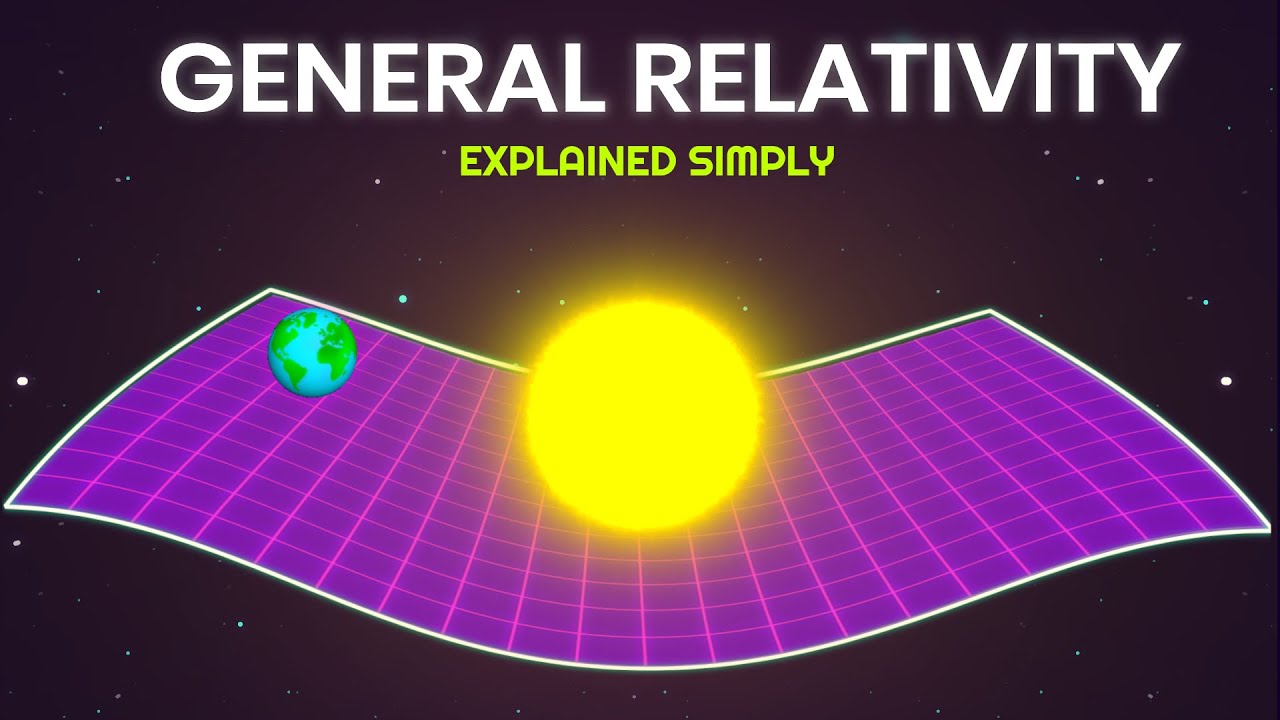
Light speed remains constant for all observers, making time and length relative. Mass curves spacetime, producing gravity. Mass converts directly to energy via E=mc² in nuclear reactions.
12:13Quantum Mechanics
Energy arrives in discrete quanta. Particles exhibit superposition until measured and obey the uncertainty principle, preventing exact simultaneous knowledge of position and velocity.
Mental Models
Glossary
- Entropy
- Measure of disorder in a system that tends to increase over time.
- Half-life
- Time required for half of a radioactive sample to decay.
- Superposition
- Quantum state in which a particle exists in multiple configurations simultaneously until observed.
- E=mc²
- Equation showing mass can be converted into energy and vice versa.
Notable Quotes
“You’re not overweight, you’re just on the wrong planet.”
“Light is like the fastest thing in the universe.”
Topics
More from Polymath
See all